A full analysis of green pig farming experience, covering food, housing and travel management
Original title: Wang Shengli: The green pig farming approach brings good "money" prospects
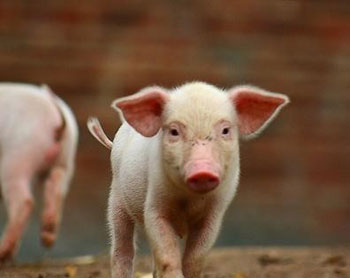
December 2 was a heavy snow day. While many people chose to take a "snow day off," Wang Shengli, a large-scale farmer in Yima Town, Panshi City, spent the whole day busy at his breeding pig farm deep in the mountains of Yonghe Village, and did not return home until dark.
People who know Wang Shengli say this is his normal working routine.
Wang Shengli's Shengda Farm is well known among farmers in Shicheng. It is famous not only because it has a large stock of breeding pigs and a wide sales reach for piglets, but also because the pigs here are of good breed and have strong disease resistance, and even more because of its excellent after-sales service for piglets - in links such as raising, disease prevention and sales, it helps in every detail and in a timely manner with all its strength, and even provides door-to-door service when necessary.
The owner of the breeding pig farm, 36-year-old Wang Shengli, believes that success comes from years of dedicated study and from following a good approach to green pig farming.
"He treats the pigs extremely well; their food and housing are like being in a hotel. To visit, you even have to change into disease prevention clothing and then disinfect, which he calls sterile farming. When piglets are being born, the pens are even more off-limits, saying he is afraid the pigs will be startled - they are so precious." A local villager joked.
Wang Shengli said with a smile that this true approach to green pig farming was something he figured out through practice.
Wang Shengli's hometown is in Yima Town, Panshi City. After graduating from high school, he ran a small-scale pig farm, and when the market was good, he could earn several hundred thousand yuan a year. Wang Shengli is a thoughtful person, and he was not satisfied with this. To expand his farming scale, he decided to go elsewhere to learn from experience. In 2009, through a friend's introduction, he came to work at a modern breeding pig farm in Jilin City. Wang Shengli was not afraid of hardship and used his brain when dealing with problems, and he soon became a technical backbone at the farm. Two years later, Wang Shengli returned after completing his training and embarked on the path of green pig farming.
Living in a "natural oxygen bar." In 2010, a 30,000 sq m piece of wasteland in Yonghe Village was offered for investment. After an on-site inspection, Wang Shengli found that this plot was surrounded by mountains, had fresh air, and was at least three or four li away in a straight line from the village, making it very suitable for building a large farm. He made a prompt decision, raised funds from various sources, and spent 2.6 million yuan to build a modern breeding pig farm of more than 6,000 sq m. Wang Shengli said that building the breeding pig farm in the mountains neither pollutes the village environment nor is it extremely beneficial to the pigs' growth, achieving two things at once.
Eating "green food." Yima Town is a major grain-producing town, and villagers have a tradition of growing corn. Wang Shengli also took into account favorable factors such as the convenience of buying corn for feed and the ability to return pig manure to the fields when building the breeding pig farm in Yonghe Village. Not only that, Wang Shengli used the wasteland near the breeding pig farm to grow vegetables such as greens and radishes to improve the pigs' "meals," which not only increased the pigs' disease resistance but also improved pork quality. The pigs he raises score "excellent" on all indicators, are highly favored by the market, and their pork sells well in many cities within the province.
Sleeping in "high-end rooms." Farrowing rooms, nursery rooms, radiators, electric heating plates, insulated boxes... When introducing the pens, Wang Shengli listed them one by one, saying these are all "standard equipment" of the breeding pig farm. "The beds the breeding pigs sleep on cost more than 4,000 yuan each. There are clear requirements for height from the ground, size, material and temperature, and none of it can be vague. Piglets are even more delicate; after birth they all have to be placed in insulated boxes for a period of time."
Enjoying "special medical care." As the old saying goes, even with vast wealth, animals with fur do not count. This means the farming industry carries huge risks. Wang Shengli, who has been in the farming industry for many years, understands this deeply. On the basis of choosing the environment, selecting fine breeds, and emphasizing green feed, Wang Shengli made disease prevention the top priority. Every day he stayed at the breeding pig farm, observing and studying together with technicians, discovering and handling problems in time, and never deviating in the slightest on medicines that should be used or vaccines that should be given. Wang Shengli said that the strong sales of the piglets he raises are closely related to good disease prevention and strong disease resistance.
Extraordinary effort will surely bring generous returns. Today, Wang Shengli's breeding pig farm has expanded again. The pens cover an area of 20,000 sq m, with an annual output of more than 4,000 breeding pigs and an inventory of more than 2,000. After deducting all inputs, annual net income exceeds 600,000 yuan. Under his leadership, many nearby people have become more motivated to raise pigs. According to incomplete statistics, more than 70 farming households have expanded their farming scale along with Wang Shengli, and pig farming has become one of the main industries for enriching the people and increasing income locally.
Just as the reporter was finishing the interview, one of Wang Shengli's customers, Zhou Degui, who lives in Xilin Village, Niuxin Town, called with good news: the 200 piglets he bought from Wang Shengli four months ago had been sent to market, and after deducting costs such as feed, he made a net profit of 100,000 yuan.