What are the future prospects for rural farming and breeding?
In the future, agricultural insurance products will tend to become more complex in Zhejiang clothing wholesale market, and coverage will further expand into the areas of price and yield. The challenges brought by expected climate and environmental changes will gradually increase, which makes the application of new technologies such as satellite measurement and observation particularly important, while issues such as carbon emissions will also lead to the emergence of more new products. So how should the future prospects for rural farming and breeding develop?
With subsidy support for the market from the central government, the agricultural insurance market has grown rapidly. The main insured varieties are crop farming and livestock breeding, especially breeding sows. Government subsidy rates range from 25% for crop farming to 35% for livestock breeding. The Chinese government is committed to extending subsidies to more provinces and more varieties, such as forestry. In 2009, the government subsidy budget was 879 million USD.
At present, it is a common pattern in developed countries for the breeding industry to become a strategic leading industry in agriculture. Xurigan believes that, compared with the world average level and the level of developed countries, the proportion of China's breeding industry in agriculture is still relatively low, with considerable room for improvement. "By 2020 and 2030, the proportion of China's breeding industry output value in total agricultural output value will further increase, reaching 50.3% and 53.5% respectively; but after 2030, the changes in the GDP of the breeding industry and the GDP of crop farming will not be too large." "In the next 20 years, China's breeding industry will achieve a major strategic transformation, take the lead in realizing modernization within agriculture, become a pillar industry for ensuring food security and promoting farmers' income growth, and become a foundational industry for promoting the coordinated development of the national economy." To this end, Xurigan suggested on behalf of the project team that the state should clearly define the strategic leading position of the breeding industry in modern agriculture, take the breeding industry as an important core, and accelerate the adjustment of the agricultural economic structure; in addition, within the next 10 years, it is hoped that the central government can increase investment and, in response to the scientific and technological bottlenecks facing the sustainable development of the breeding industry, implement a "major science and technology innovation project for the breeding industry," including special projects for scientific and technological innovation in animal seed industries and modern breeding product processing.
The future prospects for rural farming and breeding still appear optimistic. As part of China's agricultural modernization, agricultural insurance, as a method of supporting and protecting agriculture, will attract much attention as a special breeding industry with growth prospects. The Chinese government will continue to increase support for agricultural insurance to ensure long-term growth.
What is most profitable in the breeding industry?
This short article recommends some special breeding projects with breeding prospects, hoping to be helpful to breeding friends who want to engage in the breeding industry to make a fortune.
(1) Small-tailed Han sheep. It has entered the stage of commercial production, with fewer and fewer people introducing breeding stock, and development is trending toward stability.
(2) Meat dog breeding. Breeding has increased sharply in recent years, but it still cannot meet market demand, and the development momentum looks good, but technically pseudoscientific practices and breeding stock speculation should be prevented.
(3) Meat rabbit. Sales have always been relatively good. In 1997, a nationwide rabbit breeding craze arose. In the past two years, the rabbit breeding industry has declined, and future development will tend toward stability.
(4) Miniature pigs, nutria, and bamboo rats. In the past two years they were used by breeding stock speculators, while the consumer market and processing lagged behind, dampening farmers' enthusiasm for breeding. Nationwide inventories are gradually decreasing, and it is expected that there will not be major development in the next few years.
(5) Masked palm civet. It is a nationally protected animal and should not be developed.
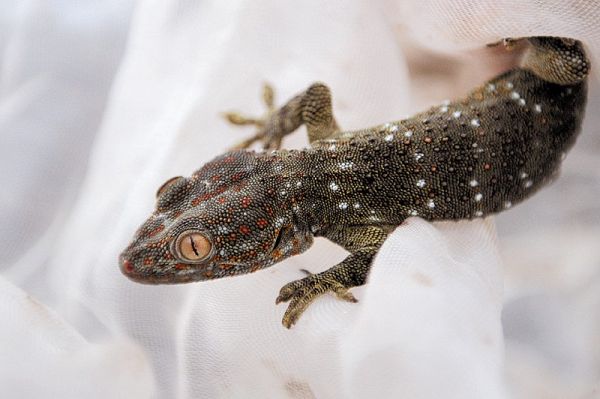
(6) Tokay gecko. The prospects for artificial breeding look good.
What is most profitable in the breeding industry
Brown eared pheasant and golden pheasant (red-bellied golden pheasant). They are nationally protected animals, the prospects for development for food use are unstable, and they are even less suitable for industrialization.
Lady Amherst's pheasant. The market is good, nationwide inventories are small, and it is expected to continue developing.
Black silky fowl. It caters to the trend of black foods, and development is on an upward trend.
Ornamental birds. China has a long history of breeding them, and market prospects are good.
Chinese palace yellow chicken, silky chicken, and green-shelled chicken. They are all rare chicken breeds in China, with great development potential.
Wild roe deer. Nationwide stock is very small, market breeding prospects are relatively good, and they can be vigorously developed.