After eating free-range eggs for so many years, I only just found out they're all fake
In recent years, people have been saying in the market that home-raised free-range eggs are more nutritious than farm eggs. Is this true?
Truth 1: Free-range eggs and regular eggs have almost identical nutritional value
After expert research, it was found that the nutritional content of the two types of eggs is almost the same. Home-raised free-range chickens are generally kept free-range, so whether the food they eat is safe and their living environment cannot be controlled. Chickens on poultry farms, however, are raised scientifically, making them comparatively healthier and safer.
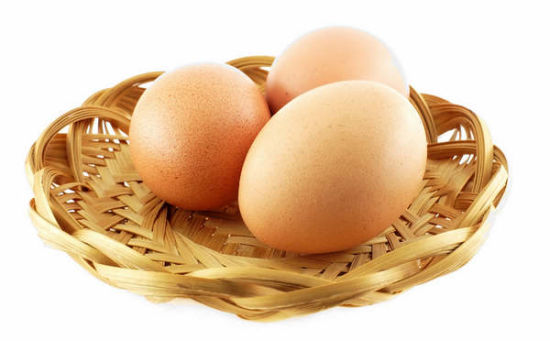
Truth 2: Brown-shelled eggs are simply stored longer, with no special nutrition
Many sellers deceive consumers by saying brown-shelled eggs are more nutritious than white-shelled eggs, but this is wrong. Brown-shelled eggs just have a slightly thicker shell than ordinary white-shelled eggs and keep longer in storage; their nutritional content is almost the same.
Truth 3: A darker yolk does not mean richer nutrition, just more corn in the feed
Everyone knows about the "red-heart duck eggs" of Baiyangdian, right? Many people mistakenly believe that duck eggs with a "red heart" are good, and that eggs with a yellow heart are good. Actually, most of the protein in an egg is concentrated in the egg white, and the yolk of course also contains rich nutrients; a yellow yolk has nothing to do with nutrition, but rather with the chicken's feed. When a chicken eats a lot of corn or green leaves, the yolk of its eggs becomes darker in color.
If you buy eggs with a very dark yolk, you should also be careful; it's possible that unscrupulous merchants, in order to make money, use "extraordinary" methods to change the color of the eggs, making them unsafe to eat.
Truth 4: Balut is just a dead-embryo egg and cannot nourish the body.
Many people like to buy balut incubated for 18 days, believing it is an excellent tonic for the body. In fact, balut is just an egg that has not completed incubation; the nutrients inside all change during incubation, and 90% of the nutrients are consumed during embryonic development, so it is far less nutritious than ordinary eggs.
Moreover, balut can be called a breeding ground for bacteria and is very easily infected by microorganisms. You could say that balut not only fails to nourish the body, but may also harm it.
Truth 5: Eggs should not be boiled too long; 3 minutes after the water comes to a boil is enough.
It is widely shared online that the longer eggs are boiled, the more nutritious they become, but this is wrong. Experts explain that boiling eggs in water for a long time causes the ferrous ions in the yolk to react with the sulfur ions in the egg white, producing ferrous sulfide, which is difficult for the body to absorb.
It is best to boil eggs in cold water, then turn off the heat 3 minutes after the water comes to a boil. The nutrients in the yolk in this state are more easily absorbed by the human body.
Truth 6: Eating eggs raw makes it easy to get an infection.
Foreign friends all like to eat eggs raw, and Chinese friends have been imitating them one after another. But in fact, eating eggs raw is unhealthy; eggs contain Salmonella, and eating them raw may cause diarrhea, fever, stomachache and other infections. Everyone must tell the friends around them not to blindly believe that raw eggs are more nutritious, and to be careful of bacterial infection.
Truth 7: Eggs and soy milk can be eaten together.
Eggs and soy milk cannot be eaten together, otherwise they will affect the absorption of nutrients in the food. This is actually wrong; after soy milk is heated, the trypsin inhibitor molecules in it lose their activity, so they do not affect absorption. Therefore, eggs and soy milk can be eaten together.
Truth 8: You can eat eggs when sick, just try not to make them greasy.
Some friends believe that you cannot eat eggs when you have a cold, as it will worsen the illness. This is actually wrong. When a person has a cold or fever, their resistance tends to decline and their body lacks nutrients, while eggs contain a lot of protein, so eating eggs can help the body recover its health. You just should try not to eat greasy food while sick; you can eat steamed egg custard or boiled eggs.
Truth 9: A woman in postpartum confinement also does not need to eat too many eggs
Elders often say that for postpartum confinement, eggs and brown sugar are essential, and most pregnant women in our country eat a lot of eggs while recovering at home after childbirth. But experts point out that eating 10 eggs a day and eating 2 eggs a day is actually the same, because the body can only absorb so many nutrients, and eating too many will increase the burden on the stomach and intestines. Therefore, it is recommended that women in postpartum confinement follow a scientific diet and eat no more than 2 eggs a day.