Internet Plus and blue stone-ground tofu: Liu Qiangdong opens the way with drones
Liu Qiangdong: I have never eaten hometown tofu again since coming to Beijing
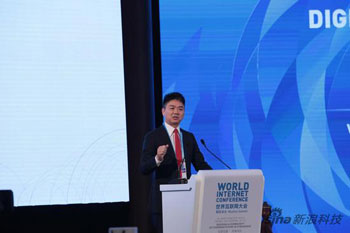
Liu Qiangdong, founder and CEO of JD Group (photo)
News from the afternoon of December 17: the World Internet Conference continued today in Wuzhen, and Liu Qiangdong, founder and CEO of JD Group, delivered a keynote speech at the "Digital China - Wuzhen Dialogue" forum. Liu Qiangdong said that after coming to Beijing he had never eaten hometown tofu again, and for this reason JD would spend two years building its own cold-chain logistics and delivery network.
Liu Qiangdong said that what made him happiest as a child was grinding tofu at home together with the other children. "I lived in the countryside for 18 years, and after coming to Beijing I kept wanting to eat the blue stone-ground tofu from my hometown, Suqian, Jiangsu." According to Liu Qiangdong, when he later returned to his old home, because of industrial production no one used blue stone mills to grind tofu anymore, so he never tasted the flavor of those years again.
Liu Qiangdong believes that in the past, the things farmers produced themselves could not be sold, and selling them locally brought very low net profit, which caused agricultural products such as blue stone-ground tofu to disappear. He revealed that by the end of next year JD would complete its third logistics network, namely a logistics network for cold chain, warehousing and delivery, and he hoped to use it to help rural areas build their own brands.
"Work with farmers all over the country, buy them soybeans, blue stone mills and even small donkeys to help them turn the mill, and deliver the ground tofu to the cities by drone or JD delivery." Liu Qiangdong said that this applied not only to tofu; in the future JD would also collect consumers' demand for bean sprouts in the city one day in advance and deliver them in the same way as tofu.
The following is the transcript of Liu Qiangdong's speech:
Ladies and gentlemen, good afternoon!
Next I will use 8 minutes to talk about bread and tofu. What I want to share with you today is JD's "Internet Plus" strategy and "one village, one product." A few years ago I was studying in the UK with a group of classmates from China and Europe, and in the evening one classmate said: next to our hotel there is a bakery, this bakery has a 600-year history, the bread is very, very delicious, and the price is a little expensive. In the end several of us went at past 4 in the afternoon, and they said: "Sold out." This shop's bread is basically sold out by 10 or 11 in the morning. Since it sells so well and the bread is so expensive, why not increase your output and open 500, or even 1,000, shops in London? With this question, the next morning I deliberately went to find this family, already the 12th generation, who had been making bread in London for several hundred years. It was all dug underground like our cave dwellings, and after talking for a long time, I understood: once such output is expanded, some problems will arise. I lived in the countryside for 18 years, then went to Beijing, and for how many years I kept wanting to eat the tofu ground with a blue stone mill back in Suqian, Jiangsu. When I was little, the happiest thing about the New Year was turning the mill. Every time tofu was made, the children were all very happy and competed to push the big stone mill, because the okara was delicious when stir-fried, and the tofu was really fragrant. Since leaving the countryside for Beijing, I have never eaten tofu that delicious again.
Once I went back to the village and a neighbor invited me to a meal. He asked me what I liked to eat, and I said: stir-fried tofu with hot peppers. But when it was brought to the table, the taste was wrong. He said: "Life in the countryside is better now, the tofu is bought from the town, it is no longer tofu you grind yourself, it is large-scale industrial production." Ever since JD proposed channel sinking, we have been laying logistics into the villages. In the past we already covered all of China's tier-1 to tier-3 cities. In June this year, when we entered the 150,000th village, every village had a JD delivery person, and through a great deal of communication and exchange we found that there are actually very good ways to help farmers escape poverty, to let rural people live well, and also to solve the food safety problem for city people. That is because in the past there were two price unfairnesses between the countryside and the cities: the first price unfairness is that for a long time in China, the poorer the place, the more backward the place, the poorer the place, the more expensive the industrial goods sold there. For the same home appliances, you can all look at the prices sold on **, which are much more expensive than in Beijing and Shanghai. This is one price unfairness: farmers finally earn a little money, have a little money to buy things, and in the end the price is 20% more expensive than for Beijing people and Shanghai people. The second price unfairness is that the things farmers produce themselves have always fetched low prices, that is: costs are high, the selling price is low, and net profit is very, very low.
A few days ago I went to Shaanxi and saw chickens raised by farmers in a village, with no money to feed them feed. A dozen or so chickens were just kept at home and allowed to find insects to eat, with no cost at all. I asked: how much does this chicken sell for in the town? I was told, about 30 yuan-40 yuan each. I said: just try a few on our website, and sell them for 128 yuan each. Several hundred chickens a day, all snapped up. In the past, selling locally could not reach the cities, could not be turned around, so after working hard to raise a chicken for one or two years, in the end after deducting all kinds of costs you found you had made little money. This is a very important reason for rural poverty. Based on this, our whole Internet Plus rural strategy, under the banner of "one village, one product," is about what is natural and mature, and we hope that by the end of next year we can establish JD's third logistics network in China. Over the past dozen years we built two networks: 1. Large home appliance logistics network. Now all our large home appliances, refrigerators and color TVs, can be delivered to 42 villages in China. The year before last we began building the "JD Help" service system, for the first time making it so that no matter how poor and backward the place, whatever you enjoy is the same as in Beijing. 2. Small and medium parcel logistics network. It now covers 98% of JD Mall, and 98% of daily orders are delivered to thousands of households through self-operated logistics. The third network is the integrated cold chain, warehousing and delivery network. To date no company has been able to build a nationwide cold chain and delivery network in China. So we plan to spend two years building this network, and in the end we hope that through quality plus branding, we can turn the truly good things in the countryside into a brand, rely on the brand to achieve a premium for farmers, and at the same time solve the food safety problem for city people.
I hope that one day, all of you city people here will be able to buy tofu at home every day and be guaranteed to eat blue stone-ground tofu. Why? We hope to find some rural farmers, and we can give you soybeans, buy a large blue stone mill, and even lend you money to buy a small donkey to help you turn the mill, so that every day JD's drones can deliver the tofu you produce from the morning to the city in 15-30 minutes. Then we can use JD's efficient and fast delivery network in the city to deliver it to thousands of households. The same goes for bean sprouts: the day before, we collect city consumers' demand for bean sprouts, then send it to the farmers who grow bean sprouts. According to JD's requirements, I can guarantee that the selling price can reach 2-3 times. Thank you, everyone!