Analysis of the Chinese and Foreign Agricultural Machinery Industry: Are You a Hyena in the Industry?
Introduction
In the highly competitive field of China's agricultural machinery industry, there are as many as several thousand agricultural machinery enterprises of all sizes and under different systems. Have you ever thought about what types these enterprises fall into? Which type does your company belong to? What are the advantages and disadvantages of different types of agricultural machinery enterprises? What is their development trajectory? Please read the article brought to you by Mr. Liu Qi, a strategic research expert in the agricultural machinery industry.
Text | Liu Qi
Photography | Fu Rao
In 2015, the Chinese local enterprise Foton Lovol Heavy Industry spent huge sums to acquire the Italian veteran agricultural machinery company ARBOS. Shortly before that, the company had also acquired another Italian agricultural implement manufacturer, MaterMacc. This reminded the author of an article published in 2002 in the magazine IT Manager World——"The Evolution from Hyena to Lion."
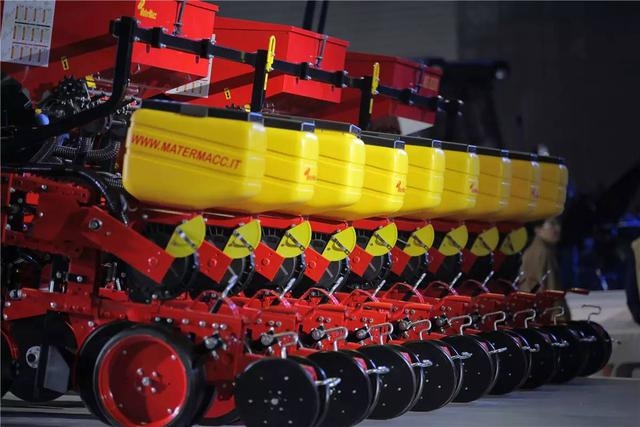
Precision seeder under Foton Lovol Heavy Industry
In this article, the author divides manufacturing enterprises into three types. Lions——Western enterprises, characterized by comprehensive advantages in technology, products, capital, and management, and possessing the superiority complex of giants. Leopards——Chinese-foreign joint ventures, which also have comprehensive advantages in technology, products, capital, and management, along with preferential policy treatment and familiarity with the local market; Hyenas——local enterprises, lacking core technology, with poor products, management that is basically nonexistent, scarce policy resources, and which may even face discrimination, but which are extremely aggressive in the market and are posing a powerful threat to the lion and leopard packs with unconventional tactics of "survival of the fittest."
At present, within the agricultural machinery industry in China and even globally, a full-scale competition is unfolding among lions, leopards, and hyenas, three organisms occupying different links in the food chain. This is especially prominent in the Chinese market. The current competitive situation can be summed up in one sentence: "Lions are retreating step by step, leopards are lost and helpless, hyenas are pressing in closer and closer."
"Lions" Retreat Step by Step
In the field of agricultural machinery manufacturing, the Chinese market has long displayed the characteristics of "international competition domesticized, domestic competition internationalized." All foreign-funded enterprises among the Fortune Global 500 and the world's top 15 agricultural machinery rankings entered the Chinese market long ago. Companies such as John Deere and CNH even began pioneering the Chinese market before the founding of New China. These enterprises are precisely the "lions" referred to in the article "The Evolution from Hyena to Lion." Facing China, this enormous cake, these "lions" of noble pedigree have come sniffing with knives and forks in hand.
Indeed, in previous years, relying on their comprehensive advantages in technology, products, capital, and management, the "lions" occupied the most lucrative high-end market in China and raked in enormous profits.
But those who are well fed can hardly hear the footsteps of the starving. The good days of the "lions" have already become a beautiful memory in the past tense. Retreating step by step and sustained losses have become the common maladies of the "lions" in the Chinese market.
For example, a certain multinational giant, once the overlord of China's tractor and harvester industries, saw its most profitable wheat harvester and corn harvester businesses fully replaced by Chinese enterprises in 2014. Its medium-wheel tractor market was carved up by local Chinese hyenas. Now only its large and medium tractor business barely keeps operating. Another American multinational company, after ten years in China, lost 20 million in 2014, with operating performance deteriorating year after year.
Overall, apart from Japan's Kubota and Yanmar, most multinational companies have performed rather poorly in the Chinese market, with performance retreating step by step and profits declining year after year. Relative to the performance of the "leopards," this decline of the "lions" seems to have been expected.
John Deere booth at the 2015 China International Agricultural Machinery Exhibition
"Leopards" Are Lost and Helpless
Trading market for technology is a common practice in China's equipment manufacturing industry, and Chinese-foreign joint ventures are the main cooperation model, most evidently seen in the automobile industry. But in fact, trading market for technology was only a beautiful fantasy of the Chinese people. The final outcome was that no technology was obtained; on the contrary, the market was completely lost.
This situation also exists in China's agricultural machinery industry. The enterprises tasked with "trading market for technology" are mostly former veteran domestic agricultural machinery enterprises, such as Tianjin Tractor, Jiamusi Combine Harvester Factory, Ningbo Benye, and Huanghai Jinma.
Tianjin Tractor
With the rapid development of the agricultural machinery industry over the past 10 years, competition in the industry has become increasingly fierce, and these mixed-blood "leopards" have generally fallen into the trap of joint ventures, with their development mired in a prisoner's dilemma. For example, Huanghai Jinma, once the leader in the medium-wheel tractor industry, had annual exports exceeding 40,000 units at its peak, with export volume exceeding 50% of the total export volume of domestic enterprises, but today its glory is gone. According to internal sources, after the joint venture, Mahindra Jinma's 2015 sales were only a mere 20,000 units. From being the medium tractor leader and the target once chased by China YTO and Lovol Heavy Industry, to its current operating condition, it inevitably leaves one somewhat regretful. In stark contrast to these lost "leopards" are the pressing "hyenas."
"Hyenas Press In Closer and Closer"
When the "lions" are in full rout and the "leopards" are collectively lost, those native-born "hyenas" present a completely different picture.
Observing the competitive landscape of each segmented industry in agricultural machinery can explain everything. In the tractor industry, the top four are China YTO, Foton Lovol Heavy Industry, Changzhou Dongfeng, and Zoomlion, all pure independent brands.
The top three in wheat harvesters are Foton Lovol Heavy Industry, Zoomlion, and Shandong Ninglian. Lions and leopards are already hard to find in the top ten.
The top five in rice harvesters are Jiangsu World, Kubota, Foton Lovol Heavy Industry, Zoomlion, and Huzhou Star Agricultural Machinery. In this segmented field, after Kubota reached the top in 2013, it was replaced by Jiangsu World this year. The industry newcomer——Zoomlion——is even eyeing the top spot covetously, and Foton Lovol Heavy Industry will absolutely not be content to remain subordinate, so Kubota is facing the unfavorable situation of wolves ahead and tigers behind.
In the field of corn harvesters, lions and leopards are almost nowhere to be seen. John Deere made a quiet exit after a brief moment of glory, and although Kubota's corn harvester has relatively mature products, it has no great advantage in competition with the pack of wolves and has still not opened up the situation to this day.
In this field, native national enterprises like Yongmeng Machinery have boarded the "bullet train" of rapid development in the past two years, with 2015 sales even reaching as high as 5,000 units. It must be said that "hyena" enterprises like Yongmeng Machinery are quietly rising.
Yongmeng Machinery production workshop
From the above analysis, it can be seen that in China's domestic agricultural machinery market, in major product categories such as tractors, wheat harvesters, rice harvesters, and corn harvesters, independent brands are gradually gaining absolute dominance. In other words, the strongholds are firmly in the hands of the "hyenas," while multinational companies have basically suffered a full-scale rout.
In the Chinese market, before 2015, the agricultural machinery industry was basically a net inflow of capital, a one-way process of multinational companies inputting capital into China. Multinational companies either established wholly owned companies or formed joint ventures with domestic enterprises. But starting in 2015, with Foton Lovol Heavy Industry's acquisition of MaterMacc and ARBOS, the "hyenas" began to stage a dramatic counterattack. Insightful people in the industry believe that Foton Lovol's acquisition of Italian agricultural machinery enterprises marks the arrival of the inaugural year of China's agricultural machinery internationalization, while the author believes this is the counterattack of the "underdogs," the beginning of the "hyenas'" evolution toward "lions." From then on, the capital Pandora's box of China's agricultural machinery global mergers and acquisitions will be opened. In the future, in developed countries such as Europe, America, Japan, and South Korea, we will see more and more phantom presences of Chinese corporate capital.
The Reasons Behind It: A Powerful Market and a Strong Enterprising Spirit
So how did the once poor, short, and ugly "hyenas" counterattack the tall, rich, and handsome "lions" and the fair, rich, and beautiful "leopards"?
First is the enormous domestic market with abundant demand. Great markets breed great companies. Looking at the rise of multinational companies, no company grew in another country's market while detached from its own home market. China's massive and multi-layered market provides suitable soil for the survival of all kinds of companies. Those companies skilled at drawing nutrients from the domestic market and adept at utilizing policy resources grow rapidly.
But the "lions" and "leopards" are exactly the opposite. These multinational companies and joint ventures, full of a sense of superiority, find it very difficult to grasp China's complex and ever-changing market. Foreign purely market-oriented business models and products often cannot adapt to an agricultural machinery market with Chinese characteristics.
Incompatibility with the local environment is the biggest problem the "lions" face in China. China is the market most deeply influenced by a planned economy and also the most complex market in the world. In this market, the "hyenas" either jump about wildly, maneuver flexibly, go with the flow, or sail against the wind. In short, the "hyenas" have nothing and therefore have no scruples. Only by fighting with their backs to the river might they have a chance to survive.
It is precisely this intense hunger and unconstrained enterprising spirit that has allowed these "hyena" enterprises to survive and to grow and strengthen.
Roll On, "Hyenas"
Writing to this point, the author recalls a line from a poem expressing ambition written by Yuan Shikai at the age of twelve: The great dragon lies dormant in the wild, and the deer of the Central Plains is fat indeed!
At dawn, standing on the ancient land of Shu, the author looks out the window at the rising morning light and distinctly hears the sound of a giant dragon turning over and its scales rattling.
China's agricultural machinery, this giant dragon, has already awakened. The domestic market can no longer satisfy its appetite. One day when the giant dragon takes flight, it will soar straight up ninety thousand li.
In the future, the global agricultural machinery market will surely be the domain of the Chinese dragon, and the world will tremble before the Chinese giant dragon!
Roll on, hyenas!