The maca myth is shattered: unsalable at the place of origin, priced lower than radishes
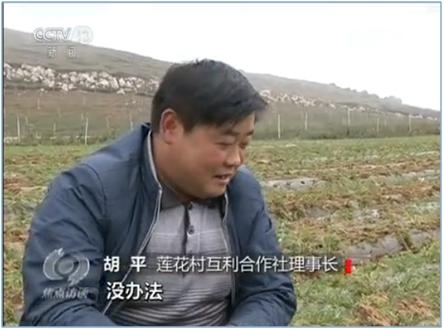
On January 5, 2016, CCTV's "Focus Interview" program interviewed Lianhua Village in Zhijin County, Guizhou Province, under the title "Poverty Alleviation, Not a Single Person Left Behind!" In the background, thousands of mu of contiguous maca plantings were conspicuously visible!
Maca, this new resource food introduced from South America more than 10 years ago, can it really help farmers in backward areas of Guizhou escape poverty and become rich?
Preliminary research shows that domestic maca has already seriously crashed the market.
The answer is very regrettable! The maca growers of Lianhua Village in Guizhou will, like the thousands upon thousands of maca producers this year, very likely lose their entire investment, and may even fall back into poverty because of maca! Because news recently came from the main maca-producing areas of Lijiang and Dali in Yunnan: large quantities of local maca are waiting in the fields to be harvested, and farmers, finding harvesting too troublesome, simply let it rot in the ground. If anyone is willing to buy it, they can pay for laborers themselves and dig it up for free, treating it as simply plowing the field for the growers.
In terms of price, taking yellow maca, which has the largest output, as an example: bulk asking prices at Yunnan production areas have already dropped to below 15 yuan (price per kilogram, the same below); for online retail prices, yellow maca has also dropped to below 20 yuan; for the highest-quality purple maca in the 50-head specification, the price is around 30 yuan; even domestic black maca, which was once booming, has dropped to between 70-80 yuan.
Compared with the prices of several hundred yuan or even 1,000 yuan three years ago when maca was at its hottest, this price drop is so steep and the fall so great that it is enough to make one stare in shock! If calculated at the production-area dried-goods price of 15 yuan/kg, it means the fresh-goods price has fallen to around 1.5 yuan per jin. If apportioned to yield per mu, it is not at all an exaggeration to say that maca has fallen to a "radish price."
The above signs indicate that the domestic maca industry is repeating the historically famous "Dutch tulip crash" -- that is, after being hyped to astronomical prices, it rapidly goes into free fall, left to the wind and rain in a complete mess, and ultimately the growers swallow the bitter fruit of a collapsed market.
Maca, this health-product myth of the new century, why has it fallen to such a miserable state?
I. Blind, frenzied expansion of planting is the root cause of the disaster
Let us take a look at the development trajectory of maca after it entered China, divided into three periods:
1. The first period, 2002-2010, was the trial-planting period
In 2002, led by the Yunnan Academy of Agricultural Sciences, China first introduced Peruvian maca and began trial planting in Nanxi Town at the foot of Jade Dragon Snow Mountain in Lijiang, Yunnan. Over the following nearly 10 years, Lijiang, Yunnan firmly occupied the position of China's number one maca-producing area, and by 2012 its output still accounted for more than 70% of the national total;
Figure 2: A 10,000-mu maca planting base at the foot of Jade Dragon Snow Mountain
In 2004, Dahai Township and Kuangshan Town in Huize County, Yunnan successfully introduced and planted maca, with a planting area of more than 200 mu and a yield per mu reaching 300 kg;
In 2006, small-scale trial planting of maca was carried out in Ili, Altay, Wenquan and other places, but yields were very low. In 2009, large-scale planting took shape in Tashkurgan County at an average altitude of 3,500 m.
It can be seen that in this period, because maca had not yet been hyped up, production areas were mainly concentrated in western Yunnan, with Lijiang as the main producing area. In other provinces, only a small number of places such as ** introduced it, without forming scale.
2. The second period, 2011-2013, was the development period
In 2011, Diqing in Yunnan began planting maca, and the current planting area has reached 150 mu;
In 2012, many places in ** such as Ili and Hotan, which have much land and sparse population, began introducing maca, and that year the planting area exceeded 3,000 mu;
In 2013, Ninglang County in Yunnan began maca seedling cultivation and expanded planting, and quickly became one of Yunnan's main producing areas, with a planting area of 3,900 mu that year;
In 2013, some areas of Northeast China began introducing maca, but the quality was poor and it was often mixed into Yunnan maca for sale;
In 2013, Chinese people began cooperating with production areas in Peru, widely contracting land for maca cultivation, and shipping it back to China where demand exceeded supply.
……
This period was the stage of large-scale development for maca. Although domestic production areas were still concentrated in a small number of provinces such as Yunnan and **, production had already begun extending to places of origin such as Peru.
3. The third period, from 2014 to the present
As a mountainous country, what China lacks least is mountainous land, especially mountainous areas between 1,200-2,800 m in altitude. In 2014, as maca prices soared all the way, maca cultivation became the most widely introduced food-tonic medicinal material of that year, seemingly becoming the best way for poor and backward areas to escape poverty and become rich.
Stimulated by high prices, in addition to widespread introduction within provinces such as Yunnan and **, maca planting began to expand rapidly outward. Bijie and Liupanshui in Guizhou; Ganzi, Liangshan Prefecture and Xichang in Sichuan; Gannan in Gansu... Even Chamdo in Tibet, Jingle County in Xinzhou, Shanxi, and Haixi and Huzhu County in Haidong, Qinghai and other places had all begun planting in batches.
At this point, stimulated by the maca myth, domestic maca planting finally became overheated. Production showed a trend of shifting from south to north and from high altitude to low altitude. In particular, the successful introduction of planting in arid areas such as northern Shanxi and Gannan showed that maca's suitable planting areas in China are quite extensive; it is only that yields per mu and quality in some areas cannot compare with those of the places of origin.
It was also by this period that the disaster of blind maca production had already been brewing.
II. Excessive planting caused a sharp expansion of maca production capacity
1. Changes in domestic maca output
According to statistics, in 2012 the maca planting area in all of Yunnan was 6,000 mu, with an annual output of about 2,400 tons, accounting for 90% of domestic output; by 2015, Yunnan alone planted more than 80,000 mu of maca, with production capacity reaching more than 20,000 tons. If the expanded planting area across the country is included, in 2015 the national maca output could easily break through 30,000 tons.
2. Volume of imported maca
According to information from the Peruvian Exporters Association, in September 2009, maca powder exports amounted to 2.1 million USD, up 18% year on year; the United States accounted for 48% of total exports, an increase of 49.4%, followed by Japan, Germany and China; maca powder exports grew at double-digit rates for 2 consecutive years. But by 2014, China had become Peru's first importing country and consuming country for maca, and that year imported maca raw materials and processed products reached 8,000-10,000 tons.
In other words, in 2015, the sum of domestic maca output plus imports was between 38,000-40,000 tons.
If there were real demand support, maca prices would never have fallen to such a miserable state. So how did the demand market for maca change?
In "Blockbuster: The Maca Myth Is Shattered, at the Place of Origin It Rots at a Price Lower Than Radishes! (Part 2)," we will interpret the deep-seated causes of this maca market collapse from the perspectives of market speculation, maca health products and the demand market. Please stay tuned!