A New Way of Thinking About Pig Farming: When the Wind Blows, Will the Pig Definitely Fly to the Sky?
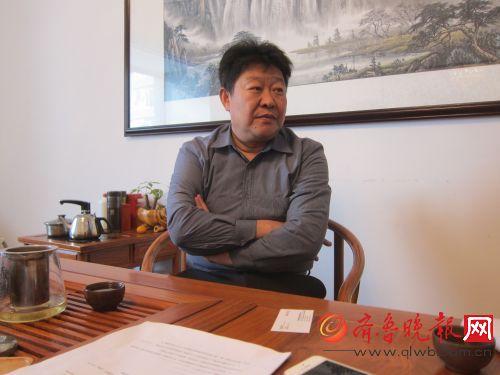
When he is alone, Zhang Xunzhao often thinks about what the Internet can actually bring to his pig farming business.
He has raised black pigs for 10 years and is one of the earliest practitioners in China's black pig industry. After ten years of hard work, the black pigs he raises are renowned at home and abroad. Now, together with peers, he has proposed and established the Agriculture and Animal Husbandry E-commerce Branch of the Shandong E-commerce Promotion Association, transforming from a traditional businessman who raises pigs and sells meat into an expert of the Internet age. He is Zhang Xunzhao, chairman of Shandong Tuhe Black Pig Food Co., Ltd., affectionately known as the "pig herder."
The one who eats the crab first must not fear failure
In Zhang Xunzhao's chairman's office, there is a cabinet displaying the various honors Tuhe Black Pig has won over the years: organic food certification from the Ministry of Agriculture, a national-level healthy breeding demonstration base, the "Golden Pig Award"... Now, under Zhang Xunzhao's leadership, Tuhe Black Pig has even stepped onto the international stage, reaching the dining tables of ordinary people in the Republic of Benin in Africa.
Despite such a wonderful situation, Zhang Xunzhao is not smugly complacent; instead, he is quietly calling for a "revolution" within the company. When the chairman wants a revolution, naturally it means revolutionizing his own company. The reason is that the Internet age has deeply stimulated Zhang Xunzhao's nerves.
"Traditional industries that don't transform will die. Traditional industries that adopt the O2O marketing model will survive. If you want to survive, you must transform! In today's China, this is a must! Even transforming slowly won't do."
These are Zhang Xunzhao's own words. In his view, in the transformation of the Internet age, a company that transforms quickly and seizes the initiative faces both opportunities and challenges. He told reporters: "To be the first to eat the crab, you must not fear failure."
Due to work reasons, Zhang Xunzhao has frequently visited Beijing recently. Standing on the streets of Beijing, looking at the ceaseless flow of cars and pedestrians, and then at the many street shops with few customers, Zhang Xunzhao felt deeply: "The Internet has impacted traditional channels such as supermarkets and specialty stores, which will cause these industries to decline. In the future, even the storefronts along the road may be deserted."
If no way is found to guide the transformation of traditional industries, the storefront shops in cities may become quite desolate, which will also impact the economy. Without transformation it won't work. The owners of these storefront shops also paid high prices to buy their storefronts and rely on renting them out to live. In the future, they may suffer losses.
Looking at the Internet from the perspective of a traditional industry practitioner, Zhang Xunzhao describes the Internet as a giant wheel: "If you don't transform and get stuck in it to move forward together, you can only be crushed under this wheel."
In order to adapt to the development of the Internet age, Zhang Xunzhao introduced the O2O marketing model at sales terminal stores and began trying to revolutionize the old appearance and old paths of traditional industries.
Now, each of Zhang Xunzhao's sales terminal stores has established a store company. There are 17 in Jinan, 10 in Beijing, and 4 in Shanghai, all converted to branch company operations. Zhang Xunzhao said: "If you still have the mindset of a store manager, then you won't be able to make a living. Running a business by just sitting in the store no longer works."
In each store company, the store manager leads sales staff who use mobile phones to join various community groups and friend circles, and send WeChat messages to communicate. Sales staff's business cards have also become experience cards, which contain cash and allow customers to place orders online to buy meat, with sales staff quickly delivering to consumers' homes.
"This is the O2O Internet model," Zhang Xunzhao said. "The core is online ordering, offline experience, and delivery, giving consumers a better experience."
Whoever doesn't understand mobile phones will be doomed
Although he is already over 50 years old, Zhang Xunzhao still browses his friend circle every night when he has nothing to do, to see what happened that day.
"People aged 30 and under buy things online; people aged 30 to 40 also mainly buy online; slowly, over the next ten years, these people will all be the main force of consumption, accustomed to online shopping. Even for meals now, they use online ordering, which is convenient and saves money," Zhang Xunzhao said.
Through his observations, Zhang Xunzhao realized that the main force of consumption in the future will no longer obtain information from traditional information channels, and future sales must be combined with mobile phones. "Whoever combines them well will operate well. This is definitely the trend, unless something new emerges to replace it. Whoever doesn't pay attention to mobile phones will fail."
In fact, as early as 2013, Zhang Xunzhao began trying "micro-marketing."
At that time, Zhang Xunzhao assigned staff to go out specifically to learn micro-marketing. However, after they came back from learning, WeChat operations still could not be done well. Zhang Xunzhao was also troubled: "Why can't we do it well? I am determined to make it work!"
So Zhang Xunzhao required all employees to provide 4 WeChat articles each month. After all employees provided WeChat materials, the WeChat chief editing office was responsible for editing the WeChat content.
After two or three months of trying, Zhang Xunzhao's WeChat platform would produce a high-quality WeChat article every day. Sometimes, two articles a day would explode in friend circles like heavy bombs. "This is a very good form of promotion," Zhang Xunzhao said.
In Beijing, Zhang Xunzhao met a fruit-selling company whose fruit was all sold through friend circles. This once again stimulated Zhang Xunzhao's nerves: "Our community stores can also try WeChat friend circle marketing!"
So how can consumers be attracted to pay attention to community stores in friend circles? Zhang Xunzhao gave an example from personal experience: when donating Tuhe black pigs in Benin, Africa, they held a black pig wedding ceremony, which was forwarded very widely online and had a very good communication effect.
From this, Zhang Xunzhao is also exploring whether setting up a pet pig pen at the entrance of community stores, dressing the piglets in fancy clothes, and letting people in the community compete to take photos and spread them in friend circles could produce a very good promotional effect for the community store's WeChat.
"We also have movie promotion. In a few more days, the movie 'I Am Crazy for Pigs' will be released," Zhang Xunzhao said. Combining these promotional methods, what they currently want to do is transform the past model that mainly relied on offline promotion into simultaneous online and offline promotion, and in the future gradually make online the main channel.
Dig deep into details; the industry needs heavy vertical integration
Regarding Tuhe Black Pig's transformation from a traditional industry to the Internet, Zhang Xunzhao believes they have transformed relatively quickly. In previous years, many companies engaged in black pigs, hairy crabs, sea cucumbers, abalone, and other businesses were greatly impacted by the Internet.
Analyzing why they were impacted, Zhang Xunzhao said these industries mostly focused on gift sales, and combined with traditional sales models, being impacted by the Internet was inevitable. However, they had always focused on corporate consumption and household consumption, so they were less impacted, and they even seized the industry opportunity and achieved rapid development.
In 2014, Tuhe Black Pig developed franchises in dozens of cities outside Shandong Province. By the end of March 2016, 100 more stores will be added in cities such as Beijing, Shanghai, Hangzhou, and Dalian.
Facing an industry development opportunity, what Zhang Xunzhao and his team need to do is "seize the opportunity."