Guangdong selected this year for agricultural e-commerce pilot
Original title: Guangdong selected for agricultural e-commerce pilot
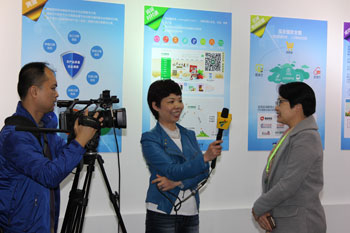
The first Guangdong Rural E-commerce Expo opened in Pazhou, Guangzhou from December 24 to 26, 2015 (file photo)
Guangzhou Daily reporters learned today that the General Office of the Ministry of Agriculture recently issued the "Agricultural E-commerce Pilot Program." The Ministry of Agriculture will carry out agricultural e-commerce pilots in 2016 in 10 provinces (autonomous regions and municipalities directly under the Central Government), namely Beijing, Hebei, Jilin, Heilongjiang, Jiangsu, Hunan, Guangdong, Hainan, Chongqing and Ningxia.
However, according to the pilot program, the pilot contents differ from place to place. Among them, Guangdong, Beijing, Hebei, Jilin, Hunan, Chongqing and Ningxia, 7 provinces (autonomous regions and municipalities directly under the Central Government), focus their pilots on e-commerce for fresh agricultural products. In Jilin, Heilongjiang, Jiangsu and Hunan, 4 provinces, the focus is on e-commerce for agricultural production materials. At the same time, Beijing and Hainan will also carry out pilots in e-commerce for leisure agriculture.
The Ministry of Agriculture stated that through the pilots, it will gradually explore development paths for different categories of agricultural e-commerce, such as agricultural products, agricultural production materials and leisure agriculture, and initially form a standards system for agricultural product e-commerce, a full-process cold-chain logistics and distribution system, a quality and safety traceability and supervision system for agricultural products and agricultural materials, and a quality supervision system for leisure and sightseeing agricultural tourism products, so as to provide replicable and promotable practices and experience for advancing the rapid and healthy development of agricultural e-commerce.
A comparison by reporters found that agricultural e-commerce has become an important part of national support. In 2015, the State Council and other departments specifically issued documents, such as the "Opinions of the State Council on Vigorously Developing E-commerce and Accelerating the Cultivation of New Economic Momentum," the "Guiding Opinions of the General Office of the State Council on Promoting the Accelerated Development of Rural E-commerce," and the "Notice of the Ministry of Agriculture, the National Development and Reform Commission and the Ministry of Commerce on Issuing the Action Plan for Promoting the Development of Agricultural E-commerce."
Some analyses believe that as an important part of agricultural modernization, agricultural e-commerce faces broad room for development. Among A-share listed companies, agricultural product companies such as Nongfa Chan, Xindu Chemical, Suning Commerce, Stanley and Batian Shares all have related businesses involving agricultural e-commerce. (Guangzhou Daily reporter Zhang Zhong'an)
Related links>>
10 provinces and municipalities pilot to explore rural e-commerce development paths
Economic Information Daily reporters learned from the Ministry of Agriculture on the 19th that the General Office of the Ministry of Agriculture issued the "Agricultural E-commerce Pilot Program." The Ministry of Agriculture will carry out agricultural e-commerce pilots in 2016 in 10 provinces (autonomous regions and municipalities directly under the Central Government), namely Beijing, Hebei, Jilin, Heilongjiang, Jiangsu, Hunan, Guangdong, Hainan, Chongqing and Ningxia.
According to the program, Beijing, Hebei, Jilin, Hunan, Guangdong, Chongqing and Ningxia, 7 provinces (autonomous regions and municipalities directly under the Central Government), focus their pilots on e-commerce for fresh agricultural products; Jilin, Heilongjiang, Jiangsu and Hunan, 4 provinces, focus on e-commerce for agricultural production materials; and Beijing and Hainan carry out pilots in e-commerce for leisure agriculture. Through the pilots, the program will gradually explore development paths for different categories of agricultural e-commerce, such as agricultural products, agricultural production materials and leisure agriculture, and initially form a series of operating models and institutional norms, including a standards system for agricultural product e-commerce, a full-process cold-chain logistics and distribution system, a quality and safety traceability and supervision system for agricultural products and agricultural materials, a quality supervision system for leisure and sightseeing agricultural tourism products, a "base + urban community" direct distribution model for fresh agricultural products, and an online sales model for agricultural materials. Positive progress will be made in promoting entrepreneurship and innovation, developing the sharing economy, increasing farmers' incomes, driving poverty alleviation in poor areas, and achieving win-win outcomes for multiple parties, so as to provide replicable and promotable practices and experience for advancing the rapid and healthy development of agricultural e-commerce.
The program shows that China's agricultural e-commerce development is still in its initial stage, and problems in logistics and distribution, product standards, quality management, the integrity system and profit models remain bottlenecks and obstacles restricting the development of agricultural e-commerce. Regarding the challenges facing the development of agricultural e-commerce, Wang Xiaobing, deputy director of the Market and Economic Information Department of the Ministry of Agriculture, said: "At this stage, the most important issue is still that farmers do not understand it and do not know how to use it, and at the same time most e-commerce companies are unfamiliar with agriculture. This is the biggest problem for agricultural e-commerce." He also said that problems such as low efficiency in the circulation of agricultural products, a low degree of standardization and the fact that a standards system has not yet been established all require the joint efforts of the government and enterprises. (Source: Economic Information Daily, reporter Lin Yuan / Beijing report)