Ejiao annual output of 5,000 tons, donkey hide supply can only meet 60%
Original title: With only this much donkey hide, how can 5,000 tons of ejiao be produced each year?
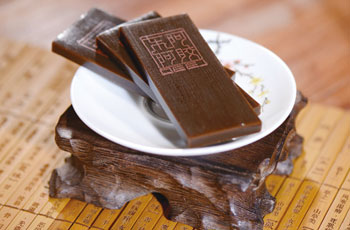
This is ejiao medicine produced by an ejiao company in Dong'e County, Shandong (photographed on December 28, 2015). Photo by Xinhua News Agency reporter Zhou Ke
The chill is intense, and it is also the season for winter tonic supplementation. As a traditional blood-enriching tonic, ejiao, made by simmering donkey hide, is deeply popular despite being "precious." But have you ever worried: after paying a considerable sum, what you bought is actually inferior, fake ejiao made from cowhide, pigskin, horsehide, or even industrial leather and other raw materials? Industry insiders point out that, calculated on the supply of raw donkey hide, annual ejiao output should be only about 60% of actual sales. This means that nearly 40% of counterfeit raw materials may have entered the production chain, transformed into all kinds of "ejiao" products and brazenly sold on the market.
Raw Materials VS Output
This is a set of figures that is thought-provoking but does not withstand scrutiny: the Shandong Ejiao Industry Association, based on annual production reports from more than 100 ejiao manufacturers, estimates that total annual ejiao output is at least more than 5,000 tons.
Market monitoring data from Dong'e Ejiao Co., Ltd., a leading enterprise in the ejiao industry, shows that based on current ejiao sales in the Chinese market, about 4 million donkey hides are needed, while the total domestic supply is less than 1.8 million hides.
According to the National Animal Husbandry Statistical Yearbook, China's donkey population has fallen from 11 million head in the 1990s to the current 6 million head, and is still declining by about 300,000 head each year. Dong Shuguang, a professional in the ejiao industry, explained that based on a normal annual slaughter of 1.2 million head, plus imported donkey hides, the total amount of ejiao that can be produced in a year is only just over 3,000 tons. The donkey hides available for glue-making in a full year are only enough to achieve about 60% of current output.
Bu Xun, director of the Sequencing Center of the Biotechnology Research Center of the Shandong Academy of Agricultural Sciences, said that because donkeys are difficult to breed, have a long cycle, show slow results, have low returns, and are difficult to raise on a large scale, China's donkey population has continued to decline. The contradiction between supply and demand has caused donkey hide prices to rise sharply year after year, with raw donkey hide prices increasing at a rate of 23% annually. "One donkey hide costs between 2,000 yuan and 3,000 yuan, while one horse or mule hide costs only 200 yuan, and pigskin and some scraps left over from making leather shoes and bags are even cheaper."
During interviews, multiple industry insiders told reporters that driven by huge profits, some manufacturers have repeatedly adulterated ejiao raw materials. Because the price is relatively low, these inferior ejiao products are sold through OEM labeling or loose sales to remote county- and township-level supermarkets or pharmacies, or sold online under the guise of low prices.
Dong Shuguang said that currently the main medicinal and edible ejiao products on the market include ejiao blocks, ejiao oral liquid, ejiao cake, ejiao dates, and so on. These products are a mixed bag, and some ejiao cakes do not contain ejiao ingredients at all.
"A crisis of trust" has become a major problem
"The more these ejiao products are boiled, the more foul they smell. Can they be eaten?" A Ms. Chen reported that the ejiao she bought back from a pharmacy in her local township gave off a frightening smell and color when simmered, and though she bought it, she did not dare eat it.
Ejiao is a precious traditional Chinese medicine and a traditional famous product unique to Shandong, with more than 90% of the country's ejiao produced in Shandong. Yan Shi, standing committee member of the Famous Physicians' Academic Thought Branch of the China Association of Chinese Medicine and a traditional Chinese medicine physician, said that the pharmacopoeia clearly stipulates that ejiao can only be made by simmering donkey hide, and it has the effects of enriching blood, nourishing yin, and moistening dryness. Glues made from the hides of other animals have different effects. Among them, glue made from cowhide is called yellow bright glue, whose function is similar to ejiao but less effective, while "ejiao" made from horsehide has exactly the opposite effect; horsehide medicine acts to move blood downward, and "once a pregnant woman consumes it, it is highly likely to cause miscarriage."
"The raw hides of donkey-mules and horse-mules are difficult to distinguish from donkey hide by the senses and are easily used for adulteration," Bu Xun said. Mule hide, because it contains horse genes, also cannot be used to make ejiao. It is understood that currently ejiao products on the market are of chaotic variety, with prices ranging from 400 yuan to 4,000 yuan per kilogram, a huge price difference.
According to statistics from the Shandong Ejiao Industry Association, before 2010 each donkey hide cost less than 500 yuan; by 2014 it had exceeded 1,500 yuan; and in 2015 the average purchase price was more than 2,600 yuan per hide. Each donkey hide is expected to produce 1.5 to 2.5 kg of ejiao, and the cost of the donkey hide alone reaches an average of more than 1,200 yuan per kilogram.
"Ejiao on the market that is below cost price is definitely not authentic ejiao made from pure donkey hide," an industry insider said.
Meng Zhaohong, quality director of Dong'e Guojiao Tang, said that the entire ejiao industry is currently full of chaos. How to resolve the risk of trust in product quality and ensure the long-term healthy development of the industry is an important issue facing ejiao companies.
It is not just a matter of "self-discipline"
Industry insiders point out that the current ejiao industry faces two "identification difficulties." First, raw material identification is difficult: hides are mixed with those of mules, horses, cattle, industrial leather, and scraps from slaughterhouses, and traditional identification methods are being challenged. Second, product identification is difficult: adulterated ejiao products are numerous, and pharmacopoeia methods lag behind and cannot keep up with counterfeiting techniques.
Bu Xun said that in recent years the main target of national testing for adulteration in ejiao products has been cowhide, that is, bovine-derived ingredients, while there are no mandatory requirements for ingredients such as horsehide, mule hide, and pigskin. This has left room for some lawless traders to use various means to confuse donkey hide with others.
According to people in the ejiao production industry, currently relying only on the traditional testing method of complete "head, ears, tail, and hooves" on a whole donkey hide can no longer fully meet the needs of manufacturers. The key is to control the authenticity of raw donkey hide at the source.
Bu Xun said that food and drug safety is a major matter for people's livelihood. How to achieve results in quality depends first on national supervision, second on industry self-discipline, and third on the promotion of technological progress.
Qin Yufeng, a representative inheritor of the national intangible cultural heritage ejiao production technique, said that regarding fraud in the ejiao industry, regulatory authorities should strengthen online and offline crackdowns and penalties so that counterfeiters pay a heavy price.
Qin Yufeng suggested that the state increase support for the donkey-raising industry, give subsidies and support equal to those for raising cattle and sheep, and make donkey raising a measure for targeted poverty alleviation, so as to ease the contradiction in the supply of ejiao raw materials. (Reporter Zhou Ke)