Still planning to plant corn in 2016? These three things you must know
1. You need to keep your eyes open when choosing seeds! Do not buy these 30 seed varieties!
According to the relevant documents and notices of the Ministry of Agriculture, the sale of genetically modified seeds in the domestic seed market is strictly prohibited, otherwise all consequences arising from it must be borne. These include the corn varieties recently sold in the seed market: Shibin 338, Jinqing 707, Jinqing 709, Jinqing 129, Jinqing 168, Hongchen 788, Pengcheng 8, Pengcheng 5, Fu'er 216, Fu'er Yuwu 116, Qiaojing 607, Tayu 1, Dika 1, Dika 3, Yuanfa 815, Jiahe 558, Jinyu 29, Zhongnongda 236, Zhongnongda No. 4, Denghai 3686, Yuanyu 66, Fuxing 2000, Yinhe 14, Juhe 20, Heyu 187, Yamei 72, Qianfeng 252, Yuanke 701, Liaodan 570, and all product names under which Jinqing 707 is repackaged under changed names.
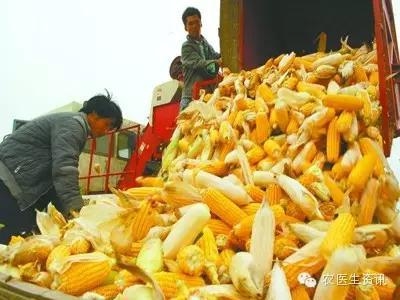
The above varieties have been confirmed by the Ministry of Agriculture as genetically modified seeds and should immediately withdraw from the seed circulation sector. Otherwise, the grain produced after planting will cause extremely serious and unforeseeable consequences. After the autumn harvest, the state reserve grain will also refuse to purchase them; the parties engaged in sales will also be severely punished by law, and farmers who plant these varieties will also suffer economic losses. Farmers should purchase seeds cautiously and resolutely refrain from planting genetically modified varieties, so as to avoid serious consequences.
It is reported that among the 30 genetically modified corn varieties announced this time, some are familiar names, such as Denghai 3686 from Denghai Seed Industry. Although ordered to be withdrawn from the market, quite a few breeding companies are still secretly propagating them. The industry has been calling for management to start from the source.
2. Will corn prices rise this year or not?
Policy——targeted sales, temporary reserve purchase, separation of price and subsidy
Temporary reserve purchase: This temporary reserve purchase was announced in advance and implemented in advance. Although the floor price was lowered, the purchase volume was still astonishing. The latest data show that as of February 10, the cumulative temporary reserve intake of corn in Northeast China exceeded 82.6 million tons, compared with 54.99 million tons in the same period last year. As temporary reserve purchases continue, the grassroots grain supply in Northeast China continues to decrease, which will support corn prices in stages.
Targeted sales: Since last year, rumors that the state would conduct targeted sales of state reserve grain have been circulating in the market. Recently the decision was finally made, and a document on targeted corn sales was leaked, but only the preliminary list of targeted sales processing enterprises was announced; neither the sales price nor the quantity was given. Targeted sales are mainly intended to curb sudden market movements caused by tight grassroots grain supply after temporary reserve purchases.
Separation of price and subsidy: Before the Spring Festival, the "Central Document No. 1" arrived as expected, and the term "separation of price and subsidy" was written into the document for the first time. That is to say, after the floor price for temporary reserve market support was lowered for the first time in 2015, the temporary reserve policy will continue to change this year. However, taking farmers' interests into account, it is expected that the temporary reserve purchase system will still exist, but the price will continue to be lowered. At the same time, when the market price is higher than the target price, low-income people will be subsidized; when the market price is lower than the target price, producers will be subsidized according to the price difference. At present, the import cost is around 1500, so the temporary reserve purchase price should not be lower than 1500 yuan/ton.
Market——supply and demand
Supply is abundant! Last year's total corn output was 225 million tons; the temporary reserve intake in the previous year was 89.29 million tons; judging from the auctions in the past two years, 21.37 million tons of the 30.83 million tons of temporary reserve corn from 2012 have been sold, and 9.15 million tons of the 69.19 million tons of temporary reserve corn from 2013 have been sold. Last year, less than 5 million tons were sold at temporary reserve auctions. Add to that the 8.26 million tons of corn already purchased for reserve this year…… Roughly calculated, the corn inventory in state reserve warehouses has long exceeded 200 million tons. This means that even if the whole country did not plant corn for a year, supply could still be met.
Demand is sluggish! It is often said that corn follows a policy-driven market. Since last year, the influence of marketization has become increasingly serious, and poor demand has been the first to weigh on corn. First, feed demand should be mentioned, starting with the most widely used pig feed. The continued elimination of hog production capacity has led to a reduction in the number of animals on hand, greatly reducing corn consumption for feed. Meanwhile, the operating rate of deep-processing enterprises has remained below 50% all year round, and industrial corn consumption has remained sluggish. From the latest data, sow inventories remain persistently low. Although pig prices have risen and restocking of piglets and sows has appeared in the market, the recovery growth in feed consumption will be reflected in the second half of the year.
3. National plan: corn planting area will be reduced by 10 million mu this year!
At the National Planting Structure Adjustment Work Conference on December 26, Vice Minister of Agriculture Yu Xinrong said that in 2016, a reduction of 10 million mu in corn planting area will be achieved, while pilot projects for a farmland rotation and fallow system will be explored.
In 2016, the focus will be on reducing the corn planting area in "sickle bend" regions such as the cold and cool areas of Northeast China, the farming-pastoral ecotone of North China, the windy, sandy and arid areas of Northwest China, and the rocky desertification areas of Southwest China. By 2020, the reduction will reach 50 million mu, of which 10 million mu will be reduced in 2016 if possible. The farmland taken out of corn production will be used, according to market demand and the needs of agricultural and pastoral development, to develop crops such as silage corn, forage grass, and miscellaneous grains and beans in line with local conditions.
What benefits and business opportunities will corn growers gain?
Although the corn planting area will be reduced in 2016, the state will still support large-scale contiguous growers, especially moderate-scale operating entities such as major grain-growing households, family farms, and specialized cooperatives. They are generally better qualified, more sensitive to the market, and more receptive to scientific and technological innovation, and can better play a leading role in structural reform of agriculture. Major grain-growing households are an unchanging priority for key state support. In 2016, the development of grain and other advantageous and characteristic leading industries will be accelerated, leading industries will be made bigger and stronger, and farmers' incomes will be increased.