If corn is no longer allowed to be planted, what crops can be grown instead?
The state has issued a policy planning to reduce the corn planting area by 50 million mu (3.33 million hectares) within 5 years, striving to reduce it by 10 million mu (670,000 hectares) in 2016. Looking at the total quantity, it is not that much; according to data from the Ministry of Agriculture, the total corn planting area in 2015 was 36.9 million hectares.
Corn is now facing numerous problems: large stockpiles, serious price inversion, heavy fiscal pressure, and losses for deep-processing enterprises. Reform and transformation are urgently needed, so the state wants to reduce the supply by reducing corn planting to ease the immediate crisis.
But the question we farmers care about is: if I'm not allowed to grow corn, what should I grow?
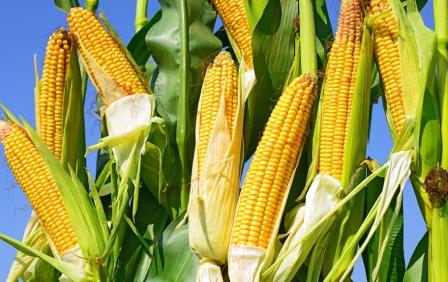
Wu Jun, a farmer in Jilin Province, has his own view: "The land still has to be planted! If farmers don't plant, what will they do? In 2016 I still plan to grow corn; at least someone will buy it. If you plant it well, and one shang of land yields 30,000 jin, you can still make a little money." He thinks that at worst, it can still provide some firewood. "In winter we rely on burning straw for heating. If we don't grow corn, don't we still have to spend money to buy firewood?"
Wu Jun did the math: switching to soybeans, one shang of land generally yields about 5,000 jin, and the market price is around 2 yuan per jin. "Soybeans aren't worth much, and the yield is low. If it's contracted land, you'll definitely lose money."
What about growing some miscellaneous grains and other cash crops? He has also thought about it: "With technical guidance, I could grow them too, but the key is being able to sell them. Only then would I dare to plant."
You must feel the same way. It's not that we don't want to cooperate with national policy; in the end, it still depends on whether other crops can be more profitable than corn and can also be sold. Only then would we dare to stop growing corn.
I think reducing the corn area is not something that can be achieved just by issuing a call or assigning targets; corresponding supporting policies must be in place to drive it forward.
This reduction of the corn planting area is mainly in the cold northern regions, increasing the planting area of feed corn, soybeans and miscellaneous grains.
But northern China is a region with advantages for growing corn. Even if dry corn drops to 8 mao per jin, if more effort is put into high-yield techniques, there can still be profit. At the same time, it is also hard to find any crop that can replace corn on a large scale.
Growing soybeans, as Wu Jun said above, isn't worth much and has low yields. If it's contracted land, you will lose money.
Growing feed corn is difficult to promote quickly, and at the same time it would reduce the consumption of ordinary corn, slowing down the pace of reducing corn stockpiles.
The market for miscellaneous grains is basically saturated now. If too much is grown, there is simply nowhere to find a market, and selling the grain is also difficult.
To reduce the corn planting area and grow other crops, the problem of how farmers connect with the market must be solved.
Whether this year's corn is good or bad, at least someone will buy it. This is a kind of guarantee, while other crops basically have to rely on the market to absorb them. Whether they can be sold is uncertain, and there is no sense of security. Who would dare to grow them?
To get farmers to reduce the corn planting area, the key still lies in profitability, and in how to let us farmers see what the market truly needs.
The policy documents repeatedly mention marketization, but right now, for farmers to enter the market, guidance from government functional departments is still needed. China still has a long way to go in providing agricultural information guidance, and has basically done little to guide farmers.
Farmers arrange planting based only on their own experience, which often leads to frequent difficulty in selling, because farmers do not understand what the market truly needs and are not capable of analyzing market demand. If all farmers had this kind of insight, every farmer would become an entrepreneur, and the state would not need to worry.
Functional departments need to let farmers know what the market lacks, arrange planting, and also carry out regulation: what varieties to plant where, and how much area to plant, to avoid everyone rushing into the same crop, which leads to what could have been profitable becoming unprofitable in the end because of oversupply.
This is also a way to prevent farmers from becoming overly dependent on agricultural subsidies.
Reducing the corn planting area is not something you can reduce just because you want to.