Passing on Melon Cultivation Techniques to Give Back to the People of Hainan
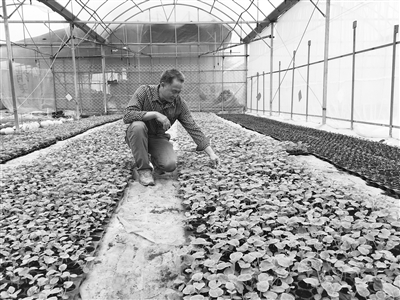
Tian Shupei, male, 70 years old, a native of Yuanping City, Shanxi Province, former director of the Gansu Hexi Vegetable and Melon Research Institute, former chief melon breeder at Syngenta Seeds (Beijing) Co., Ltd., has won the Gansu Provincial Science and Technology Progress Award, was named a model worker, and is an outstanding private entrepreneur of China. He currently serves as chairman and researcher of Hainan Jintian Seed Industry Co., Ltd. He works in Sanya from October to May of the following year each year.
More than 40 years ago, on his first visit to Hainan, he wanted to put down roots in this warm land
Tian Shupei, now 70 years old, is a native of Yuanping City, Shanxi Province. He graduated from **Bayi Agricultural College in 1969 and was then assigned to the **Hami Regional Agricultural Science Research Institute to engage in scientific research. "At that time, I was mainly engaged in wheat breeding. In 1971, I and my research group set foot on this warm land of Hainan for the first time," Tian Shupei said. As a natural greenhouse for crops, Hainan has uniquely favorable conditions, which also held great appeal for him as someone working in agronomy.
"Normally speaking, crops in the north have only one generation (season) a year, while breeding a new variety requires ten generations, that is, 10 years. And because crop varieties are updated and replaced relatively quickly, breeding time became a major problem. In Hainan, however, crops can complete three generations a year, so basically a new variety can be bred in 3 years, greatly saving breeding time," Tian Shupei said. For the agronomy profession, Hainan is undoubtedly a treasured place, which also gave him the idea of putting down roots in Hainan.
After that, from October to May of the following year each year, Tian Shupei would engage in breeding work in Hainan, making him a genuine "migratory bird elder." He has successively carried out breeding work in places including Yacheng, Meishan, Tengqiao, Lingshui, and Baoting in Sanya up to now. "At first I was engaged in wheat breeding. In 1980, under the guidance of Professor Lin Depei of **Bayi Agricultural College, I began to work on watermelon and melon breeding and production promotion," Tian Shupei said. In 1986, the melon variety "Xinmicui" that he bred became the country's first hybrid F1 melon variety.
The melon varieties he bred were promoted in places including Ledong and Changjiang
Tian Shupei said that in 1994, the melon varieties "Yujinxiang" and "Jinguan" that he bred became among the first batch of melon varieties to pass national appraisal and were widely promoted and planted in Gansu, Henan, Shaanxi, Yunnan, Ningxia, and other places. "I engage in breeding work in Sanya every year, but unfortunately the varieties I bred were not promoted in Hainan at that time," Tian Shupei said. In 2001, he bought a property in Sanya, and his family began to truly put down roots in Hainan.
"Sanya is a blessed place for me, so I chose to put down roots here," Tian Shupei said. In 2007, he sold his research institute to a company and became the company's chief melon breeder. "In 2013, in order to develop better, I left that company, hoping to establish my own company in Hainan, truly serve Hainan, and make some contributions to Hainan," Tian Shupei said. In 2015, he and several friends established Hainan Jintian Seed Industry Co., Ltd., choosing Sanya as its location.
"Local melon farmers are very interested in the 'Jinguan' melon variety I bred, and there has been a lot of praise," Tian Shupei said. The varieties he bred have excellent quality, relatively strong disease resistance and adaptability, can achieve stable melon production and ensure the excellent quality of melons, effectively helping growers avoid many risks, and have been widely promoted. "At present, a total of 10,000 mu of farmland in Ledong, Changjiang, Sanya, and other places is planted with 'Jinguan,' and the planting area will gradually expand in the future."
Breed more melon varieties and contribute more to Hainan
Tian Shupei said that his company has a total of 60 mu of land, and currently displays more than 10 melon varieties, among which "Hongguan," "Niumeilong," "Jintian No. 1," and "Hongmeilong" are the varieties currently promoted more widely.
"The 'Jinguan' variety was rated first place at the 2015 Asia Expo and became the most popular melon variety," Tian Shupei said. Most of his company's employees are Hainan locals. Usually, he also teaches the employees breeding techniques, and after some employees learn them, they also plant some melon varieties in their own fields.
"As a 'migratory bird elder,' I am already 70 years old this year. I hope my techniques will not be buried, and I hope to pass them on to the local people, so that they can master the techniques and ultimately benefit from them," Tian Shupei said. He hopes to use technology to give back to Hainan and to the people, and in engaging in the breeding industry, one must neither be detached from the market nor lack unique insights; one must both cater to the market and lead the market.
"I hope to breed more melon varieties that adapt to Hainan's climate, adapt to Hainan's market demand, and bring certain economic benefits to Hainan, and use more varieties to give back to Hainan. This can also be regarded as a kind of repayment to Hainan," Tian Shupei said. Over the years, he has developed deep feelings for Hainan, and he hopes to make more contributions to Hainan and do his modest part for the development of Hainan as an international tourism island.
Tian Shupei said that Hainan has many "migratory bird" talents, and government departments should make full use of the talent resources of the "migratory bird community" to contribute to the development of Hainan as an international tourism island. "These 'migratory bird' talents have experience and resources accumulated over many years. Since they have chosen to put down roots in Hainan, they should also make corresponding contributions to Hainan's development."