To shore up weak links in modern agriculture, scientific and technological innovation is a hurdle that must be overcome
Original title: Shoring up weak links in modern agriculture requires science and technology to lead the way
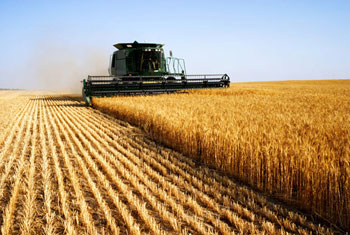
Modern agriculture has weak links (illustrative image from the internet)
Compared with the rapid development of urbanization, industrialization and informatization, China's level of agricultural modernization lags relatively behind, seriously affecting the synchronous development of the four modernizations. For three consecutive years, the No. 1 Central Document has included "agricultural modernization" in its title, and the government work report just released even positions accelerating the development of modern agriculture and promoting sustained growth in farmers' incomes as one of the eight areas of work to be done well this year, and proposes four subdivided tasks: accelerating agricultural structural adjustment, strengthening the foundational support for agriculture, improving rural public services, and implementing the poverty alleviation project. It can be seen that developing modern agriculture has become the primary breakthrough for solving the "three rural issues" at present, and is also a key task of "shoring up weak links" in the "three cuts, one reduction and one strengthening" proposed by the central government.
Minister of Agriculture Han Changfu said on the 7th that agricultural modernization must achieve obvious progress; this is a target requirement put forward by the Fifth Plenary Session of the 18th Central Committee. In terms of the strategy for advancing it, efforts must be made to achieve three transformations and upgrades. In the agricultural operation system, new types of operating entities must be cultivated, and various forms of appropriately scaled operations must play a leading role in modern agriculture; in the agricultural production system, the promotion of agricultural scientific and technological innovation must be accelerated, the supporting role of materials, technology and equipment must be brought into play, and the transformation of the driving forces of agricultural growth must be fully realized; in the agricultural industry system, the industrial chain must be extended and the value chain elevated, giving play to the multiplier effect of the integration of the primary, secondary and tertiary industries. In terms of work layout, places with conditions should take the lead in realizing agricultural modernization; coastal developed areas, suburbs of large cities, national reclamation areas, and the modern agriculture demonstration zones designated by the state should basically realize agricultural modernization by the end of the "13th Five-Year Plan".
Regarding the development of modern agriculture, Xia Qingyou, a member of the National Committee of the Chinese People's Political Consultative Conference and a professor at Southwest University, said in an interview with an Economic Information Daily reporter that whether a country is strong or not still depends on its countryside; as far as agriculture is concerned, China has made a great many achievements in recent years, but there is still great room for improvement in modern agriculture, for example, in the production process it is necessary to develop agriculture that is scaled, technologically rich and relatively highly mechanized.
Liu Yonghao, a deputy to the National People's Congress and chairman of New Hope Group, said: "The draft outline of the 13th Five-Year Plan proposes vigorously advancing agricultural modernization, and to improve agricultural competitiveness and operating efficiency, technological progress is the key factor." In fact, as the primary productive force of modern agriculture, agricultural science and technology has the most notable role in promoting agricultural production. Many representatives and committee members at the two sessions believe that to achieve sustained and stable agricultural development in China, it is necessary to strengthen agricultural scientific and technological innovation, change extensive agricultural operation methods, and focus on improving the capacity for sustainable agricultural development.
The proposal of the Central Committee of the Revolutionary Committee of the Chinese Kuomintang holds that there are still some problems in the development of China's agricultural scientific and technological innovation: first, there is still a relatively large gap with the world's advanced level in major basic agricultural theories, frontier core technologies, and the application and promotion of high agricultural technology. Second, agricultural scientific research resources lack effective integration. Third, the dominant position of enterprises in agricultural scientific and technological innovation has not yet taken shape.
For this reason, they put forward four suggestions: first, accelerate the construction of modern agricultural industry scientific and technological innovation centers. It is suggested that cities such as Beijing, Shanghai, Shenzhen and Wuhan be selected to create agriculture-related high-tech innovation bases, focus on cultivating a group of high-tech agricultural enterprises, strengthen research on major basic agricultural theories, and accelerate research and development of frontier core agricultural technologies. Second, strengthen the dominant position of enterprises, including private enterprises, in agricultural scientific and technological innovation. Third, improve the management system for agricultural scientific research funding. At the present stage, under the background of deepening the reform of the management of central government fiscal science and technology programs, it is necessary to further clarify and strengthen the public-welfare orientation of agricultural scientific research and establish a stable and long-term funding input system for agricultural scientific research. Fourth, accelerate the integration of "Internet + agriculture". Build a new modern agricultural development model of "Internet + high technology + agriculture + finance" and effectively promote the transformation and upgrading of the entire agricultural industry chain.
Duan Huijun, a member of the National Committee of the Chinese People's Political Consultative Conference, believes that to increase agricultural scientific and technological innovation, financial support must be strong. A risk compensation fund for agricultural science and technology should be established, giving play to the guiding and leveraging role of public finance and guiding and driving social capital to participate in agricultural scientific and technological innovation. He suggests accelerating reform of the management measures for agricultural science and technology loans and lowering the loan threshold as soon as possible. Support for direct financing should be increased, and diversified financing channels for agricultural science and technology enterprises should be established. At the same time, efforts should be made to explore expanding the scope of agricultural insurance subsidies and increase fiscal premium subsidies for agricultural insurance; insurance companies should explore including scientific and technological breeding, agricultural machinery, improvement of crop and livestock breeds, and standardized breeding within the scope of agricultural insurance, and encourage the development of insurance varieties such as order-based agricultural insurance based on product orders. (Reporter Lin Yuan/Reported from Beijing)