Asparagus is now in peak season: tips for choosing fresh asparagus
In hot, humid weather, a crisp bite of asparagus comes at just the right time! Because asparagus is rich in fiber, niacin and folic acid and other nutrients the human body needs, it is called the "king of vegetables" and has long been an indispensable ingredient in both Chinese and Western cooking.
However, asparagus tends to turn bitter and woody as its storage period lengthens. How should it be handled to keep the fresh sweetness of direct-from-the-farm delivery, and how should you choose fresh asparagus? The Tainan Agricultural Research and Extension Station provides 4 key tips for identifying fresh asparagus and storage methods, so the public can easily enjoy delicious asparagus.
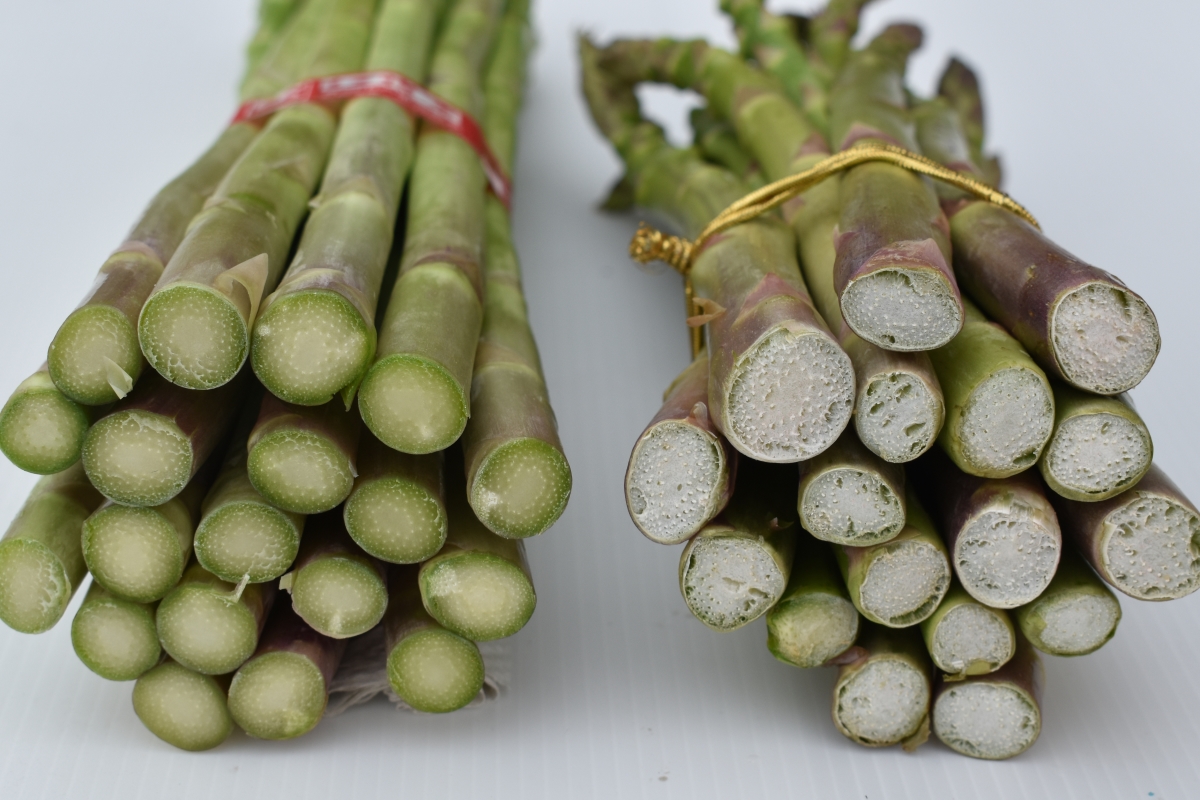
To verify fresh asparagus, there are 4 key points to observe: the cut at the base must stay fresh green, the tip must be plump, the scales on the stalk must be emerald green or bright pink-purple, and the skin on the tender stem must be plump and glossy; if any one of these appears shriveled, brown, or shows obvious gaps between the scales, these are signs that the asparagus has lost water after being stored for many days. Asparagus that has lost too much water will also develop wrinkles near the tip, and will be somewhat soft and droop at the head.
The Tainan Agricultural Research and Extension Station says that because Taiwan, China is in a subtropical environment with relatively high temperatures, freshly harvested asparagus will continue to grow if it is not cooked immediately, and if laid horizontally in the refrigerator it will bend every which way, making it difficult to cook, so if there is enough space in the refrigerator, it can be stored upright. In addition, to keep asparagus fresh, you can wrap the base of the asparagus with a moistened household paper towel, then add plastic wrap or a crisper container to isolate the asparagus from contact with air, and the asparagus can still stay green and crisp within 2 to 3 days.
If the storage environment is not cold enough, or if it is stored for a longer time, the asparagus may age or become fibrous, but there is also a remedy: simply soak the base of the asparagus in water for 5 minutes before cooking, so the asparagus does not break easily, and then you can easily peel off the fibrous parts and old skin. After that, it is a crisp, tender asparagus again!