Introducing Specialty Produce from Abroad: Farm-to-Supermarket Direct Supply Helps Villagers Increase Income and Prosper
In spring, on the vast farmland, tender green seedlings cover the fields. Chen Zhenna, a young man from Donghai, stands at the edge of the field with his hands on his hips, looking at the crops before him with full confidence: "This year will be another good harvest!"
Since 2013, Chen Zhenna, through cooperation with the Jinjiadong Village Economic Cooperative on Donghai Island, has contracted about 44 mu of farmland in the village, introduced specialty produce from Laos, Vietnam, Thailand and other places, adhered to ecological planting, developed specialty agriculture, and carried out farm-to-supermarket direct supply with a supermarket in the city, leading local villagers to prosperity and winning unanimous praise from the villagers.
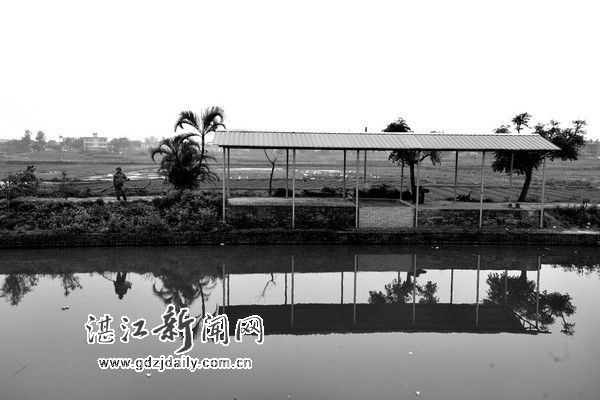
Looking out, the agricultural base is full of vitality.
Returning Home to Rent Land for a "Second" Startup
Chen Zhenna, 36 years old this year, is a villager of Wencan Village on Donghai Island. After graduating from university, he started his own business and founded a technology company in Zhuhai. In recent years, after the company got on track, Chen Zhenna chose a "second" startup, shifting his investment target to the countryside.
In August 2013, after multiple communications with the Jinjiadong Village Economic Cooperative on Donghai Island and with the support of the village cadres and villagers, he leased 44 mu of farmland in the village and found several partners, "planning to introduce a batch of specialty produce." This was Chen Zhenna's initial plan.
After returning home, Chen Zhenna recruited people in the village and eventually found 3 farmers with rich planting experience to serve as technicians, adopting temporary employment and signing labor contracts with more than 10 farmers. He noticed that in hotels in the Pearl River Delta region, okra was particularly popular with customers, while in Zhanjiang the "okra craze" was just beginning to emerge. Chen Zhenna seized this business opportunity, planting 32 mu of okra, and through a friend's introduction, brought in cherry tomatoes from elsewhere for cultivation, planting 8 mu.
In mid-October of the same year, this batch of produce gradually entered the harvest period. The field price of cherry tomatoes was 5 yuan/jin, and the field price of okra was 3 yuan/jin. He had not anticipated that the market responses to the two crops would differ greatly: cherry tomatoes were snapped up by people nearby, while okra was neglected in Zhanjiang, with low sales. "We had to transport the okra to Zhuhai for sale, where the market response was better." Chen Zhenna said that from October to December of that year, okra could be harvested 500 jin per day, with goods continuously supplied to the Pearl River Delta.
Specialty Produce Introduced from Abroad
After earning his first pot of gold from returning home to start a business, Chen Zhenna was full of confidence. He said that as long as the quality of the produce is good, there is no need to worry about finding a market. The following year, his concept of specialty agriculture attracted Kuang Haiqin, a returned overseas Chinese from Laos, to join.
In 2014, led by Kuang Haiqin, Chen Zhenna and several others visited agricultural bases in Laos, Vietnam, Thailand and other places for inspections, introducing seeds of moringa, Duo'an mountain flower, red and white lily, golden silk gourd, pole bean king, Laotian tomatoes, papaya and others, which were gradually put into cultivation on the 44-mu agricultural base through propagation.
Chen Zhenna's team adopted a new cooperation model of three-party connection, in which the base provides land and seeds, farmers plant and manage, and a farm resort company makes unified purchases, attracting many nearby farmers to join. During crop management, the base also regularly provides farmers with technical support. "Previously, this piece of land was used to grow papaya, with low yield and poor returns. This new planting model has increased the benefits of our village's agricultural economy and driven farmers to prosperity." said Jin Shengwen, a village cadre of Jinjiadong Village.
Farm-to-Supermarket Direct Supply Means No Worry About Sales
Recently, the reporter came to Chen Zhenna's agricultural base. On the vast land, bamboo frames had been set up in some areas, with young tomato plants winding upward around the bamboo frames; in another area, green seedlings were sprouting out of the soil here and there. Under the sunlight, it was a scene full of vitality. According to the base's technician, in order to make the crops healthier and more environmentally friendly, the base opened a breeding farm specifically to raise "moringa chickens" (chickens raised with moringa leaves mixed with rice grain), and the chicken manure is fermented for fertilizer. Considering the demand for fertilizer and crops, Chen Zhenna's team cooperated with nearby pig farms to regularly collect biogas water to irrigate the crops.
How can the newly introduced produce open up the Zhanjiang market? Chen Zhenna said that when this batch of crops was harvested, he had taken them to the farmers' market to sell, but no one showed interest. "There was no way around it. Even if you say the product is very good, when you mention the name, the vegetable vendors have never even heard of it." Therefore, when this batch of produce was about to be harvested, he took the finished products to recommend to a supermarket in the urban area of Zhanjiang, attempting to create a path of farm-to-supermarket direct supply. The supermarket's purchasing staff came to the base, learned about the entire crop growing process, and finally reached a cooperation agreement with Chen Zhenna.
This year, Chen Zhenna's team has a new plan. They have leased a piece of farmland covering about 40 mu in Jinjiadong Village, adopting an "Internet Plus" intelligent system for scientific management. This batch of crops will be harvested continuously starting in June this year.