Rural sewage treatment: the real work lies beyond pollution control
Original title: How can rural sewage be made "clear"
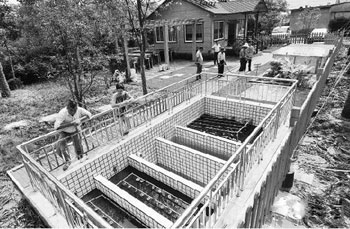
Rural sewage treatment experimental demonstration area in Hezhuang Subdistrict, Xiaoshan District, Hangzhou. Image source: Baidu Images
Sewage treatment has always been a major priority in environmental protection work, and among it, municipal sewage treatment has long been the top priority. But according to a reporter from China Science Daily, from 2006 to 2013, China's urban sewage treatment rate rose from 55.7% to 99.1%, and the municipal sewage treatment field has nearly reached saturation. In sharp contrast, the rural sewage treatment market has always had a huge shortfall.
According to a sewage treatment report by Qianzhan Industry Research Institute, in 2013, the national village sewage treatment rate was only 7%, a huge gap compared with the urban sewage treatment rate of 99.1%. In 2013, chemical oxygen demand emissions from agricultural sources reached 11.258 million tons, accounting for 47.85% of the national total chemical oxygen demand emissions in wastewater.
"The main battlefield for China's sewage treatment in the future will definitely be in rural areas," Wang Kaijun, a professor at the School of Environment of Tsinghua University, told a reporter from China Science Daily.
As for China's rural sewage treatment market, which is large in volume and broad in scope, the industry generally believes that innovation needs to be strengthened in management models, business models, technical models and other aspects to solve existing problems such as "money for construction but no money for operation," "sparing no cost in pursuing high water quality, and promoting MBR (membrane bioreactor) regardless of scale," and "extremely expensive rural sewage treatment facilities generally left idle."
Institutional problems are prominent, and the government should take the lead in solving them
At present, it is very common for rural sewage treatment projects in China to "sit in the sun" unused. Taking Beijing as an example, a sewage treatment facility in Changgou Town, Fangshan District, which cost 5 million yuan in 2003, had still not been put into operation by 2009; an intermittent activated sludge process domestic sewage treatment plant with a daily treatment capacity of 3,000 cubic meters in Haidian District could not be operated by the village or town; sewage treatment facilities built in 284 administrative villages across 14 townships in Huairou District could not be operated...
Why exactly are rural sewage treatment projects "sitting in the sun" unused?
"Funding has always been a core issue." Wen Yibo, chairman of Sound Group, told a reporter from China Science Daily that central government guidance is currently insufficient, and no special fund for village and town sewage has been established. Among existing funds for comprehensive rural environmental improvement, the amount used for village and town domestic sewage treatment is relatively small; the subsidy stage is also unreasonable, emphasizing construction while neglecting management; and the burden on local finances is relatively heavy. Construction costs easily run into tens of millions of yuan, and operating costs are millions of yuan each year. The burden on townships is heavy, and even townships with good economic conditions find it difficult.
The lack and lack of uniformity of technical standards is also an important reason for difficulties in local "implementation."
"Why was the rural biogas digester successfully promoted? Legally, there are the National Rural Biogas Project Construction Plan and the National Agricultural Biomass Energy Industry Development Plan; in terms of policy and funding support, the state invested a cumulative 38 billion yuan, providing strong financial support; in terms of technical standards, a total of 6 national standards and 15 agricultural industry standards were promulgated and implemented." Wang Kaijun said that for a small biogas digester, the Ministry of Agriculture formulated nearly 20 standards. By comparison, industry standards for rural sewage are still far behind.
According to statistics, China has a total of 52 rural sewage treatment technologies, with many types, most of which apply urban sewage treatment processes. Wen Yibo said that with so many technologies and inconsistent discharge standards for rural and village/town sewage, not only is it difficult for local areas to implement them, but if they are too loose, the environmental problems cannot be fundamentally solved. "For example, Beijing's village and town Class A discharge standard is already stricter than the national Class I discharge standard, equivalent to Class IV surface water. To meet such a standard, the treatment price per ton of water should be 5-10 yuan, which is basically impossible to pay in some economically underdeveloped areas. Zhejiang is the most lenient; Zhejiang's Class I discharge standard lies between the national discharge Class I B and Class II, and it is again difficult to solve the pollution problem."
In addition, China has not yet clearly defined the management and responsible entities for rural sewage treatment, and there are great differences across regions. Wen Yibo said that some are managed by water affairs bureaus, and some by housing and urban-rural development bureaus. Billing methods are also various: some calculate by household, some by number of people, some by site (a certain amount of maintenance fee is given to a site each year), and some by water volume... This is obviously very different from the management system for municipal sewage treatment.
"The problems that have emerged in rural sewage treatment are institutional problems, and the main body of the system is the government. For technologies with large volume and broad scope, we cannot rely entirely on market competition. We must rely on the government's promotion policies and systems, and on the power of organization," Wang Kaijun said.
Choose a suitable business model
From 2006 to the present, because the Beijing rural sewage treatment technology system dominated by MBR membranes has generally "sat in the sun" unused, many people believe that "high-end technologies" such as membrane bioreactors are not very suitable for rural sewage treatment.
Wang Kaijun does not agree with this view. In his view, in the field of rural sewage treatment there are both membrane bioreactor projects that operate very well and relatively simple rotating biological contactor technologies that have also been successfully promoted. "Rural sewage treatment is not just a technical issue; it lies more in the choice of business model," Wang Kaijun concluded.
A business manager at Capital Environmental Protection Co., Ltd. told a reporter from China Science Daily that rural sewage treatment and industrial sewage treatment are two major emerging markets. The company's existing rural projects have landed in Zhejiang, adopting a model of overall packaging with the county as a unit, so profitability is still acceptable.
According to Wen Yibo, as a pioneer in domestic village and town sewage treatment, Sound has explored both technical processes and business models. In 2010, among 18 towns in Changsha County, Hunan, only 2 town governments invested in building sewage treatment plants, but due to various reasons there were still problems in operation. After conducting research in Changsha County, Sound decided to treat the sewage of 18 townships in a packaged manner.
After scaling up, "the treatment cost dropped from the initial three to four yuan per ton to about 1.8 yuan per ton." Wen Yibo believes that Sound's original village and town water environment solution is not only a process technology but also a set of business models. The combination of the two forms an overall solution relatively suitable for current village and town water environment governance in China.
Ma Hui, executive secretary-general of the Environmental Chamber of Commerce of the All-China Federation of Industry and Commerce, believes that individual rural sewage treatment projects are relatively small, with a treatment volume of only a few thousand tons per day. Only by adopting a model of overall packaging with the county as a unit can a certain scale effect be achieved and costs be reduced.
"Rural sewage treatment has characteristics such as scattered sites, difficult management, and inability of villages and towns to operate it. Therefore, the future business model for rural sewage treatment must be that new projects adopt PPP models such as BOT with 'regional bundling,' and already-built projects adopt a specialized operation model with third-party operation." Ma Hui told the reporter that through the combination of the PPP model and third-party operation, the technical and service advantages of professional environmental service providers can be greatly brought into play, while also reducing expenses and lowering costs to a certain extent.
"Big data" is the development direction
"Rural sewage treatment must jump out of the scope of sewage treatment; that is, it should not consider sewage treatment alone, but should be combined with livestock and poultry manure treatment, straw utilization and so on, converting waste into energy, and while solving pollution problems, also solving the problems of rural energy and fertilizer sources." Qian Yi, an academician of the Chinese Academy of Engineering and a professor at the School of Environment of Tsinghua University, once publicly stated that rural sewage treatment has great prospects, among which the potential for scientific and technological innovation is enormous.