China-Israel cooperation drives technological innovation; private equity and venture capital seek gold in the soil
Original title: Innovation achieves miracles, venture capital boosts cooperation
-- Harel Locker talks about China-Israel agricultural technology exchange
"Speaking of the sustained and sound development of China-Israel relations, one cannot fail to mention Israeli Prime Minister Netanyahu's very important visit to China in May 2013," said Harel Locker, partner of the China-Israel Agricultural Technology Fund, in an interview with a reporter from Science and Technology Daily. "As the organizer and witness of that important visit, I feel deeply honored, and I resolved to devote myself to China-Israel agricultural technology exchange."
From 2011 to 2015, Locker served as Director-General of the Israeli Prime Minister's Office and head of Prime Minister Netanyahu's economic command, and is regarded as the person with the most influence on Netanyahu's economic policy. While people were still enthusiastically discussing the unprecedentedly large farewell ceremony the Prime Minister held especially for him at the end of last year, Locker had already begun to be active in a new field of promoting the development of China-Israel relations. This time his title was partner of the China-Israel Agricultural Technology Fund. Why agriculture? Why a technology fund? With a series of questions, a reporter from Science and Technology Daily conducted an exclusive interview with him.
Technological innovation achieves Israel's agricultural miracle
"A difficult environment created an agricultural technology powerhouse; hardship turned into a blessing." Speaking of Israeli agricultural technology, Locker spoke with great familiarity: "Israel is a global innovation leader in agriculture, water and food technology." In his view, the harsh natural environment, the security environment surrounded by powerful enemies, and strong research and innovation capabilities gave rise to Israel's modern agricultural technology.
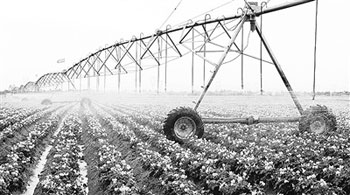
Israel possesses the world's most advanced seawater desalination technology and has successfully transformed technological advantages into industrial advantages. The drip irrigation technology invented by Israel has provided the most effective weapon for people around the world struggling against drought and hunger. In the fields of farming, dairy and animal husbandry, Israel, through innovation, has maximized dairy cow output and automated dairy farm management. The country's agricultural research organization has become a world leader in agricultural technology innovation and technology export, with research fields covering agricultural engineering, soil, water and environmental science, food technology, post-harvest preservation and storage, and more.
Take the breeding industry as an example. The highly adaptable fruit and vegetable varieties cultivated by Israel, such as cherry tomatoes, are not only nutritious and delicious but also stay fresh longer. Locker said: "This benefits from the integration of Israel's strong gene research technology with traditional breeding technology." Israel has mapped the genomes of many vegetables and flowers and developed high-quality seeds adapted to various environments. Israel has become fertile ground where the world's seed industry giants gather; almost every global seed industry giant has its own R&D center and merger and acquisition activities in Israel.
Agricultural cooperation becomes a new highlight of China-Israel cooperation
"When I was assisting the Prime Minister in formulating China-Israel cooperation policy and accompanying the Prime Minister in meeting Chinese leaders, I could deeply feel the important position of agriculture in China, as well as the creativity and productivity in the agricultural field contained and unleashed among the Chinese government and people," Locker said. "Agricultural cooperation has become a new highlight of China-Israel cooperation."
Since the two countries' agriculture ministries signed a memorandum of understanding on agricultural cooperation in 1993, agricultural technology exchange between the two countries has continued to deepen. Drawing on Israeli technology, China has developed a number of new technologies suited to China's national conditions in water-saving irrigation, protected cultivation, dairy farming and other areas. In recent years, China and Israel have successively signed important documents such as an action plan to strengthen agricultural cooperation and minutes of cooperation between the two countries' agriculture ministries, building a relatively complete cooperation framework system.
"The economic mergers and acquisitions that have taken place between China and Israel are most notable in the agricultural field," Locker said. In 2011, China National Chemical Corporation spent 1.4 billion USD to acquire a 60% controlling stake in Israel's Makhteshim Agan; in 2014, China's Bright Food Group acquired a stake in Israel's largest food company, Tnuva, with a corresponding market value of 2.5 billion USD, the largest acquisition in the history of Israel's food industry.
"There are still many Chinese and Israeli enterprises discussing cooperation and mergers and acquisitions now," Locker said. "China's 13th Five-Year Plan particularly emphasizes the importance of agriculture. The spring of China-Israel agricultural technology cooperation has arrived."
Venture capital helps China-Israel agricultural cooperation
"There are obvious differences in policy and culture between China and Israel. Private equity and venture capital are effective tools for bridging the gap and boosting cooperative development." In Locker's view, the Chinese and Israeli governments have done a great deal of highly effective work to promote bilateral cooperation and development and have established a good cooperation mechanism. "The government paved the road and provided convenience, enabling private enterprises and capital to get on the road and run."
Locker believes that in Israel, the role of the government is limited, and capital, technology and investment channels are all in private hands. Once the government has built the platform and cleared the channels, it must mobilize private enterprises and capital to act. Although Israeli enterprises yearn for China's market and resources, when they actually face China, they lack confidence and channels. "Compared with the familiar European and American markets, they find themselves facing many challenges in policy, culture, market and other aspects, and they need someone to lead them and need a bridge, especially for agricultural cooperation projects."
"This is why I established the China-Israel Agricultural Technology Fund," Locker said. His former government decision-making background makes him more familiar with China than others; his economics background and experience in charge of economic work let him know which technologies are more suitable for development in China. "So I want to be a guide for Israeli agricultural enterprises, to help them open up the Chinese market and promote agricultural technology cooperation."
In Locker's view, China has a huge market and resources, the capacity to carry out large-scale production, and experience in making enterprises bigger and stronger; while Israel has endless innovative momentum, a good innovation ecosystem, and an endless stream of startups. "The life cycle of an enterprise is usually divided into two stages, startup and growth. In this life cycle, China and Israel have the strongest complementary effect and are bound to achieve the best cooperation results."
Locker believes that Israel's agriculture, food, water and environmental market is highly attractive, while China has strong demand for agriculture, food, water and environmental solutions and products. He is building the first investment fund focused on agriculture, food, water and the environment in the Israeli market.
Locker said they will focus on finding enterprises with leading market share and reliable technology or patented concepts, and provide financing support and professional management services for small and medium-sized Israeli agricultural companies suitable for the Chinese market. (Science and Technology Daily, Tel Aviv, March 29 dispatch; our correspondent in Israel, Feng Zhiwen)