Peanut prices rise against the off-season trend, and you'll pay through the nose for these high-priced nuts
Normally, after the Spring Festival, peanut sales enter a relatively slack season, and market prices generally show a downward trend. But since this year's Spring Festival, the peanut market has risen and maintained a persistently firm tone. Besides "garlic you ruthless," "onions for money," now there is "peanuts draining your wallet." What is driving up peanut prices during the off-season?
It is now once again the annual peanut planting season. In Puyang, Henan, the reporter learned through on-the-spot visits to the local peanut market that farmers currently have relatively high expectations for peanut prices, and a reluctance to sell is widespread. Li Wei, a farmer from Sanlidian Village, Zi'an Township, Puyang City, planted more than 3 mu of peanuts last year. Because he chose high-quality varieties, his family's peanuts had a bumper harvest last year, with yield reaching more than 200 kg per mu.
Li Wei: The peanut price around here isn't very good this year. Right now it's just over four yuan per jin, and it's been this price ever since the Spring Festival. It's not ideal. I can't get a good price, so I haven't been willing to sell and am keeping them at home.
According to Xu Chunhui, an analyst at the Weihai aquatic products market in Shandong, after the Spring Festival, domestic peanut market prices have been on a steady climb. Since late March, affected jointly by factors such as limited remaining supply in production areas and some oil mills raising their purchase prices, domestic peanut market prices have continued to remain stable with a firm bias, but quotations have appeared rather chaotic. Judging from current market transactions in various production areas, market confidence in some areas has strengthened somewhat, and market transactions in some localities have improved slightly, but farmers and dealers still remain reluctant to sell.
Xu Chunhui: Recently, prices for varieties such as Baisha from Shandong and Henan and Silihong from Jilin have continued to show a stable-to-firm trend. At present, in the main production area of Shandong, the price of ordinary Baisha peanuts has reached 5-5.3 yuan per jin, up 3.5% year on year; and recently the purchase price of oil-grade peanuts at the Tianxiang Oil Mill in Qingdao, Shandong, was 4.3 yuan per jin, up 4.9% from last week.
It is understood that the recent steady rise in oil mills' purchase quotations for peanut raw materials has ignited enthusiasm in the peanut market. The reluctance to sell has been further strengthened as oil mills raise prices, dealer confidence has greatly increased, and farmers' reluctance to sell has reappeared; on the other hand, inventories in the main production areas are low, creating the current situation in which supply is less than demand.
Xu Chunhui: Surveys show that overall remaining supply in all production areas is now low. In the main production area of Henan, overall Baisha supply has only about 10% left; while oil-grade market inventories in Guangdong and Guangxi are not large. In addition, major oil mills have recently given the market plenty of support, and their good purchasing attitude has been the leading factor behind the recent persistently firm prices; combined with the recent sharp rise in soybean oil and palm oil prices, peanut oil also has room to raise prices, fully supporting peanut prices to continue rising.
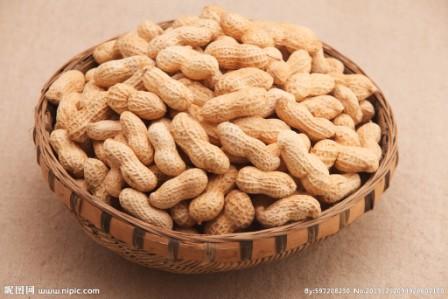
Analyst Xu Chunhui reminds that supply with unsatisfactory quality should be disposed of and used up as much as possible, and for supply of good quality, temperature should also be controlled during storage or transportation, with attention paid to ventilation. Judging from the peanut market situation in recent years, the range of peanut price fluctuations has grown larger and larger, while the phenomenon of growers following the trend in planting has still not changed. It is expected that peanut prices will not soar later, and farmers are advised to plant rationally.
Xu Chunhui: As the weather turns warmer and overall market demand is not particularly strong, the phenomenon of production and sales being inverted exists in some areas, which will restrict prices from continuing to rise. It is expected that the peanut market will still be mainly stable in the future, but there will be periodic fluctuations.
Regarding the recent bullish sentiment in the peanut market, Xu Chunhui believes that the current high peanut prices will, to a certain extent, boost farmers' enthusiasm for planting peanuts this spring, and an expansion of peanut planting area is a foregone conclusion. Against the backdrop of supply-side reform in grain, farmers can, in addition to adjusting their planting and breeding structure, also rely on "upgrading planting methods and technology" to farm scientifically and grow "income-boosting grain."
Xu Chunhui: In Shandong, wheat production should be stabilized, corn area appropriately reduced, and cash crops such as soybeans and peanuts vigorously developed; in Liaoning, on the premise of ensuring total grain output remains stable at 5 billion jin, corn planting area should be appropriately compressed, and the planting area of protected agriculture and rice, peanuts, miscellaneous grains and feed should be expanded.