How to Seize the Wealth Opportunities Left Behind in Rural Areas
Zhang Yanhui, general manager of a travel agency in Hainan, discovered a business opportunity in the Five-Toed Pig from a single dish. The Five-Toed Pig not only has a peculiar name but also a very distinctive body shape. At one time, the Five-Toed Pig was raised in small numbers by a few scattered farming households, earning little money, and was rarely seen on the market. Zhang Yanhui's idea of breeding Five-Toed Pigs was not favored at all. How did Zhang Yanhui change the market situation for Five-Toed Pigs and achieve annual sales of over 10 million yuan?
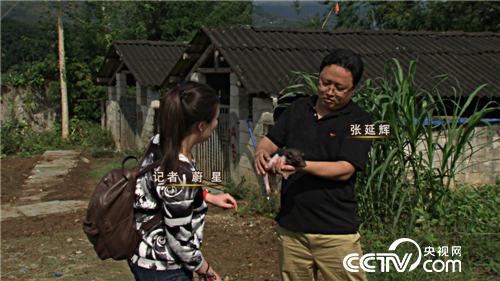
South of Wuzhishan in Hainan Province, there is a pig with a peculiar name and a distinctive body shape, called the Five-Toed Pig. On January 27, 2016, driven by curiosity about the Five-Toed Pig, a group of tourists came to Zhang Yanhui's breeding farm.
Zhang Yanhui: Have we ever seen this kind of Five-Toed Pig before?
Tourist: No, never seen one up close.
Zhang Yanhui: Never seen one, right?
Tourist: Seen them on TV.
Zhang Yanhui: Seen them on TV, right?
Tourist: Today is the first time seeing one up close.
Zhang Yanhui: Right, this one is about the size of a piglet, roughly two months old, around ten to twenty jin or so.
Because the Five-Toed Pig has a large appetite, every time it is seen, it is eating, with its slender snout pressed against the ground. Viewed from a distance, it appears to have five feet, hence the name Five-Toed Pig. There is another explanation: because the Five-Toed Pig has a big belly that sometimes nearly touches the ground, people associate that with a fifth foot. Besides its physical characteristics, the Five-Toed Pig's food also has a distinctive Hainan flavor.
Zhang Yanhui: We planted a lot of this elephant grass along the roadside, and down there are many jackfruit trees, and also papaya. These are what we normally plant, and after planting, they are all fed to the Five-Toed Pigs. It is precisely because this Five-Toed Pig is very wild by nature. It is not moving inside right now, but once we go in, it might run all over the place. Let's guess: out of these few things, which one does the Five-Toed Pig like to eat most?
Hainan's specialty fruits jackfruit and plantain, along with the banana tree core that locals use as a cooking ingredient, are all food for the Five-Toed Pig. Even the tourists who saw them loved eating them.
Tourist: No need to feed the pigs, just feed the people. It's really delicious.
Tourist: I think I love eating jackfruit, and I think it would love jackfruit too.
Tourist: Generally pigs like to eat grass.
Tourist: There's a kind of sweetness to it. This pig is born liking to eat this grass.
Tourist: Banana (plantain), jackfruit, wild grass (elephant grass).
Reporter: They like eating all of them?
Tourist: They like eating all of them.
Zhang Yanhui: Because when catching this pig, it is not easy to catch, and it is also very afraid of people. But these things are all its favorite foods. Hmm, in a moment, here's the plan, all of us.
Tourist: Go lure it?
Zhang Yanhui: Hmm, right, go lure it.
The Five-Toed Pig is very wild by nature, hard for people to approach, and when raised freely on the mountain, it runs fast. In order to let tourists observe and learn about the Five-Toed Pig up close, Zhang Yanhui prepared the foods that Five-Toed Pigs like, to attract their attention.
Zhang Yanhui: The game begins, hold on to the ingredients we just selected. Start now, start now!
As the tourists entered the enclosure, the Five-Toed Pigs that had originally been strolling on the hillside first dodged, and then ran when people got closer. Even with food in hand, the Five-Toed Pigs remained very alert. Feeding the pigs turned into chasing the pigs while holding food, which is a far cry from the greedy little pig everyone had imagined.
Tourist: I feel that pigs have always given us the impression of being very clumsy and heavy, but I never expected that the pigs raised here are so nimble. I really did not expect it.
Everyone decided to give up running and quietly wait for the Five-Toed Pigs to let down their guard. The children even imitated pig sounds to greet the piglets.
The Five-Toed Pigs gradually became familiar with the tourists. After some effort, everyone finally got to touch the Five-Toed Pigs as they had wished, and took photos with the piglets as souvenirs.
Zhang Yanhui: Very brave, like Hua Mulan.
Tourist: I touched one.
Reporter: You touched one? Did you take a photo?
Tourist: He took a photo.
Tourist: This pig gets way too much exercise.
Tourist: Too hard to catch, we're all covered in sweat.
Tourist: A bit like a leopard, a cheetah, a leopard.
In 2016, Zhang Yanhui's breeding farm marketed nearly 6,000 Five-Toed Pigs annually, with revenue exceeding 10 million. As a Hainan specialty, the Five-Toed Pig is also becoming known to more and more tourists and consumers. However, just five years earlier, the Five-Toed Pig had been almost forgotten by everyone in Hainan and was rarely seen on the market, so that people only knew its name but never saw the pig. So how did Zhang Yanhui discover this business opportunity in the Five-Toed Pig and create tens of millions in wealth?
In 2004, Zhang Yanhui graduated from Hainan University with a degree in Tourism Management. In 2005, Zhang Yanhui went to work in sales at a travel agency. Three years later, he had already become the general manager of the tourism division of a group company, which could be considered a modest success.
In 2009, as an executive of a tourism enterprise, Zhang Yanhui noticed that the Five-Toed Pig dishes in scenic areas, although slightly higher in price, were very popular. The 98 yuan per portion white-cut Five-Toed Pig added no seasoning at all and only needed to be boiled in clear water, keeping its original flavor. The 30 yuan per piece roast Five-Toed Pig had tourists praising it endlessly.
Tourist: Very tender.
Tourist: This is not greasy, very refreshing, very tender, very refreshing, really good. It's not greasy, quite good.
Tourist: Quite delicious, very fragrant.
Zhang Yanhui: Many tourists, and also some of my own friends, sometimes I invite them to travel here. They also especially, especially approve of this pork.
The dish was popular, but sourcing the raw ingredients for it was very troublesome. There was no long-term supplier to be found, and every time the purchasing staff had to go to the villages to buy from the villagers.
Zhang Yanhui: Every day I still had to send dedicated staff to the villages to purchase and buy up supplies. This way there were two risks. First, I had to increase my personnel costs. Second, it was still uncertain; sometimes we might not even be able to buy any. During this process, we discovered that this pig had no stable purchasing and sales channel.
Zhang Yanhui went around the large and small markets in Haikou and found not a single one selling Hainan Five-Toed Pig. He went to the Li ethnic villages for further investigation and found that although the villagers all thought Five-Toed Pig meat was delicious, raising one for 12 months could only bring it to about 100 jin, and the feed cost alone was more than 800 yuan. If sold at a low price, there was no money to be made; if priced high, not many people were willing to buy. Over time, villagers only raised a few Five-Toed Pigs for their own consumption and did not treat it as a way to make money.
Villager Ji Qing: In the past, when we raised them, it was about two or three head a year. Not much money to be made.