Raspberries replace corn planting, income per mu triples
Heilongjiang Province, as the major agricultural province with the most cultivated land in the country, has been continuously advancing the pace of agricultural structural adjustment and reform in recent years to boost agricultural efficiency and increase farmers' incomes. The people of Bin County, Heilongjiang Province have tasted the tangible "sweet rewards" brought by agricultural structural adjustment.
When we met Li Yaqin, a villager from Daxing Village, Chang'an Town, Bin County, he was explaining planting techniques to farmers in his village who were preparing to switch to growing raspberries. Li Yaqin said: "Now, the county is carrying out agricultural structural adjustment, and the government encourages farmers to plant cash crops. The farmers who came to me for advice were all originally corn growers. In recent years, corn production capacity has been excessive, and last year the state also abolished the floor purchase price for corn. Compared with corn, raspberries can bring in 2,500 yuan per mu, which is 3 times that of corn. Farmers can only get rich by changing their way of thinking."
In recent years, Chang'an Town, Bin County has fully mobilized farmers' enthusiasm, taken the market as the guide, optimized the planting structure, encouraged farmers to establish various professional cooperatives, and guided farmers to plant high-quality and high-efficiency cash crops such as flue-cured tobacco, vegetables and fruits. After several years of development, Chang'an Town has become the second-largest flue-cured tobacco demonstration zone in Bin County after Ningyuan Town. Local fruits produced in Chang'an Town under the "Chang'an" brand, such as Longguan, Jinhong, Qiulu, raspberries, and blackcurrants, are sold well at home and abroad.
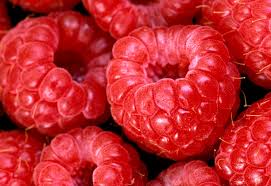
Li Yaqin is a major grower in the village. When the topic turned to his family's raspberries, Li Yaqin opened up. "The raspberries in Daxing Village belong to the autumn-bearing type, a kind of single-season raspberry. Last year, my family planted 22 mu, more than 100,000 plants in total, with a yield of 2,500 kg per mu, at 8 yuan per kg, and net income reached more than 120,000 yuan." Speaking of sales, Li Yaqin was all excitement: "Our family's raspberries are not hard to sell. Every year in August, when the raspberries are about to ripen, brokers from Harbin Gaotai Food Co., Ltd. come to the door to contact farmers, set prices, and sign agreements; fruit wholesalers from Shangzhi drive their trucks right to the edge of the fields, scrambling to buy our raspberries, because Chang'an's raspberries are good in quality, large in size, and especially sweet in taste. After raspberries are purchased in bulk, they can be quick-frozen, or deeply processed into dried fruit, fruit pulp, fruit wine and other products. Raspberries are rich in nutrients, and after deep processing their value increases greatly."
Talking about raspberry cultivation, Li Yaqin said: "Raspberries are cold-resistant and suitable for planting in the north. The cultivation cycle is short. After one-year-old seedlings are planted, they bloom and bear fruit the following year, enter full fruiting in the third or fourth year, and their economic lifespan can reach more than 20 years. The yield per mu can reach 1,500-2,500 kg. Later-stage management is relatively complex. Ordinary herbicides cannot be used; once used, the seedlings die, so weeds can only be removed by hand; only organic fertilizer can be used, so the raspberries we produce are organic green food and are absolutely safe to eat." "In large supermarkets, a small box of raspberries can sell for more than 10 yuan, so I am very optimistic about the prospects of the raspberry industry. Last year, I set up a raspberry planting cooperative with five villagers from the same village, with a planting area of 100 mu. This year we will continue to expand the planting area, attract more farmers to join the cooperative, add new varieties, and introduce new techniques, so that small berries can make a big story."