The latest 2016 agricultural subsidies are here - see how much you can get
What does this year's subsidy policy look like?
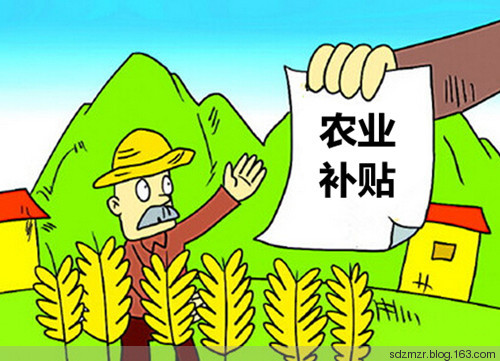
The most widely called-for principle - "whoever grows more grain gets the subsidy" - has been put into practice! In 2016, the agricultural support and protection subsidy policy will be rolled out nationwide:
① Use 80% of the existing funds from the comprehensive agricultural input subsidy, plus the direct subsidy to grain farmers and the crop improved seed subsidy funds, for the protection of cultivated land fertility. The subsidy recipients are all farming households that hold contracted rights to cultivated land, and this portion of subsidy funds is paid directly to households in cash.
② Use 20% of the existing funds from the comprehensive agricultural input subsidy, plus the subsidy funds for large grain growers and the incremental funds of the agricultural "three subsidies", to support the development of various forms of moderate-scale grain operation, reflecting the principle of "whoever grows more grain gets priority support".
What are the minimum purchase prices for wheat and rice?
To protect farmers' interests and prevent "cheap grain hurting farmers", in 2016 the state continued to implement the minimum purchase price policy for wheat and rice in major grain-producing areas:
☑The minimum purchase price for wheat (third grade) produced in 2016 is 118 yuan per 50 kg, remaining unchanged from the 2015 level.
☑The minimum purchase prices for early indica rice (third grade, the same below), mid-late indica rice and japonica rice produced in 2016 are 133 yuan, 138 yuan and 155 yuan per 50 kg respectively. Early indica rice was reduced by 2 yuan compared with 2015, while mid-late indica rice and japonica rice remained unchanged from the 2015 level.
What is better to plant in the "sickle bend" region?
In November 2015, the Ministry of Agriculture formulated and issued the "Guiding Opinions of the Ministry of Agriculture on the Structural Adjustment of Corn in the 'Sickle Bend' Region". The goal is to reduce the corn area in the "sickle bend" region by more than 50 million mu by 2020. Focus will be placed on developing silage corn, soybeans, high-quality forage grass, miscellaneous grains and beans, spring wheat, economic forest fruits and ecologically functional plants, promoting close integration of agriculture and animal husbandry and deep industrial integration, and boosting agricultural efficiency and industrial upgrading.
In 2016, the Ministry of Agriculture integrated project funds to support the "sickle bend" region in carrying out planting structure adjustment, changing the continuous corn cropping model, achieving the combination of land use and land nurturing, and promoting sustainable agricultural development.
At the same time, the central government arranged 100 million yuan to support pilot development of the potato industry, researching steamed buns, noodles, rice noodles and other regional specialty products with different potato flour ratios, improving residents' dietary structure, and building a staple food culture for a moderately prosperous society.
What is this year's policy on "grain-to-feed"?
In 2015, the state launched the "grain-to-feed" pilot program, with the central government investing 300 million yuan. In 10 provinces and regions - Hebei, Shanxi, Inner Mongolia, Liaoning, Jilin, Heilongjiang, Shaanxi, Gansu, Ningxia and Qinghai - 30 counties with a good foundation for cattle and sheep breeding and relatively large corn planting areas were selected to carry out grain-to-feed pilot work focused on the collection and storage of whole-plant silage corn. In 2016, the state will continue to implement the grain-to-feed pilot project, further increase funding, and expand the scope of implementation.
How are agricultural machinery purchase subsidies provided?
The subsidy recipients are individuals and agricultural production and operation organizations directly engaged in agricultural production. The types of subsidized machinery cover 11 major categories, 43 subcategories and 137 items, with different types in different provinces.
The agricultural machinery purchase subsidy policy is implemented through independent machinery purchase, county-level settlement, and direct subsidy to card (household). The subsidy standard is determined by the provincial agricultural mechanization authorities in accordance with regulations, and differential treatment of similar products produced by enterprises inside and outside the province is not allowed.
☑For general machinery, the central government subsidy per unit does not exceed 50,000 yuan;
☑For milking machines and dryers, the subsidy per unit does not exceed 120,000 yuan;
☑For large tractors of over 100 horsepower, high-performance green fodder harvesters, large no-till seeders, large combine harvesters, and large programmed rice seed soaking and germination equipment, the subsidy per unit does not exceed 150,000 yuan;
☑For tractors of over 200 horsepower, the subsidy per unit does not exceed 250,000 yuan;
☑For large sugarcane harvesters, the subsidy per unit does not exceed 400,000 yuan;
☑For large cotton pickers, the subsidy per unit does not exceed 600,000 yuan.
Are there subsidies for scrapping and replacing agricultural machinery?
In 2016, the Ministry of Agriculture and the Ministry of Finance continued to carry out pilot work on subsidies for scrapping and updating agricultural machinery in 17 provinces (municipalities and regions) including Jiangsu. Provinces that have not yet launched pilots may decide on their own whether to do so.
The subsidy for scrapping and updating agricultural machinery is linked with the agricultural machinery purchase subsidy and implemented simultaneously.
☑Scrapping standards
The types of machinery eligible for scrapping subsidies are tractors and combine harvesters that have been registered with an agricultural machinery safety supervision agency and have reached the scrapping standard or exceeded the scrapping age.
☑Subsidy standards
The subsidy standards for scrapping and updating agricultural machinery are determined by the model and category of the scrapped tractor or combine harvester. For tractors, the subsidy ranges from 500 yuan to 11,000 yuan depending on the horsepower range; for combine harvesters, it ranges from 3,000 yuan to 18,000 yuan depending on the feed rate (or number of harvesting rows).
Will this year's breeding improved seed subsidies be increased?
In 2015, 1.2 billion yuan was invested in livestock improved seed subsidies, mainly used to provide price subsidies to farms (households) in project provinces for purchasing high-quality breeding pig (cattle) semen or breeding rams and yak breeding bulls:
☑The improved seed subsidy standard for pigs is 40 yuan per sow;
☑The improved seed subsidy standard for beef cattle is 10 yuan per breeding cow;
☑The improved seed subsidy standard for sheep is 800 yuan per breeding ram;
☑The subsidy standard for yak breeding bulls is 2,000 yuan per breeding bull.
☑The improved seed subsidy standard for dairy cattle is 30 yuan per breeding cow for Holstein, Jersey and dairy buffalo, and 20 yuan per breeding cow for other breeds, and a pilot subsidy program for the introduction of high-quality Holstein breeding embryos is carried out at 5,000 yuan per embryo.
In 2016, the state continued to implement the livestock improved seed subsidy policy.
What subsidies are there for animal epidemic prevention?
① Subsidy policy for compulsory immunization vaccines against major animal epidemics
The state implements a compulsory immunization policy for animal epidemics such as highly pathogenic avian influenza, foot-and-mouth disease, highly pathogenic porcine reproductive and respiratory syndrome, swine fever and peste des petits ruminants. For the compulsory immunization vaccines against the above major animal epidemics, farms (households) do not need to pay for the vaccines.
② Subsidy policy for compulsory culling of animals due to animal epidemics
The state implements compulsory culling of animals infected with highly pathogenic avian influenza, foot-and-mouth disease, highly pathogenic porcine reproductive and respiratory syndrome and peste des petits ruminants, as well as animals in the same group, and dairy cows testing positive for brucellosis and tuberculosis. Compensation is provided for losses caused to breeders by the culling of livestock and poultry due to the above epidemics.
③ Subsidy policy for harmless treatment of dead pigs in the breeding stage
A subsidy of 80 yuan per pig is provided for the harmless treatment of dead pigs in the breeding stage, shared by central and local finances.
④ Subsidy policy for harmless treatment of diseased pigs in designated pig slaughtering stage
Subsidies are provided for the losses of diseased pigs and the costs of harmless treatment in the slaughtering stage. The financial subsidy standard for diseased pig losses is 800 yuan per pig, and the harmless treatment standard is 80 yuan per pig.
Subsidy policy for primary processing of agricultural products at the place of origin
In 2016, the central government arranged 900 million yuan to implement the subsidy policy for primary processing of agricultural products at the place of origin.
The subsidy policy will further highlight support priorities, tilting toward advantageous production areas, new agricultural operation entities, and old revolutionary base areas, ethnic minority areas, border areas and poverty-stricken areas. The subsidy ceiling will be raised: each specialized cooperative may receive subsidies for storage facilities with a total capacity of no more than 800 tons (no more than 5 units), and each family farm may receive subsidies for storage facilities with a total capacity of no more than 400 tons (no more than 2 units).
Subsidy policy for renovation of dilapidated houses in state farms
In 2016, the state will continue to implement the renovation of dilapidated houses in state farms, planning to renovate 176,000 dilapidated houses in 15 reclamation areas. Central government funds will provide subsidies of 6,500 yuan, 7,500 yuan and 9,000 yuan per household for eastern, central and western reclamation areas respectively, and 1,200 yuan per household for supporting infrastructure such as heating and water supply.
Subsidy policy for updating and renovating ocean fishing vessels
The updating and renovation of fishing vessels follows the principle of voluntary participation by fishermen. Existing ocean fishing vessels with complete certificates and documents will be updated and renovated, with priority given to replacing old, outdated and wooden fishing vessels and fishing vessels of operation types that cause relatively heavy damage to marine resources. Standardized "safe, energy-saving, economical and environmentally friendly" ocean fishing vessels will be built. The updating and renovation of fishing vessels will be combined with regional economic and social development and the transformation of marine fishery production methods, to improve the structure of ocean fishing operations, enhance vessel safety performance, raise the level of fishery equipment, and promote sustainable fishery development.
Central investment shall not exceed 30% of the total investment per vessel, and in principle shall not exceed the upper limit of fishing vessel investment subsidies. Central subsidy investment is provided on a build-first-then-subsidize basis. For the updating and renovation of distant-water fishing vessels, central subsidy investment is disbursed according to construction progress. For the updating and renovation of domestic ocean fishing vessels, after construction is completed, the central subsidy investment is collected by presenting the Fishing Vessel Inspection Certificate, Fishing Vessel Registration Certificate and Fishing License.
At the same time, the state will no longer approve the construction of bottom trawlers, sail netting vessels, and single-vessel large light purse seiners with bag nets and other operation vessel types that cause heavy resource damage. Fishing vessels of other operation types may not be converted into trawlers or stow net vessels.
Subsidized fishing vessels must be built of steel or fiberglass-reinforced plastic; fishing vessels made of wood, steel wire mesh cement and other materials are not included in the subsidy scope. Except in special circumstances such as illness, disability or death of the vessel owner, ocean fishing vessels receiving updating subsidies may not be bought or sold within ten years, and those sold must repay the state according to the state subsidy ratio.
What subsidies are there for returning farmland to forest and grassland?
① Convert basic farmland on steep slopes that genuinely needs to be returned to forest and grassland into non-basic farmland.
② Starting from 2016, priority will be given to provinces with heavy poverty alleviation and development tasks and relatively large poor populations.
③ Promptly disburse subsidy funds for the new round of returning farmland to forest and grassland. The subsidy standard for the new round of returning farmland to grassland is 1,000 yuan per mu (of which 850 yuan is cash subsidy arranged from central government special funds and 150 yuan is seed and grass planting fees arranged by the National Development and Reform Commission). The subsidy funds for returning farmland to grassland are issued in two installments: 600 yuan per mu in the first year (including 150 yuan for seed and grass planting fees) and 400 yuan in the third year.
Support policy for standardized large-scale livestock breeding
In 2015, the central government invested a total of 1.3 billion yuan to support the development of standardized large-scale livestock and poultry breeding. Of this, the central government arranged 1 billion yuan to support the construction of standardized large-scale dairy cattle breeding communities (farms), and 3 billion yuan to support the construction of standardized large-scale beef cattle and sheep breeding farms (communities) in Inner Mongolia, Sichuan, Tibet, Gansu, Qinghai, Ningxia, ** and the ** Production and Construction Corps.
The support funds are mainly used for supporting facility construction such as water, electricity and road renovation, manure treatment, epidemic prevention, milking and quality testing in breeding farms (communities). In 2016, the state continued to support standardized large-scale breeding of dairy cattle, beef cattle and mutton sheep.
Policy for revitalizing the dairy industry and supporting alfalfa development
To improve the production and quality safety level of China's dairy industry, starting from 2012, the Ministry of Agriculture and the Ministry of Finance implemented the "Action to Revitalize the Dairy Industry through Alfalfa Development". The central government arranges 300 million yuan each year to support the construction of high-yield and high-quality alfalfa demonstration areas. Each area is built in units of 3,000 mu, with a one-time subsidy of 1.8 million yuan (600 yuan per mu), mainly used to promote alfalfa improved varieties, apply standardized production technology, improve production conditions and strengthen alfalfa quality management.
In 2016, the "Action to Revitalize the Dairy Industry through Alfalfa Development" continued, with 500,000 mu of high-yield and high-quality alfalfa demonstration bases.