Modern fishery IoT technology innovation has broad prospects
Original title: IoT supports the development of modern fisheries
-Sidelights from the founding conference of the China Fishery IoT and Big Data Industry Technology Innovation Alliance
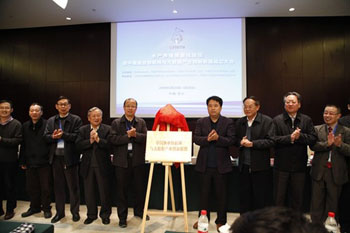
On March 30, the founding ceremony of the China Fishery IoT and Big Data Industry Technology Innovation Strategic Alliance was held at the Environmental Protection Technology Building in Yixing Environmental Science Park. (Network illustration: Sohu.com)
Recently, the founding ceremony of the China Fishery IoT and Big Data Industry Technology Innovation Strategic Alliance (hereinafter referred to as the "Alliance") was held in Yixing City, Jiangsu Province. The Alliance was jointly proposed by China Agricultural University, the National Fisheries Technology Extension Center, iSoftStone Information Technology (Group) Co., Ltd., Tianjin Agricultural University and other units, and is composed of 56 units including universities and research institutes nationwide engaged in fishery industry research, as well as leading national aquaculture enterprises and aquatic technology extension and information technology enterprises. It aims to build a fishery IoT and big data collaborative innovation model oriented to the needs of fishery IoT and big data and combining industry, academia and research, form a transfer and transformation mechanism suitable for the transformation of scientific and technological achievements and large-scale industrialization, improve the efficiency of scientific research achievement transformation, and promote the rapid development and internationalization process of the fishery IoT and big data industry.
Modern fisheries have great potential
At present, China's fisheries are in a critical period of transition from traditional fisheries to modern fisheries. "The traditional decentralized farming by individual households has led the aquaculture industry to face problems such as resource waste, low production efficiency, high farming risks and high environmental pressure. Intensive precision aquaculture is the fundamental way to solve these problems." Li Daoliang, executive vice chairman and secretary-general of the Alliance and professor at China Agricultural University, said at the Alliance founding conference, "Modern fisheries must be a high degree of integration of aquaculture technology, equipment technology and information technology. All of these require deep integration of modern fisheries with the IoT, and scientific decision-making based on big data analysis to achieve precision, automation and intelligence."
The view that aquaculture is becoming an important field of human food production became the consensus of attending experts and relevant practitioners. Li Jiale, professor at Shanghai Ocean University, used a set of data to illustrate the issue: in China, aquatic products provide 27.3% of the total animal protein consumed by consumers. At the same time, the waters accounting for 70% of the Earth's area currently provide only 10% of the total food for humanity. "This means the development of modern fisheries is unprecedentedly huge."
According to statistics, China's aquaculture output accounts for 73% of the world's total, and fisheries have played an important role in improving people's livelihoods and increasing farmers' incomes. In 2015, the national output of aquatic products was close to 67 million tons, the fishery output value reached 1.09 trillion yuan, and the per capita net income of fishermen reached 15,600 yuan. The surplus in aquatic product exports exceeded 10 billion yuan, and the export value ranked first among China's bulk agricultural products. It can be said that of every 3 fish in the world, 2 are produced in China.
IoT advances the standardization and scaling process of the aquaculture industry
Academician Luo Xiwen of South China University of Technology pointed out that accelerating the development of the aquaculture industry at the current stage is an important part of promoting the coordinated development of the aquaculture and planting industries. "The Fifth Plenary Session of the 18th Central Committee put forward five major development concepts. In agriculture, an important part of coordinated development is the coordinated development of the planting and aquaculture industries." Luo Xiwen said, and large-scale standardized aquaculture is the key to accelerating the aquaculture industry. Improving the level of informatization and developing "IoT plus" aquaculture is the inevitable path to achieving large-scale standardization of aquaculture.
Many attending representatives proposed that fisheries still use the traditional methods of extensive resource consumption and extensive operation, and lack effective monitoring of water quality and environment during aquaculture. Unreasonable feeding and medication during aquaculture have greatly worsened the water quality environment, affected the quality of aquatic products, and intensified the occurrence of aquatic product diseases, making problems such as aquatic product quality and safety, water environmental pollution and aquaculture risks very serious. These problems all force traditional fisheries to transform and upgrade and to improve fishery quality, efficiency and competitiveness.
"The IoT is a network connecting the physical world with the characteristics of comprehensive perception, reliable transmission and intelligent processing. It enables humanity to manage production and life in a more refined and dynamic way and enhances people's ability to control and precisely manage the physical world in real time, thereby achieving optimized resource allocation and scientific intelligent decision-making. This will play a major role in the large-scale standardized aquaculture of modern fisheries." Li Daoliang said.
"In six aspects, including water environment monitoring, feeding and bait systems, remote monitoring of disease prevention and control, breeding monitoring, fry rearing and facility-based aquaculture, aquaculture needs the participation of the IoT to carry out overall factor restructuring and upgrading of the industry." Li Jiale said, but at present the bottleneck most urgently needing breakthrough in "IoT plus" fisheries is that "people who understand aquaculture do not understand the IoT, and people who understand the IoT do not understand aquaculture. This is precisely an important reason why the Alliance integrates various organizations in the aquaculture industry and the IoT field onto one platform."
Fight the hard battle of upgrading the material foundation and equipment conditions of fisheries
"Large-scale socialized production gives modern aquaculture strong vitality, but it must be admitted that compared with the planting industry, the degree of mechanization in the aquaculture industry is still very low. In many places, fishing still requires draining the pond water first. The conditions of modern fishery equipment urgently need upgrading." Li Jiale said.
Attending representatives believed that China's technical research on fishery IoT and big data is relatively backward, especially in the research, development and manufacturing of perception devices such as intelligent sensors for fisheries. Many application projects still mainly rely on imported perception devices. Most products of fishery-specific perception devices researched by domestic universities and research institutes remain at the laboratory stage, and the products still lag behind foreign products in performance parameters such as stability, reliability and low power consumption. It is relatively difficult to achieve scale and standardization, and there is still a certain distance from industrial promotion. The overall level of modernization, standardization and scientific development of fishery IoT and big data production technology, equipment, management and operation systems still needs improvement, and industrial development urgently needs standardization and guidance.
"Aquatic product IoT faces enormous market development space and also enormous challenges." Li Daoliang pointed out that in the process of fishery equipment upgrading, the participation of large manufacturers is still very low, reflected in the absence of large sensor manufacturing enterprises and the absence of large agricultural equipment providers. "Taking the most basic sensors as an example, most sensors on the market currently have problems such as unclear mechanisms and inadequate materials and manufacturing processes. Achieving breakthroughs in the core technologies and major key technologies of agricultural IoT still has a long way to go." Li Daoliang said. (Reporter Guo Shaoya)