What should you grow in 2016 to make money? It's not too late to find out now
Introduction: The question we get asked the most is: what should we grow this year to make money? Our answer is: rice is better than corn, corn is better than soybeans! We don't dare recommend miscellaneous grains and miscellaneous beans!
According to news from the website of the National Development and Reform Commission, in order to protect farmers' interests and prevent "cheap grain hurting farmers," in 2016 the state continued to implement the minimum purchase price policy in the main rice-producing areas. After comprehensively considering factors such as grain production costs, market supply and demand, domestic and international market prices, and industry development, and with the approval of the State Council, the minimum purchase prices for early indica rice (grade three, the same below), middle and late indica rice, and japonica rice produced in 2016 were 133 yuan, 138 yuan, and 155 yuan per 50 kg respectively. According to national policy, this year may be the last year for the state to issue minimum purchase prices for rice and wheat. At a stage when the economic situation has entered a new normal, the planting returns of most crops are showing a downward trend, while rice, as a staple food, has maintained relatively stable returns. In areas with the conditions to develop rice cultivation, rice is undoubtedly the best choice.
The state has always attached great importance to the corn industry. A few days ago, at the central corn policy briefing, the state clearly stated that it would "establish a corn producer subsidy system to keep corn planting returns in advantageous production areas basically stable." Based on analysis and judgment, calculated on the basis of dry grain with 14% moisture, the comprehensive return from planting corn this year (grain price + subsidy) should be no problem at 0.9 yuan. In 2016, in the advantageous corn-producing areas of Northeast China, planting corn is still the best and safest choice. There is a key question here: exactly where are the advantageous corn-producing areas? Personally, I believe: in the four northeastern provinces and regions, if your area has been mainly planted with corn every year for the past 20 years, then the possibility that your area is an advantageous corn-producing area is very high!
The state is reducing the corn area in the "sickle bend" region and increasing crops such as soybeans, potatoes, silage corn, miscellaneous grains, and miscellaneous beans, and the policy is extremely clear. It can be said that the increase in soybean area this year is already settled. In the near term, soybean prices in the northern market will mainly remain stable, and it will be difficult for major adjustments to occur. This is because at the current stage the purchase price of rough grain at the grassroots level has already fallen to 3,300 yuan/ton, and the price decline is severe. Farmers' reluctance to sell has gradually strengthened, which will temporarily slow the pace of sales. But in the long term, the weak demand-side market will be hard to change. In addition, there is still nearly 50% of grain remaining in the market, and the current situation of slow consumption and sufficient supply may force farmers to choose to sell soybeans at low prices. In 2016, the state continued to carry out the soybean target price reform pilot in the three northeastern provinces and the Inner Mongolia Autonomous Region, and the soybean target price level was 4,800 yuan per ton, consistent with 2014 and 2015. It is believed that the profit level should be similar to that of 2014 and 2015 (that is, no money to be made). Area is increasing, the market is weak, subsidies have not increased, and the international soybean supply is sufficient. In summary, there is no favorable news at all for soybeans. It can be imagined that the returns from soybeans in 2016 will continue to decline on the basis of the low returns in 2015.
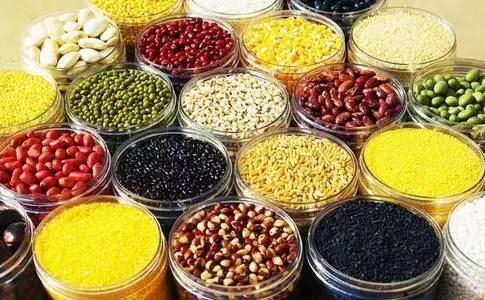
For miscellaneous grain production, take millet as an example: in the autumn of 2014, farmers sold grain for more than 5 yuan per jin; in the autumn of 2015, it was 1.8 yuan per jin. I saw a document from a certain county in Heilongjiang introducing the local "sickle bend region" document on reducing corn area. It mentioned that this year the local production area of miscellaneous grains and miscellaneous beans increased by 900% compared with the previous year. Miscellaneous grains and miscellaneous beans, heh heh heh, we don't dare recommend them!