How does a farm make money? Meet a post-80s "rich second generation" who refuses to live off his parents and becomes a fruit farmer
Unlike many people involved in agricultural projects, Wang Bo, the "owner" of Jingxiu Dadi Ecological Farm, is a "willful" post-80s. To use a trendy phrase, he could have lived a carefree life relying on his father, yet he chose to become a "muddy-legged" farmer.
From the moment he entered this line of work, many people concluded that he wouldn't "last" long. Now, 4 years later, this young man's face is covered with traces of wind and frost, giving a powerful response to those who once doubted him.
A "willful" post-80s who did not take over his father's business but went into agriculture on his own——
Growing dragon fruit: 200,000 yuan in tuition to buy a lesson
In the bright spring of April, standing on the cement road of Songlin Village, Yuxian Town, Caidian, one sees vegetables and fruits and fresh flowers everywhere, with the sweet fragrance of fruit drifting in the air. Row upon row of farms are neatly planned and well arranged. This is what Jingxiu Dadi Ecological Farm looks like now. Four years ago, this place was still a stretch of barren lakeside land overgrown with weeds.
In fact, Wang Bo had a family business behind him - his father's company is a leading enterprise in Hubei's industry - and taking over from his father would have given him a much higher starting point than ordinary people. But after graduating from university, he tried to forge his own path. He sold houses, worked in the internet, did marketing, and even worked in a government department. "Later, when I came into contact with agricultural picking gardens, I felt this industry had great potential, so I decided to start in this line." As for his son "farming," his open-minded father chose to tacitly allow it. "Some preferences are innate. After doing many things, I found that I love the land and love agriculture most," Wang Bo told reporters. To this end, he acquired 1500 mu of land in Caidian and began building his own farm.
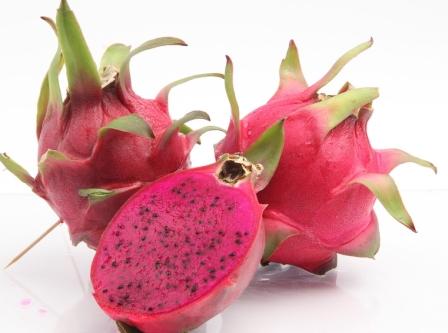
Five or six years ago, he discovered that dragon fruit sold very well in the Wuhan market, and compared with local fruits such as oranges and peaches, its economic benefits were much higher. He learned that normally one mu of land can yield up to 2000 kg of dragon fruit. So Wang Bo decided to grow dragon fruit.
In 2011, he invested more than 200,000 yuan to test the waters, introducing red-fleshed dragon fruit from Shandong. "Dragon fruit is a tropical and subtropical fruit. At the time I thought, Shandong's winter temperatures are much lower than Wuhan's, so if it can grow in Shandong, logically it should also grow in Wuhan." To keep the seedlings warm, Wang Bo covered them with 4 layers of insulation film. But when they matured at the end of the year, he found that after spending most of the year's effort, not a single dragon fruit had been produced.
Amid his frustration, an expert who knew the field told him that the reason dragon fruit could grow in Shandong was that although Shandong's winters are cold, the sunshine duration is long, while Wuhan's temperatures are slightly higher, but once it rains there are many consecutive overcast days, affecting the plants' growth. To grow it well in Wuhan, technical measures must be taken to supplement light and control temperature.
After this setback, Wang Bo began cramming on fruit-growing techniques and brought in agricultural experts to oversee the operation.
Not only selling fruit, but also selling services and selling health——
Four-season picking: a tourism and leisure farm takes shape
In recent years, picking tours have become a popular item in the tourism industry of Jiangcheng, but farmers' picking operations often offer a single variety, making it difficult to form a clustering effect. "Why not build a sightseeing and leisure farm with a variety of fruits and vegetables for picking, integrating dining and entertainment?" Following this idea, with the technical support of agricultural experts, starting in 2012 Wang Bo successively introduced nearly 100 kinds of fruit to his farm. Grapes alone included 11 varieties; peaches included flat peaches, honey peaches, and yellow peaches; pomegranates were divided into soft-seeded pomegranates and black-seeded pomegranates; pears included Cuiguan pears, Wonhwang pears, and others. He also ensured that there were more than two kinds of fruit available for visitors to pick every month. For example, in November strawberries and winter jujubes ripen, and after strawberries are off the shelves in April of the following year there are watermelons, mulberries, cherries, and so on; peaches ripen in June, grapes ripen in July, and after grapes are off the shelves in October, figs and pomegranates ripen one after another.
Just as he had envisioned, the clustering effect of abundant varieties brought tens of thousands of visitors to his farm every year.
In 2014, in addition to fruit and vegetable picking, Wang Bo began to follow the route of a sightseeing, tourism, and leisure farm, adding multiple amusement facilities so that tourists could stay longer after arriving. In 2015, the farm received 80,000 visitors for the whole year. "At present the farm is still just a picking base. In the future it should develop in the direction of a scenic area. Building the largest sightseeing and leisure agricultural picking garden in Central China is my ultimate goal," Wang Bo said confidently. "Although it receives tens of thousands of visitors a year and many people praise my fruit as delicious, I am still selling fruit in this way. What I want to do is take the path of sustainable development - not simply selling fruit, but also selling services, selling health, and selling the brand."