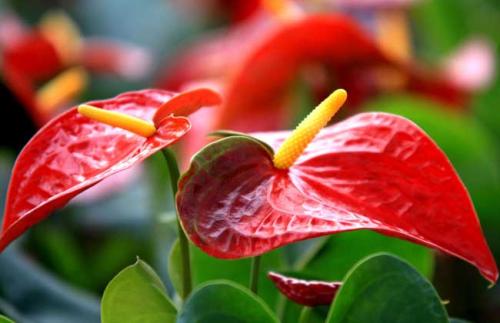
Anthurium care knowledge: how to grow it well and make it bloom normally
Anthurium plants are grown as houseplants in cooler regions and as landscaping plants in USDA zone 10 or higher. Proper anthurium care is easy as long as you provide the plant with a few key elements. Continue reading to learn more about anthurium plant care.
Basic Anthurium Care
Anthurium plants can tolerate all levels of indirect light, but anthuriums growing in low light will have fewer flowers and will grow more slowly. However, these plants cannot tolerate direct light, because it can burn the leaves. It grows best in bright, indirect light.
Anthurium care also requires soil that drains freely but retains some water. If you grow this plant as a houseplant, then a half-and-half mix of potting soil and orchid soil or perlite will provide a preferred anthurium soil. Outdoors, plant it in a well-draining location. Anthurium plants do not like consistently soggy soil.
Make sure to water your anthurium plant regularly, but do not overwater. Only water your anthurium when the soil is dry. The plant is prone to root rot, so too much water can cause the roots to die. If you allow the plant to become too dry in the pot, it will slow its growth and the root ball will be difficult to re-wet. If the root ball becomes too dry in the pot, soak the anthurium plant in a pot for one hour to rehydrate it.
Caring for anthurium plants does not require much fertilizer. The plant only needs to be fertilized once every three to four months with a quarter-strength fertilizer. For the best flowers, use a fertilizer with a higher phosphorus number (the middle number).
Proper care for anthuriums is not difficult. Once you place the plant in the right soil and the right location, watering is simple. Anthuriums grown in your garden or home will provide you with wonderful, long-lasting flowers.