New trick for saving water and reducing fertilizer: water-retaining structures show remarkable results
Original title: Besides drip and sprinkler irrigation facilities and plastic film mulching, there is a new choice of water-retaining structures for implementing integrated water and fertilizer management --
Try bringing the "water-saving and fertilizer-reducing" effect to open fields
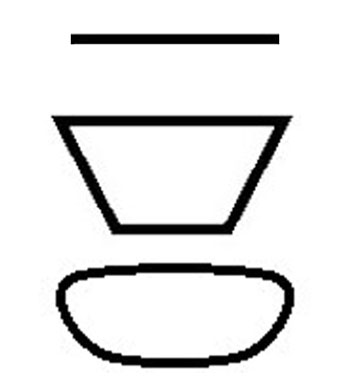
Sheet-shaped, basin-shaped, bowl-shaped
Water-retaining structures
Controlling water means controlling fertilizer, which is a major highlight of integrated water and fertilizer technology. So, how can integrated water and fertilizer management be implemented in areas lacking drip irrigation, sprinkler irrigation facilities and plastic film mulching? In recent years, Professor Liao Zongwen of the New Fertilizer Resources Research Center of South China Agricultural University has led his team in technological innovation, processing water-retaining agents and fertilizers into water-retaining structures, achieving the goal of saving water and fertilizer in open fields while promoting healthy crop growth. Today, this page invites him to introduce this new product to everyone.
Improving the use efficiency of water and fertilizer is the intersection of the two major strategic goals of water-saving agriculture and improving fertilizer use efficiency.
Currently, water-retaining agents on the market are mainly made with acrylic acid and acrylamide as the main raw materials. They are expensive, reaching as high as 20,000 to 30,000 yuan per ton, and the market price of commercial water-retaining agent generally exceeds 20,000 yuan per ton. Moreover, their salt tolerance is poor and their fertilizer-retaining ability is not strong, which is not conducive to promotion and application in open fields.
In recent years, the New Fertilizer Resources Research Center of South China Agricultural University has successfully developed a series of composite (blended) water-retaining structures made from organic-inorganic composite water-retaining materials, with mineral materials and biomass materials added at a ratio of 30%. The cost is reduced by 30% while the water-retaining performance remains basically unchanged, and salt tolerance and fertilizer-retaining performance are improved. It can be said that water-retaining structures turn the regulatory measure of separating water and fertilizer into a technical carrier for integrated water and fertilizer regulation. They are a new product besides drip irrigation, sprinkler irrigation and plastic film mulching, and are one of the carriers of China's integrated water-saving and fertilizer-saving technology accumulated over many years.
Water-retaining capacity:
Comes from water absorption and water-holding capacity
Where does the water-retaining capacity of water-retaining structures mainly come from?
First, the water absorption of the water-retaining material. It can absorb water hundreds of times its own weight, and its network structure can retain a large amount of water, which can be slowly released into the soil for root absorption when the soil is dry, similar to a sponge absorbing water, but more than a hundred times stronger than a sponge. Why can the water-retaining material also regulate the release of fertilizer nutrients? Because the release of fertilizer nutrients is mainly achieved through the movement of water. Fertilizer moves with water; when water moves, fertilizer moves. Controlling water means controlling fertilizer. Therefore, by regulating water, the water-retaining agent simultaneously achieves the purpose of regulating fertilizer, thus realizing integrated water and fertilizer regulation.
Second, the water-holding capacity of the water-retaining structure. It originates from the interception and supporting effect of the spatial configuration of the water-retaining structure (sheet-shaped, basin-shaped, bowl-shaped structures) on water movement in the soil layer (mainly intercepting downward seepage and lateral seepage), thereby producing water-retaining capacity, keeping water (nutrient solution) in the soil layer and significantly improving the water- and fertilizer-retaining effect. It differs from the water-retaining effect produced by the water absorption force of water-retaining agents. It is a new water-retaining mechanism and a new idea for technological research and development, with outstanding advantages. Generally, the water-retaining effect of water-retaining agents comes only from a single water absorption force, while the water-retaining effect of water-retaining structures comes from two aspects, namely not only water absorption force but also the water-holding capacity obtained after shaping. In this way, working together with water absorption force, the two approaches combine, clearly superior to the effect of a single water absorption force. This is the unique advantage of this technology. Moreover, cheap materials such as mineral powder, wood chips and straw with weak water absorption can also be added, thereby obtaining higher water-retaining capacity and further reducing costs.
The amount of water-retaining agent used per mu is about 3 kg, and the cost is about 50 to 60 yuan. Water-retaining structures can reduce leaching loss and save more than 20% of fertilizer, so they can become an effective technology for controlling non-point source pollution, with low cost, good effect and strong operability.
Integrated water and fertilizer:
Can play a role in all four seasons
Compared with the method of mixing water-retaining agents with soil, water-retaining structures with a spatial configuration can simultaneously have better water absorption capacity and water-holding capacity, further improving the water- and fertilizer-retaining effect, thus achieving good yield increases, and after harvest there is still a relatively high water content in the soil. Under normal circumstances, using water-retaining agents can save 25% of water and 20% of fertilizer, while yield does not decrease or even increases. In production, the technical and economic advantages of water-retaining structure technology are obvious.
For example, under the same fertilization conditions, the trunk diameter of eucalyptus increased by more than 1 times in one year, and the timber volume increased by more than 2 times, while the cost of water-retaining structures was only 0.1 to 0.2 yuan per plant. One year after applying water-retaining fertilizer at the Weihua Eucalyptus Base in Qingyuan City, Guangdong (with equal application amounts of nitrogen, phosphorus and potassium), the trunk diameter of the treated trees increased by 2 times, and the cost was only 0.1 yuan.
Treatment with water-retaining structures improved the survival rate, ground diameter, leaf water content and chlorophyll content of Camellia oleifera seedlings. The survival rate of Camellia oleifera seedlings in the control group was only 60.0%, while under water-retaining structure treatment it increased to 90.0% to 100.0%. The total chlorophyll content of leaves increased by more than 30%, the ground diameter increased by more than 23%, and the relative leaf water content was 4% higher than that of the control.
In the south, water-retaining structures have obvious water- and fertilizer-retaining effects when used for crops such as sugarcane and banana, can reduce the loss of nitrogen, phosphorus and potassium nutrients, and enhance crop stress resistance. Under water-deficient and low-temperature conditions, the survival rates of banana and sugarcane seedlings were significantly higher than those of the control, with an increase of 40%, generally increasing yield while reducing cost.
Water-retaining structures have obvious technical advantages and broad application prospects. Practice has proved that the role of water-retaining structures is not only water retention, but also fertilizer retention. Therefore, water-retaining agents can play a role in all four seasons, and have great potential in both the arid regions of the northwest and the southeastern coast. When drought and water are scarce, water retention is the main role; when there is heavy rain and much water, fertilizer retention is the main role. In the summer rainstorm season in the south, because nutrient loss from rainwater scouring is reduced, the fertilizer-retaining effect is especially prominent. It breaks through the seasonal and regional limitations of water-retaining agent application, opens up a new spatiotemporal concept for water-retaining agent application, and provides a new technical means for integrated water and fertilizer management.
In addition to being applied to general farmland, water-retaining structures can also be applied to desert vegetation, highway slope vegetation, garden substrates, golf courses and other aspects, with obvious advantages and broad market prospects. (Text and photos by Liao Zongwen, Professor, College of Natural Resources and Environment, South China Agricultural University)