Bian Shuhua's Business Approach: How She Made Her Business Thrive
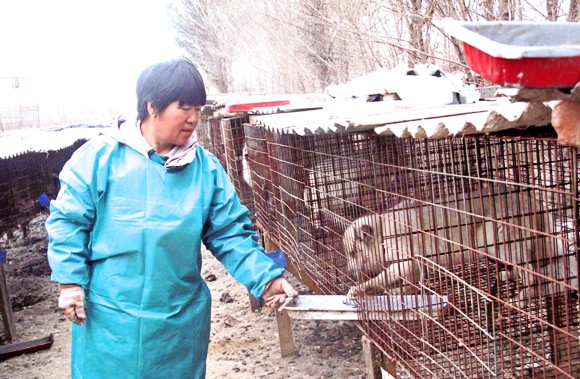
Bian Shuhua is feeding the foxes.
At the fox farm of Bian Shuhua, a farmer in Chutoulang Village, Chutoulang Town, Songshan District, Chifeng City, 150 foxes about to give birth are plump and round-bellied, with glossy fur.
Bian Shuhua and her husband were once laid-off workers. In 2010, under the guidance of a large fox farming household in Chutoulang Village, Bian Shuhua and her husband moved into the village's fox farming community, introduced 10 breeding foxes from Heilongjiang, and began a "snowballing" style of development. Today, the number of foxes has grown to 1,000, with breeds including silver fox, blue fox, red fox and raccoon dog, and the farming benefits once soared, with a net profit of 800 yuan per fox pelt at the best of times and an annual net income of more than 100,000 yuan. However, at the end of last year, the price per fox pelt suddenly dropped from 630 yuan the previous year to 420 yuan. Bian Shuhua worries that if the price falls further, profits will be even smaller.
Although she does not understand what supply-side reform is, this spring Bian Shuhua has been carrying out supply-side reform through practical action - increasing the litter rate of female foxes. "Among the factors determining the reproductive rate of female foxes, artificial insemination technology is crucial," Bian Shuhua said. A fox giving birth to 2 cubs at a time only breaks even; only more than 2 counts as profit. Last year, because the insemination technology was not up to standard, her foxes produced only 2 or 3 cubs on average. This year, she hired a highly skilled technician, and Bian Shuhua is confident about the fox cubs about to be born: "By conservative estimate, each female fox will give birth to 4 to 5 cubs at a time, and even in a poor market, there will still be profit."
Lowering costs is also Bian Shuhua's strategy for coping with low fox pelt prices. In the past, Bian Shuhua had to hire 2 people to work, but this year she and her husband feed the foxes themselves, saving about 40,000 yuan at once. Previously, corn accounted for only one-third of the feed, but this year she appropriately increased the proportion of corn in feeding to reduce expenses. Today, corn, feed and scraps from chickens, ducks and other animals have all become the "rations" for Bian Shuhua's foxes. What pleases Bian Shuhua is that this spring the prices of corn and feed fell, and the cost of raising foxes decreased accordingly. "The feeding cost per fox has dropped from 300 yuan to 200 yuan, and this is also room for added value." Bian Shuhua remains optimistic about fox farming.
At present, with the support of the Songshan District government, Bian Shuhua and the fox farmers in the same village are setting up a fox farming professional cooperative. "Joining forces" to enter the market allows them to enjoy the government's preferential policy of loan interest subsidies, and can also reduce feeding costs and increase their say in the market.