Raising Quail for 13 Years: Obsession Made Earning Money Easy for Him
Original title: Obsessed with Raising Quail, He Finally Realized His Dream of Getting Rich
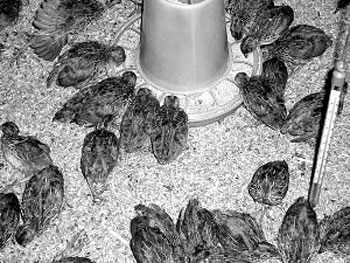
The quail raised by Yang Tingzhi (web image: Chongqing Daily Rural Edition)
Yang Tingzhi observing the growth and egg-laying of his quail. (web image: Chongqing Daily Rural Edition)
“The farm now has nearly 40,000 quail in stock, and selling eggs brings in a net profit of over 100,000 yuan a year without any problem,” said Yang Tingzhi, owner of the Tingzhi Quail Farm in Qianjiang District, Chongqing, happily as he looked at the quail in the pens.
Back in 2003, affected by “SARS,” a quail farm near the Qianjiang redrying factory was eager to transfer ownership because of poor sales. At that time, 33-year-old Yang Tingzhi had a surge of drive, and without much thought, he took over the farm, which had 10,000 quail in stock.
In farming, technology is the key. Yang Tingzhi went to a quail farm in Nanchang, Jiangxi Province, to inspect and learn quail-raising techniques, and also made a special trip to a bookstore to buy books on quail farming, devoting himself to studying breeding technology. Yang Tingzhi bought 5,000 hatching eggs, and strictly following the methods instructed by the technician, used a hatching bed to incubate the eggs, heating it with a coal stove and keeping the temperature at around 36°C. In the end, heaven rewards the diligent: the 5,000 hatching eggs produced more than 2,000 female quail.
After the successful hatching, Yang Tingzhi then put his mind to the feeding of the quail. Each cage holds 30 quail, to prevent the birds from getting sick from poor air when kept too densely. The temperature in the sheds is kept between 25°C and 26°C year-round; when the temperature drops in winter, plastic film is used to seal the shed all around for insulation; in summer, exhaust fans are installed to keep the shed ventilated and cool it down. The sheds are cleaned once a week and thoroughly disinfected, and the quail are given Newcastle disease vaccine diluted in water to prevent fowl plague.
By 2010, Yang Tingzhi's quail farm had grown like a rolling snowball, with the scale of quail raising reaching 30,000 birds.
Yang Tingzhi said that raising quail is mainly for selling eggs. When it comes to the number of quail he raises, he has his own distinctive approach: moderate-scale farming according to market conditions, without being greedy for size or quantity. From April to October each year, and during the Spring Festival, market conditions are somewhat better; after October, snakes enter hibernation, market sales decline, and at this time he must reduce the number of quail raised by nearly one third to lower feeding costs, then buy young quail to replenish the stock in the spring of the following year when the temperature rises.
Now, Yang Tingzhi's farm has nearly 40,000 quail in stock. At peak times, it can produce more than 300 kg of eggs a day, mainly sold to the Qianjiang urban market and places such as Hubei. Yang Tingzhi said that after deducting costs such as feed and labour, selling quail eggs brings in an easy profit of more than 100,000 yuan a year. (Zheng Jue)