Grain output increases for the twelfth consecutive year: how should the planting structure be adjusted?
Original title: Structural adjustment raises the curtain on the transformation of the planting industry
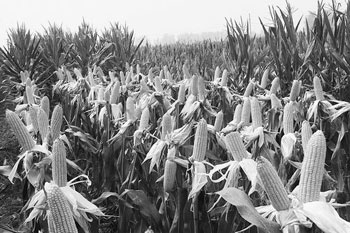
Adjustment of corn planting area
On April 28, the Ministry of Agriculture issued the "National Planting Structure Adjustment Plan (2016-2020)" (hereinafter referred to as the "Plan"). Focusing on the "13th Five-Year Plan," the "Plan" made detailed arrangements and deployments for the current and upcoming period of planting structure adjustment, in order to change the contradictions caused by the uncoordinated planting structure, adapt to the new normal of economic development, comprehensively improve the quality of development, and make every effort to ensure national food security and the effective supply of important agricultural products.
Subsequently, at a press conference held by the Ministry of Agriculture on May 5, Vice Minister of Agriculture Yu Xinrong said that, according to the Ministry of Agriculture's agricultural situation scheduling and reports from various regions, the current adjustment of the agricultural planting structure has gotten off to a good start.
"The "Plan" issued this time is a major measure for China's agriculture to adapt to the situation and actively respond to supply-side structural reform. It is an important strategic deployment made by the government after fully assessing the global supply and demand situation, the security of China's agricultural product supply, and the carrying capacity of China's resources and environment," said Luo Qiyou, a researcher at the Institute of Agricultural Resources and Regional Planning of the Chinese Academy of Agricultural Sciences, in an interview with a reporter from China Science Daily.
The reporter learned during interviews that China's agriculture and rural economy are currently undergoing profound changes. After grain output achieved a "twelfth consecutive increase," the main contradiction in China's agriculture has shifted from insufficient total supply to a structural contradiction. The planting industry is an important foundation of agriculture, and its sustained and stable development has provided strong support for economic improvement and the overall reform agenda. However, some old problems have also continued to accumulate, new contradictions have constantly emerged, and it faces many difficulties and challenges.
Adjusting corn is the focus
In the past, solving the problem of food and clothing was what people cared about most, insufficient grain supply became the main social contradiction, and solving the problem of feeding 1.3 billion people was especially important. With decades of earth-shaking changes and development in agriculture, what exists now is structural oversupply and insufficient supply at the same time.
Yu Xinrong pointed out that, from the perspective of the planting industry, the supply and demand of wheat and rice, which are staple food varieties, are basically balanced, while corn has experienced a phased oversupply; the supply-demand gap for soybeans has gradually widened, with more than 80 million tons imported last year. At the same time, cotton, oil crops, and sugar crops have been affected by resource constraints and the impact of the international market, with imports increasing.
"This is the current basic situation. The supply and demand of wheat and rice as staple foods are basically balanced, and among reserves it is mainly corn that is relatively abundant," Yu Xinrong said.
"The variety structure is severely tilted toward grain, and the massive production of corn among grains has squeezed out other crops. In particular, in many places that originally should not have produced corn, people have also been 'following the trend' and producing corn in recent years," said Kong Xiangzhi, a professor at the School of Agricultural Economics and Rural Development at Renmin University of China and director of the Institute of Rural Development, in an interview with a reporter from China Science Daily.
"The emergence of phased and relative oversupply of corn will also place greater pressure on storage and sales enterprises," Luo Qiyou said.
According to the content of the "Plan," this year corn should be taken as the key object of agricultural structural adjustment. The adjustment of the corn structure is also the item that farmers pay the most attention to. Market entities are all actively participating in the ranks of corn structure adjustment, showing some new trends.
Last year, the Ministry of Agriculture formulated and issued the "Guiding Opinions on Corn Structure Adjustment in the 'Sickle Bend' Region" (hereinafter referred to as the "Opinions"), proposing the adjustment approach of "preserving production capacity, adjusting appropriately, and industrializing," and appropriately reducing the corn area in non-advantageous regions, especially the "Sickle Bend" region.
Yu Xinrong said that corn is a crop with high energy and a very long industrial chain, and its subsequent processing industrial chain is very long, so "we must also propose promoting the transformation of corn with an industrial concept, so as to achieve increased farmers' income and relatively good development of the local economy."
According to the introduction, corn is also the basic feed source for the breeding industry and can promote the development of animal husbandry and processing industries. At the same time, corn is a good raw material for biofuels and has good processing and transformation capacity. Therefore, improving the comprehensive benefits of corn is also an important part of this corn planting structure adjustment.
The reporter learned that, in order to protect the interests of farmers in corn adjustment areas, the Ministry of Agriculture, together with the Ministry of Finance, integrated 3.25 billion yuan in funds to support corn planting structure adjustment.
In terms of work deployment, the Ministry of Agriculture coordinated the reduction of corn with grain-soybean rotation, pilot projects for converting grain to feed, and reform of the corn purchase and storage system. The focus was to reduce non-advantageous production areas in the "Sickle Bend" region, such as the cold and cool areas of Northeast China and the farming-pastoral transition zone of the north, and to actively guide farmers to switch to soybeans, potatoes and miscellaneous grains, silage corn, and high-quality forage grass.
According to the Ministry of Agriculture, it is expected that the intended corn planting area will be reduced by more than 20 million mu this year, while the soybean area will recover and increase, and is expected to increase by more than 6 million mu this year.
"Three arrows fired at once" is the highlight
At present, China's important agricultural products are affected by international grain prices. The channel for price increases has encountered a "ceiling," while production costs have encountered a "floor" pushing them up. Such a "double board" constraint has narrowed the room for further improving producers' benefits.
In addition, due to rising land rent and labor prices, production costs have been pushed up year by year. In the long run, the upward pressure on agricultural input prices, the rising cost of agricultural production labor, and the trend of rising wage levels across society are difficult to change. Agricultural production has entered an era of high costs, and the problem of relatively low planting benefits has become increasingly prominent.
With the rapid advancement of industrialization and urbanization, part of the cultivated land has been occupied as a result, part of the space for agricultural water use has been squeezed, and the "hard constraints" on agricultural production have intensified.
"China's agricultural resource environment is under increasingly serious threats from water shortages, soil erosion, non-point source pollution, and plastic film pollution, and structural adjustment is urgently needed so that crop varieties and farming systems can better adapt to environmental requirements," Luo Qiyou said.
Under the new situation, the "Plan" gave instructions on these issues and proposed the national food security strategy and the strategy of storing grain in the land and storing grain in technology. It adheres to market orientation and ecological priority, consolidates and improves grain production capacity, advances planting structure adjustment, optimizes variety structure and regional layout, and builds a pattern of coordinated grain, cash crop, and feed production, combined farming and animal husbandry, integrated planting, breeding, and processing, and integrated development of the primary, secondary, and tertiary industries, taking the path of agricultural modernization with high output, safe products, resource conservation, and environmental friendliness.
In Kong Xiangzhi's view, the very prominent highlight of this "Plan" lies in the "three combinations": the combination of grain crops, cash crops, and forage crops, that is, the so-called ternary planting structure combining grain, cash crops, and feed; the combination of production and ecology; and the combination of land use and land nurturing.
Luo Qiyou also said that the "Plan" proposes protecting staple food crops, expanding feed-use (feed and forage) crops and land-nurturing crops, and building a more adaptable, sustainable, and competitive crop structure with coordinated development of grain, cash crops, and feed. This is indeed a major feature of this adjustment.
"Coordinating the relationship between production and ecology is very important, and this must be achieved during the '13th Five-Year Plan' period," Kong Xiangzhi emphasized. We need to produce so many agricultural products, and we cannot ignore ecology.
Experts pointed out that how to combine "use" and "nurturing" is also a key point emphasized in the "Plan." While using the land, it is necessary to nurture it. We cannot only adopt predatory methods of use; the land must be given a certain amount of "rest." "How to nurture it? Mainly by adopting crop rotation."