Crayfish Business Opportunity Born from Diners' Love: Taiwan Compatriot Goes to Chibi to Farm Them
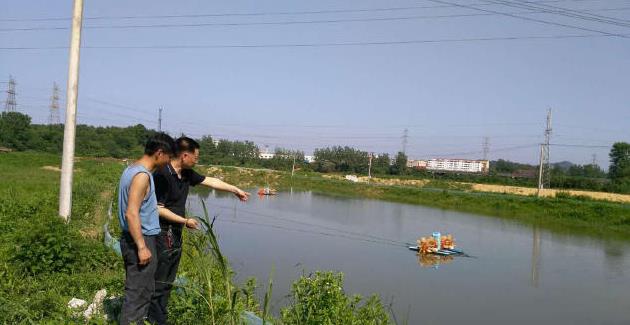
As people's living standards continue to rise, domestic seafood can no longer satisfy "foodies," and "imported seafood" has made its way onto urban dining tables. Taiwan compatriot Chen Qiuye saw a business opportunity in this. Two years ago, he came from Taiwan to Chibi to farm crayfish (giant freshwater prawns, Macrobrachium rosenbergii).
Chen Qiuye's crayfish farming base is located in Group 5, Jintan Village, Puqi Subdistrict, Chibi City. On May 11, when the reporter arrived at the base, he was installing a water intake pipe by the pond.
Chen Qiuye explained that the crayfish he farms are very different from local crayfish. They are called giant freshwater prawns (Macrobrachium rosenbergii), originally from Thailand, and belong to the seafood category. They are 5 times larger than ordinary prawns, with thin shells and plump bodies, tender meat, a delicious taste, and rich nutrition.
Chen Qiuye once worked in Shenzhen for many years, and he found that Shenzhen diners had a particular fondness for giant freshwater prawns. After some market research, Chen Qiuye learned that along the coastal areas of the mainland, giant freshwater prawns were in short supply, while in inland areas there was almost no trace of them. So he decided to go inland to farm giant freshwater prawns.
Giant freshwater prawns have very high water quality requirements. In order to find high-quality water sources, Chen Qiuye investigated several places in the mainland, but none had a satisfactory farming environment and ideal water source. Later, on a friend's recommendation, he came to Chibi City to investigate and took a liking to Jintan Village in Puqi Subdistrict, feeling that the geographical environment here and the water quality of Jintan Reservoir were suitable for giant freshwater prawns to grow. Chen Qiuye then contracted 90 mu of land in Group 5 of Jintan Village and introduced giant freshwater prawn fry from elsewhere for farming.
During the farming process, Chen Qiuye returned to Taiwan several times to invite experts for technical guidance, and hired two technicians at high salaries to farm using scientific techniques. Chen Qiuye told the reporter that his crayfish feed entirely on microorganisms and bait, and the farming water source is the water from Jintan Reservoir, so consumers can eat them with confidence.
In August last year, Chen Qiuye's first trial farming of 20 mu of crayfish yielded 5,000 jin. Although the crayfish he farms are more expensive than local crayfish, they were in short supply in the markets of Wuhan and Changsha, and sold out in less than half a month.
With this initial success, Chen Qiuye expanded his farming area this year and has now farmed 50 mu of crayfish. He preliminarily estimates that this year the yield per mu can reach 400 jin, for a total harvest of 20,000 jin.
Chen Qiuye said he will gradually expand the farming area, with plans to farm 300 mu next year, and then build a cold storage facility to ensure that consumers can enjoy fresh crayfish in all four seasons of the year.