Morel mushrooms change destiny, small mushrooms grow a path to prosperity
He was once a down-and-out young man whose father was paralyzed and who was carrying 200,000 yuan in debt. To make a living, he traveled thousands of miles away, only to accidentally discover a wealth opportunity. Relying on this magical thing, Zheng Yehua not only changed his family's destiny, but also became a local industry leader. However, when people saw his product, they were both curious and afraid. What wealth opportunity did Zheng Yehua discover, and how did he use it to rewrite his destiny?
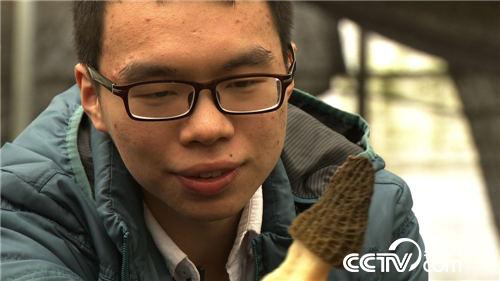
Zheng Yehua brought his product to the streets of Mianyang City to conduct surveys and promotion.
When everyone saw what he was holding, they all found it very strange.
Citizen: What is this?
Zheng Yehua: Guess?
Citizen: I don't know.
Citizen: Can you eat it?
Zheng Yehua: You can eat it.
Citizen: It looks like corn.
Reporter: The shape is like corn?
Citizen: Yes. Look at this, it's a bit like a corn cob.
Citizen: Does it still move? Or?? Why does it feel like meat?
Reporter: It feels like meat?
Citizen: So scary.
Facing this thing they had never seen before, everyone first started guessing based on its appearance.
Citizen: It's not some kind of pig stomach, no, something like a rabbit's belly, is it?
Reporter: Like a belly?
Citizen: I think it's a bit like that, this one is a bit like that.
Reporter: Like tripe?
Citizen: Yes, that kind of feeling. Maybe it's from some small animal, maybe, it's not a trap, is it?
Citizen: What is it?
Citizen: That thing for eating hot pot, this one is a bit like that.
Reporter: Like what?
Citizen: It's a bit like tripe.
Citizen: It's like that inner layer of tripe.
This thing in Zheng Yehua's hand did indeed look somewhat like tripe. But when everyone smelled it, they became confused again.
Citizen: It has a bit of that feeling, like the smell of flour.
Reporter: Like the smell of flour?
Citizen: Yes.
Citizen: It's a bit, that kind of fragrance, with that Chinese medicine kind of feeling, smell.
Citizen: A bit like wood ear mushroom.
As they smelled it, someone got the right feeling.
Citizen: There's a smell, like the smell of dried mushrooms.
Citizen: This has a fungal smell.
Citizen: It smells a bit like mushrooms, this one is a bit like that.
It looks like tripe and smells like mushrooms. The thing Zheng Yehua is holding is scientifically called: morel, a rare edible fungus.
Citizen: Oh, morel is this, morel, right?
Reporter: You've heard of it?
Citizen: Yes yes, I know it, I know it.
Reporter: Have you heard of morel?
Citizen: I've heard of it, they say it's over 100 yuan per jin, fresh.
Reporter: Over 100 yuan per jin?
Citizen: Yes, live (fresh), this one is dried.
Reporter: What about dried?
Citizen: I don't know the price for dried.
Zheng Yehua: For dried product, it takes about more than 8 jin to dry 1 jin, so the price goes up 9 times, 10 times like that.
Citizen: 9 times? That means over 1,000 yuan, per jin?
Zheng Yehua: Yes.
The main consumer country of morels is France, and the selling price of morels exported to France is even more astonishing.
Engineer He Ronghua: In France, whole morels are very expensive, equivalent to about 8,000 yuan per kilogram in RMB.
Reporter: 8,000 yuan per kilogram?
Engineer He Ronghua: Yes, 8,000 yuan per kilogram.
Reporter: That kind of dried complete ones?
Engineer He Ronghua: Dried, dried.
Every year from March to May is the season when locals harvest wild morels. Early in the morning, the reporter followed Zheng Yehua from Mianyang City to look for wild morels. For Zheng Yehua, finding one high-quality wild morel could bring him tens of millions in wealth.
The altitude gradually increased, and the mountain terrain became steeper and steeper. After more than two hours, they finally reached the destination. This is the mountainous area of Beichuan Qiang Autonomous County. The reporter met some villagers here, carrying baskets into the mountains. City people are not familiar with morels, but the villagers here know the value of morels.
Villager: There are very few. People pick such a big chunk and take it to sell, a few liang, some one or two liang, some pick two or three and take them to sell.
Reporter: Two or three and they take them to sell, for how much?
Villager: People say it's very expensive.
Reporter: How expensive?
Villager: Several hundred yuan per jin.
Reporter: Is it easy to find?
Villager: Not easy to find. Usually people come across them on old mountains after herding cattle and sheep, and only then pick them.
Reporter: Can you find one or two jin of them?
Villager: Can't find, can't find, there are very few.
Reporter: Very few? Then what are you going up the mountain to find?
Villager: We're going to pick fern shoots.
Reporter: Wild vegetables, right? Thank you.
Wild morels mostly grow in mountain forests at an altitude of 2,000 to 3,000 m. When fruiting, the temperature cannot exceed 25°C, and relatively high humidity is also required. Walking in the mountains, all kinds of fungi can be seen everywhere. However, finding morels is not so easy. As Zheng Yehua walked, he observed the surrounding environment.
Zheng Yehua: This environment is quite suitable for morels to grow. Look, there is water flowing down from above. The most critical thing for wild morels is humidity.
After confirming the environment, Zheng Yehua and the people with him began a carpet-style search. Whether they could gain anything by going into the mountains today was related to the wealth of the coming year, so no one dared to be careless.
Reporter: Did you find any?
Villager: No.
After searching for more than half an hour, Zheng Yehua suddenly ran toward a slope.
Zheng Yehua: It was so hard to find, and I finally found it.