Achieving high yields in rice cultivation is easy; achieving good quality is harder
Original title: Rice quality is harder to achieve than high yield
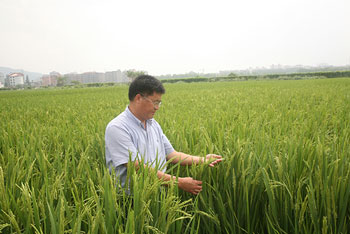
Researcher Hu Peisong, 2014 national outstanding contribution agricultural science and technology personnel in grain production (web image: Chinese Academy of Agricultural Sciences)
Today, at the dining tables of ordinary people, we have to admit that rice, this "former overlord," is gradually falling out of favor. Especially as living standards improve, on the one hand, people's choices of staple foods are becoming increasingly diverse and personalized; on the other hand, the requirements for the eating quality of rice are getting higher and higher.
In the past, to solve the food security problem, high yield had always been the primary goal of rice breeding in China; today, balancing high yield and quality has long become the new normal and new requirement of breeding. So what exactly is the situation of quality rice breeding in China? A few days ago, a reporter conducted an exclusive interview with Hu Peisong, head of the "Rice Quality Genetic Improvement" team at the National Rice Improvement Center and deputy director of the China National Rice Research Institute.
The "three rises and three falls" of quality rice
In 2015, China's total rice output was 208.24 million tons, remaining above 200 million tons for 5 consecutive years, but while "domestic grain fills the granaries," China's rice imports will break through a new high of 3 million tons. From this string of data listed by Hu Peisong, it is not hard to see that "the entire rice market is transmitting a strong signal: the quality of Chinese rice urgently needs to be strengthened, and the market needs quality rice."
But to some extent, high yield and good quality are contradictory. Hu Peisong told the reporter that although "quality" had also been placed at the core of rice breeding research many times, as soon as yield and area declined, "high yield" immediately regained dominance. Over 30 years, quality rice went through "three rises and three falls."
In 1985, the rice quality issue attracted the attention of relevant departments. At that time, the Ministry of Agriculture held a quality rice symposium in Changsha, Hunan, proposing the development direction of striving to promote product quality upgrading; the following year, rice breeding research determined quality as the primary goal; afterward, the Ministry of Agriculture also specially issued industry standards for "Quality Edible Rice" and "Methods for Rice Quality Determination."
However, not long after, domestic rice production was affected by this, and after yields declined somewhat, the first peak ended hastily. It was not until 1992, when the State Council proposed taking the agricultural development path of "high yield, high quality, and high efficiency," that quality rice finally welcomed a second spring. But the following year, domestic rice area and output fell sharply, making this spring even shorter.
"From 1994 to 1997, only after high yield was emphasized did rice output gradually recover, and with the strategic agricultural structural adjustment implemented in 1998, quality rice welcomed its third peak. As a result, in breeding research, we also gradually took both quality and high yield into account," Hu Peisong said.
At present, northern japonica rice is basically quality-oriented, and since the Rice Research Institute is located in Zhejiang, Hu Peisong's team naturally concentrates its main energy on breeding research for southern indica rice varieties. Relatively speaking, southern indica rice generally has shortcomings such as high chalkiness rate, low head rice rate, hard cooked rice, and poor eating quality, with the compliance rate for quality rice at only about 30%, leaving great room for improvement.
Rice quality research is the foundation
So how exactly is rice quality judged? Hu Peisong said bluntly that the concept of quality rice is very complex, and he briefly introduced several core indicators to the reporter: milling quality, appearance quality, eating quality, and nutritional quality. In plain terms: easy to process, good-looking, tasty, and nutritious.
"For appearance, it can be observed through grain length, grain width, chalkiness, and transparency. Generally speaking, the less chalkiness, the easier the rice is to process, and the relatively better its commercial quality; but if eating quality and nutritional quality are involved, then analysis must rely on physicochemical indicators, including starch, protein, moisture content, as well as gelatinization temperature, gel consistency, and so on," Hu Peisong introduced.
In 1991, Hu Peisong began engaging in research on genetic improvement of rice quality. He admitted frankly that quality research is more difficult than high-yield research. Taking starch, which accounts for about 75% of rice content, as an example, its synthesis is currently known to be controlled by more than 30 genes, and most of them are quantitative genes, which plainly means the traits are extremely susceptible to environmental influence.
Breeding is guided by market demand
The reporter learned that at present, for quality rice production, South China mainly eats indica rice, Central China mostly eats indica and japonica rice, the southwestern plateau region mainly eats indica, japonica, and glutinous rice, and the north eats japonica rice. Relatively speaking, because southern early indica rice has poor eating quality, quality rice research and development still has a long way to go.
In the future, where is China's quality rice research and development heading? "Under market pressure, with changes in rice production and operation methods, especially as large-scale entities have increasingly higher requirements for rice quality, food security must still be firmly maintained, so in breeding, quality and high yield still have to be taken into account at the same time," Hu Peisong pointed out, adding that quality can also be reflected in use and special characteristics.
"For example, some early indica rice varieties are actually very suitable for processing into rice noodles, and in addition there is the expansion of functional rice, whose future market prospects are also very optimistic," Hu Peisong said. In the future, for special groups such as those with kidney disease, diabetes, and cardiovascular disease, it is expected that highly personalized new rice varieties with health care and auxiliary therapeutic functions will emerge.
In terms of rice safety, farmland irrigation areas are currently severely polluted by heavy metals, among which cadmium is the main pollutant, and how to highlight the low cadmium accumulation characteristics of rice grains has become one of the important directions of breeding. Fortunately, most of the varieties currently bred by Hu Peisong's team are low cadmium accumulation varieties, among which "Zhongjiazao 17" was also recommended by Hunan Province as an emergency low cadmium accumulation variety. (Staff reporter Zhu Haiyang)