Where does the road to food safety lead? China looks to big data for support
Original title: Food safety looks to big data for support
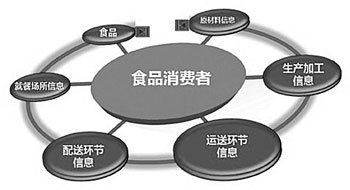
Big data underpins food safety
"In recent years, some cities in China have conducted research on food safety indices and published them, and some experts and scholars have also discussed food safety index models in their papers. Overall, however, China's existing research on food safety indices is still at a preliminary stage of exploration, and is relatively incomplete and lagging behind." On May 21, Professor Wen Liqun, executive deputy director of the Office of the China Food Safety Index Research Project, pointed this out at the "2016 China Food Safety Social Co-governance and Food Safety Big Data Summit Forum." The forum was jointly initiated by China Food News, the Office of the China Food Safety Index Research Project, and other units.
The food safety index is a comprehensive evaluation indicator for assessing the food safety situation of a country or region, and can provide data support for objectively assessing food safety conditions and giving early warning of food safety risks. It is understood that the food/food security index for 109 countries, designed and released by the UK-based Economist Intelligence Unit with sponsorship from DuPont, has been recognized by more and more countries and applied in the global food safety regulatory evaluation process. Wen Liqun told reporters that this index differs from China's commonly used concept of food safety, which means that food is non-toxic and harmless, meets the nutritional requirements it should have, and causes no acute, subacute, or chronic harm to human health, in terms of both level and content.
Wang Weiguo, director of the Food Safety Rule of Law Research Center of the China Law Society, believes that the food safety index is a useful attempt at social co-governance of food safety. Conducting research on China's food safety index through social institutions depends on the active attention and active support of all parties involved. It is necessary to form a scientific and reasonable indicator system and to advance it in an orderly manner in accordance with the law, to create a big data "product" with credibility, guiding power, and motivational force, and to build a data think tank for the social co-governance of food safety in China, so as to provide strong intellectual support for promoting the implementation of the food safety strategy and advancing the building of a Healthy China.
Wen Liqun told reporters that at present, the selection of indicators in domestic research on food safety indices lacks representativeness, and the results they reflect are difficult to apply to multiple food categories, lacking universality. In addition, the formulation of indicators is relatively independent and lacks correlation, making it difficult to achieve comprehensive analysis, so that the research results do not have comprehensive and systematic significance.
Second, the types/categories of data sample collection cannot cover all categories; the scope and quantity of collection have not yet achieved large-scale coverage across all regions of the country, and the data collection cycle is relatively short and lacks continuity. Therefore, the research results can hardly reflect changes and trends in food safety, and the data relatively lack effectiveness, relevance, comprehensiveness, and authority.
Third, according to China's current food safety standards, there are overlaps, complexities, and contradictions, and there are differences in regulatory intensity and methods between localities and between localities and the central government. Therefore, data collection and its analysis lack comparability and rationality.
At the same time, food safety risk communication (mainly through the media) has both objective and subjective communication problems, which has led to differences in people's understanding and perception of food safety-related information and a crisis of trust.
For the above reasons, establishing a comprehensive, scientific, authoritative, and integrated China food safety index suited to China's national conditions, accurately reflecting the current state of food safety in China and its continuously improving development trends, and promptly forecasting and warning of problems and risks in the field of food safety, will undoubtedly help government departments concerned strengthen regulation of food safety, help food production and operation enterprises increase their attention to food safety, and help enhance consumers' scientific understanding of food safety, ultimately helping to advance the realization of the goal of social co-governance of food safety.
The Office of the China Food Safety Index Research Project (hereinafter referred to as the Office) has done a great deal of work in the more than 2 months since its establishment. Its deputy director Wu Wu introduced at the forum that they have selected one information collection service provider in each prefecture-level city across the country to assist the Office in collecting food safety-related information; will select one testing institution in each province and city across the country as a partner; and will accelerate the pace of building a food safety expert database.
Wen Liqun pointed out that as a comprehensive evaluation indicator, the food safety index requires research that relies on the massive collection, organization, and comprehensive analysis and utilization of various types of data in the field of food safety. Only by using a data collection and analysis model that combines big data with traditional data can research on the food safety index be better conducted, and can government, enterprises, and consumers be better helped to promptly, deeply, and comprehensively discern and understand the food safety situation and existing risks, thereby effectively responding to food safety issues and achieving social co-governance of food safety.
Data is an important component and important foundation of food safety index research, and its sources will be divided into two major channels: various official data and industry data regularly released by relevant government regulatory authorities, and an information data collection system covering most regions of the country. "To this end, we hope to receive the support and help of relevant government departments, experts and scholars from research institutions, and far-sighted people who care about and pay attention to food safety," Wen Liqun said. (Staff reporter Li Chen)