The essence of leisure agriculture is agriculture; its development must be based on farming
Original title: Who is the protagonist of leisure agriculture
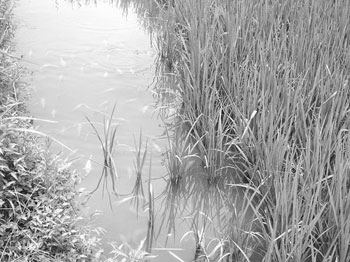
Raising fish in rice paddies (Image source: Baidu Images)
Recently, the Ministry of Agriculture once again proposed vigorously advancing the development of leisure agriculture and rural tourism through strengthening brand system development, and emphasized using brands to lead the development of leisure agriculture and rural tourism, focusing on building a "3+1+X" leisure agriculture and rural tourism brand system.
Experts interviewed by the China Science Daily believe that from the launch of national leisure agriculture and rural tourism pilot projects in 2010 to now, China's leisure agriculture and rural tourism is still in an initial exploratory stage. Improving the development level of leisure agriculture and rural tourism through brand cultivation and demonstration creation is an effective means, but in the process of its development, attention must be paid to distinguishing the relationship between agriculture and tourism.
Driving local development
What is leisure agriculture? Leisure agriculture is a new type of agricultural industrial form and new consumption format that expands agriculture's functions of sightseeing and leisure, cultural inheritance, and science and technology popularization, revolves around agricultural production processes, farmers' working lives, and rural customs and landscapes, and through innovation, creativity, and creation enables people to savor agricultural charm, enjoy pastoral life, and experience farming culture, driving the integrated development of the primary, secondary, and tertiary industries in rural areas.
Zong Jinyao, Director of the Department of Agricultural Product Processing of the Ministry of Agriculture, introduced that leisure agriculture has not been developing in China for a long time, but under the strong promotion of governments at all levels and agricultural departments and the strong pull of market demand, the scale of the national leisure agriculture industry is gradually expanding, its development connotation is continuously improving, its development types are gradually enriching, and its development methods are gradually changing.
Li Guoxiang, a researcher at the Institute of Rural Development of the Chinese Academy of Social Sciences, told reporters in an interview that rural tourism and leisure agriculture in some places have developed rapidly and become the pillar of the local economy.
Data from the Ministry of Agriculture show that in 2015, national leisure agriculture and rural tourism received more than 2.2 billion tourist visits, operating revenue exceeded 440 billion yuan, employment reached 7.9 million people, including 6.3 million farmer employees, benefiting 5.5 million farmer households. During the "12th Five-Year Plan" period, the average annual growth rates of both tourist visits and operating revenue exceeded 10%.
Ke Youpeng, Dean of the Hainan Tropical Agriculture and Rural Economy Research Institute and a professor at Hainan University, told the China Science Daily that government support for this is very strong. To drive the development of leisure agriculture and rural tourism, the Ministry of Agriculture and the National Tourism Administration began in 2010 and used 3 years to cultivate 100 national leisure agriculture and rural tourism demonstration counties and 300 national leisure agriculture demonstration sites. As of 2015, the demonstration counties and demonstration sites had all been determined.
Xin County in Henan Province is one of the first batch of national leisure agriculture and rural tourism demonstration counties. The county is located in the hinterland of the Dabie Mountains. Although it is a national key county for poverty alleviation and development, the area's good ecological environment has also driven the development of tourism, receiving 2 million tourist visits annually.
Luo Zhaocheng, deputy head of the Leading Group of the Xin County Rural Reform Pilot Area and director of its office, introduced to the China Science Daily that Xin County spans the two major river basins of the Yangtze River and the Huai River, with beautiful mountains and rivers, lovely countryside, and simple folk customs, making it very suitable for developing rural tourism. "The rural tourism industry is also one of the five leading industries for Xin County's future agricultural development."
But at present, brand cultivation and demonstration creation give localities headaches. "The effect of implementation in recent years has not been very obvious either." Jia Dameng, deputy director of the China County Economy Research Center of China Agricultural University, said in an interview with reporters that this is nevertheless one of the projects mainly promoted by the Ministry of Agriculture.
Is it tourism or production
In Zong Jinyao's view, development practices in various places have further highlighted leisure agriculture's economic function of promoting income growth, social function of driving employment, cultural function of protecting, utilizing, and inheriting farming civilization, and ecological function of beautifying the rural environment, promoting large numbers of agricultural areas to become "scenic areas," fields to become "parks," and agricultural products to become commodities.
"Brand is one of the cores of agriculture. In leisure agriculture, there are several business formats worth paying attention to, and they are currently doing fairly well." Jia Dameng said, "Agricultural theme parks and estate economy are the main business formats, and also a trend in leisure agriculture."
Taking "foreign-style farm stays" as an example, it started with "Xiaoyuan" in Beijing, rose in Moganshan Town, Deqing County, Zhejiang, and has now become an important brand of leisure agriculture and rural tourism in Deqing County, and quickly developed in places such as the Yangtze River Delta, Pearl River Delta, and Beijing-Tianjin-Hebei region in a short period of time.
It is understood that "foreign-style farm stays" practice the low-carbon concept, integrate original ecological natural elements, use local materials and bare decoration, and provide tourists with a sense of intimacy and return to nature.
At the same time, the Ministry of Agriculture actively encourages and supports localities in adapting measures to local conditions and exploring and innovating new forms and new carriers to promote the development of leisure agriculture and rural tourism, and holds agricultural festival and celebration activities with distinctive features, great influence, and strong public welfare, such as agricultural carnivals, agricultural parks, star-rated farm stays (farms), and creative agricultural fine products.
This has also drawn skepticism from people in the industry: "The Ministry of Agriculture has also started doing tourism!" In Jia Dameng's view, there is no problem with combining tourism and agriculture; the key is to clearly recognize the relationship between the two.
"In some places, whether agriculture is the primary industry or the tertiary industry has already become difficult to distinguish." Li Guoxiang also offered a similar analysis.
In addition, the Ministry of Agriculture also requires integrating three tasks - the creation of national leisure agriculture and rural tourism demonstration sites, the promotion of China's most beautiful leisure villages, and the pilot creation of China's beautiful villages - into the China Beautiful Leisure Village Promotion Activity, to create across the country a batch of beautiful leisure villages (towns) with blue skies, green land, clean water, stable living, enjoyable work, and increased income.
But in fact, some enterprises do not attach much importance to this and have no brand awareness. "They are not even very clear about what leisure agriculture is, let alone brands, and no momentum has formed." Jia Dameng told the China Science Daily.
Agriculture should not play a supporting role
In Jia Dameng's view, in the process of developing leisure agriculture and rural tourism, it must be clear that the carrier is agriculture, and tourism is only a means. "When it comes to tourism, people mention the six elements of tourism: food, accommodation, transportation, sightseeing, shopping, and entertainment. Leisure agriculture should pay attention to these."
In the view of Zhu Qizhen, director of the Institute of Farmer Issues at China Agricultural University, rural tourism that excludes farmers and rural areas, such as some sightseeing parks and agricultural theme parks, does not solve rural problems, but rather satisfies the creative desires of a small number of elites and the need of wealthy people to enter rural areas to obtain a pleasant living environment, and it is also difficult for it to reflect the function of protecting and inheriting village culture.
In fact, as far as general village cultural protection is concerned, developing rural tourism and agricultural tourism may be a more realistic path. Zhu Qizhen believes that in the contradiction between economic development and village protection, rural tourism and the revitalization of traditional handicrafts are considered effective ways to bridge the two.
After Longxian Village in Qingtian County, Fangshan Township, Zhejiang Province, acquired the label of a world agricultural heritage site, tourists drawn by its fame came in an endless stream from places such as Hangzhou and Shanghai. Its unique field fish culture, folk culture, and overseas Chinese culture effectively drove the development of ecological tourism, with annual tourism revenue reaching more than 2 million yuan.
"Farmers who directly benefited economically from this have also truly felt the importance of continuing to maintain the tradition of raising fish in rice paddies and their way of life." Zhu Qizhen told the China Science Daily.
At present, the area of rice-fish farming in Fangshan Township has expanded to more than 5,000 mu, and some young people have therefore stayed in the village to develop.