Introduction to the Morning Glory Weed and How to Control Its Numbers and Eliminate It
Due to its ability to spread quickly and take over garden areas, the morning glory weed in the garden can be seen as a nemesis. Or, you can release that tension and go zen by admiring the twining vines and lovely soft flowers. Most gardeners want to know how to kill morning glory weeds, but if you have a large forty-year-old or wild stand, morning glory vine is an excellent no-care plant that will persist and produce a lovely spring and summer floral display.
However, controlling morning glory weeds in a cultivated landscape is essential to prevent the plant from taking over. Morning glory and bindweed belong to a unique and tenacious group of plants called Ipomoea. It is closely related to the perennial bindweed or convolvulus. Morning glory vine is an annual, but if it successfully reseeds, you really would not know it. Bindweed grows from rhizomes or underground storage structures, which promotes the spread of the weed. They are tough and stubborn opportunistic weeds that can get into cracks and crevices and are nearly impossible to remove.
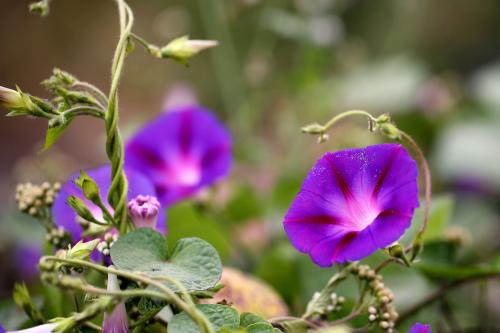
Many gardeners classify morning glory as one type of plant. Instead, their separate classifications and growth patterns clearly categorize the two as very different plants with similar flowers. Another difference between morning glory vine and bindweed is the annual availability of seeds and the inability to obtain bindweed seeds. Who wants to grow a weed that can visibly grow in a single day, spread over almost any surface, and will not die unless you use chemicals? Morning glory is more adaptable, and seeds are widely available. The slender stems grow quickly and twine around each other for support. The flowers are funnel-shaped, sometimes with a deeper or lighter throat. Garden supply centers offer them mainly in pink, rose, purple, lavender and white. The name morning glory vine comes from the flowers' habit of opening in the first light of morning and closing when the full heat and sun of the day arrive.
The morning glory weed in the garden is ideal as a ground cover, a natural decoration for fences and barriers, and a beautifying device for a broken shed or barn that has not yet been removed. Be careful when you plant this vine, because it grows at an incredible rate and can be very invasive and difficult to remove. How to kill morning glory Many gardeners are confused and call morning glory bindweed. Although the plants are separate species, they do have similar stubborn growth habits and are difficult to eradicate by pulling.
Morning glory weed control is a multi-part task. Pre-emergent herbicides do not work on this plant, pulling is labor-intensive, and it often breaks the vine, which may even regrow. Completely removing the plant can be a maddening task that takes a long time. Using thick mulch or weed barrier fabric can help smother spring seedlings. Do not let the vines flower and set seed, which can prevent some sprouts the following spring. Glyphosate and some broadleaf herbicides have some effect, but you need to spray early in the season when the plant is young. Any systemic selective herbicide is a better choice, because glyphosate will also affect surrounding plants. However,
it is widely available, and applying it to the leaves helps prevent drift and damage to surrounding plants. Whichever method you use, you need to stay vigilant and monitor for new plants and treat them. Controlling morning glory takes several seasons, and persistent seeds in the soil can germinate years later. Morning glory vine can be a glory in the garden, but it can also be a royal pain, so think once or twice before you install this rampant, colorful vine.