The division propagation method for Dendrobium officinale really isn't as hard as you'd imagine
Speaking of growing Dendrobium officinale,
especially for people like Susu who just treat it as a hobby (emphasis on the non-professional part),
many friends choose to just buy a ready-made pot online or from a local flower and bird market, for example
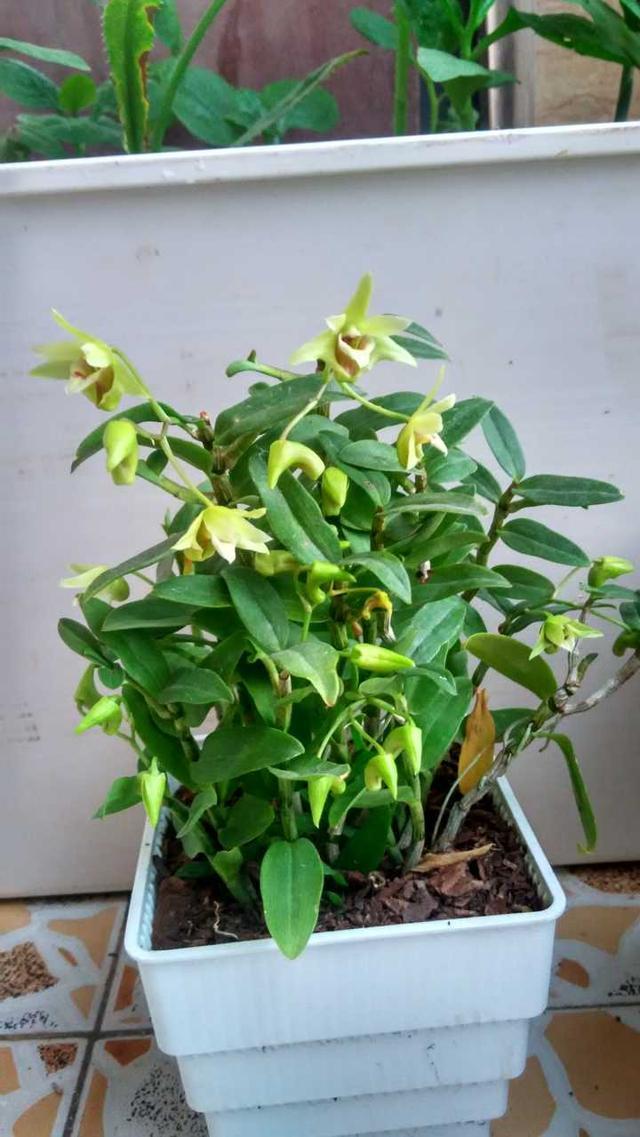
like this pot belonging to my friend, which was bought ready-made and brought home to grow.
But looking at how many nodes there are, it really is worth trying division propagation of Dendrobium officinale.
Actually, we've already seen plenty of Dendrobium officinale growing methods online, which mainly fall into two types:
The propagation methods of Dendrobium are divided into two major categories: sexual propagation and asexual propagation. At present, asexual propagation is mainly used in production.
1. Sexual propagation
That is, seed propagation. Dendrobium seeds are extremely small, with about 20000 seeds per capsule, appearing as yellow powder.
Dendrobium officinale seeds usually do not germinate; they can only sprout and grow under conditions of sufficient nutrients, suitable humidity and moderate light, and generally need to be cultivated in a tissue culture room. However, although the propagation coefficient of Dendrobium is extremely high, the success rate of its sexual propagation is extremely low.
2. Asexual propagation
(1) Division propagation:It means when you see a pot of Dendrobium officinale growing very lushly with a well-developed root system, you separate them and plant them. For example:
this one, you separate it and plant it
This lets your Dendrobium officinale go from one to two, and two to four……
(2) Cutting propagation: select three-year-old robustly growing plants, remove the leaves and lay them horizontally on sphagnum moss, preferably with 3-4 nodes
(3) Keiki propagation: For Dendrobium plants more than three years old, axillary buds, also called keikis, sprout on the stems every year and grow aerial roots, becoming small plantlets. When they grow to 5-7 cm, they can be cut off and transplanted.
Actually, Susu thinks this diagram looks much simpler than the usual piles of words, though of course there are still many things to pay attention to
For example, today we'll talk about division propagation for growing Dendrobium officinale.
I. The suitable season for division propagation of Dendrobium officinale
General division propagation is carried out in spring or autumn, mostly in spring. If planting in autumn, frost protection must also be done well. The most suitable time for division propagation of Dendrobium officinale is around early April, and it can be moved forward or back by about a month.
II. Preparation before division propagation
Before dividing, control watering to let the potting soil dry out appropriately so the roots turn white; this way the originally crisp and easily broken fleshy roots become soft, so dividing and repotting won't damage the roots too much.
When taken out, they are relatively easy to separate without damaging the roots, which is what makes them easy to survive.
III. How do you take the "divisions" out for division propagation?
First pry the Dendrobium officinale out of the pot, shake off the old soil, carefully observe the growth direction of the root system, and following its natural spreading intervals, separate it by hand from the gaps or cut it apart with a sharp knife, then leave it in a cool place to let the wounds heal.
IV. Selecting the "divisions" for division propagation of Dendrobium officinale.
The seed stems selected for division propagation of Dendrobium officinale are very important. Generally, plants with good form, well-developed roots and many buds are chosen as the seed stems for division propagation, then the seed stems are treated as follows: remove excess old roots and dead branches, and remove the flower buds to prevent nutrient consumption. Three to four stems as one clump is enough for transplanting. Note that the scissors used during handling must be sterilized.
V. Care after dividing Dendrobium officinale
After the separated Dendrobium officinale plants are potted, water them thoroughly and place them in a cool, ventilated spot for care. Note that good shade should be maintained. Do not expose them to direct sunlight at first, and do not fertilize at first either, and mist frequently to keep the substrate moist.
Well, honestly speaking, division propagation for growing Dendrobium officinale should count as relatively simple. The main things to pay attention to are still the season for division, the selection of divisions, and the management after division propagation.
Simple and easy-to-follow steps, have you learned them?
I believe your Dendrobium officinale will bloom in no time~ Susu is waiting for everyone to share the good news~~
Alright, I hope this gives our fellow Dendrobium officinale growing enthusiasts a little help~
Here I'd also like to recommend Changhong Dendrobium officinale, several newly launched products, backed by 23 years of brand assurance, making health simpler.