Taking you through the whole process of a rural wedding in Shaanxi (Part 1)
May is a very festive and beautiful month. Couple after couple sets off toward a happy new life.
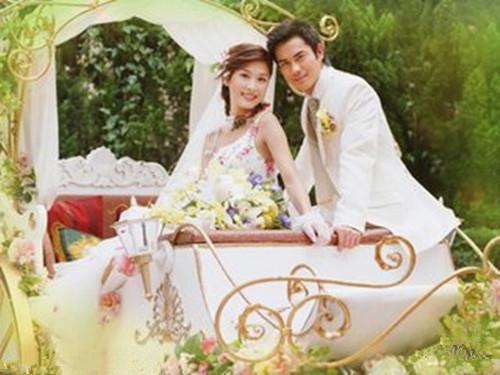
Marriage is one of life's great happy events. Every year people get married, every day people get married. Weddings are nothing rare, but how many people really know the details of a rural wedding in Shaanxi? Eighty percent of people only know one side of it, not the other. Although there is now little difference in living conditions between the city and the countryside, the wedding itself is worlds apart. For one thing, city families hold their weddings and entertain guests in hotels. You eat the banquet and then say goodbye to the wedding venue. That counts as having attended a complete wedding. The countryside is completely different. Below I will explain in detail what a real rural wedding is like.
Because I once introduced several young couples, from the time they met to the time they married. And I have taken part in many weddings of newlyweds. So I am fairly familiar with the whole process of a rural wedding in Shaanxi.
Children born after 1985 have now all reached the age to settle down and start a career. In the countryside, basically everyone marries before 30. Marriage is a great happy event, and once a child reaches this age, the parents and relatives and friends will start arranging the match before the child turns 25. Some young couples meet through their own work, some are introduced by friends, and some meet online. Once the two young people are mutually attracted, the parents will hold an engagement ceremony for the child. The engagement ceremony is first to confirm the romantic relationship, and second to let both sets of parents get to know each other and establish a kinship relationship. In the end it lays a good foundation for discussing marriage, and from this point on both sets of parents can start arranging the wedding matters for the children.
But this engagement sounds simple; in fact there are many rules handed down from the ancestors. The boy must have a wedding home. And the girl? That is different. The engagement must include a betrothal gift. The parents raised the child, and before they could enjoy any comfort, just as the child was able to work, she marries into someone else's family. So no matter how you put it, the man's side has to give the woman's parents a sum of betrothal money, right? How much betrothal money should be given? Who goes to the man's family to ask for this betrothal money? At this point a third party appears. Shaanxi people who have watched Qinqiang opera all know Matchmaker Liu, right? In the past she was called the matchmaker. Now she is called the introducer. This introducer is specifically responsible for coordinating all matters between the two families before the marriage. The woman's parents tell the introducer their ideas, and the introducer passes them on to the man's family. Then they reach a unified opinion. Then the man's side makes preparations.
So just how much is the betrothal money? I have run into this question several times. It is very tricky. It is also a key part of the engagement. If both sets of parents are reasonable, or if both families are relatively well off, the betrothal money is generally 10,000 to 20,000. That is also easier to discuss. If the man's family is not so well off, then the betrothal money is actually higher. The worse the geographical conditions, the harder it is for the child to find a partner, and the higher the betrothal money. In some places in western Guanzhong, the betrothal money reaches as high as over 100,000. Most betrothal money is around 50,000. Many rural families, in order for their child to find a partner, buy a house in the city to serve as the child's wedding home. Of course, no matter how good a material environment you create, if the child is not outstanding, finding a partner is still very difficult, and the betrothal money will also rise accordingly. Of course, basically it can always be coordinated to the satisfaction of both families. There are also cases where the romantic relationship ends because the betrothal money cannot be agreed upon. The probability of this is small.
On the day of the engagement, the boy, accompanied by relatives such as his maternal uncle or paternal uncle, together with the man's parents, goes to the woman's home. They bring the betrothal money and gifts. The woman's side invites her own maternal uncles, paternal uncles, younger paternal uncles, paternal aunts, maternal aunts and so on to entertain them and get to know them. A banquet is held at home to receive them.
After the banquet, the betrothal money is first handed to the woman's parents. No matter how much or how little the betrothal money is, it is wrapped in advance in red silk satin bed cover fabric and handed to the woman's side in front of the relatives of both families. The woman's side appropriately returns some of it to the man's side, and the man's side must not object whether much or little is returned. This step cannot be omitted. It means the two families discuss things together, you have affection and I have willingness. Both sides also give red envelopes to each other's child. This counts as acknowledging the kinship. At the same time they set a date for the wedding. There are also customs to pay attention to on the wedding day. Next the man's side begins to set up the new home. The woman's side prepares the dowry items. How much dowry there is, the two sides discuss and decide. There is no unified standard. The wedding photos are taken when there is time.
On the day before the wedding, the man's side needs to do several things: go to the woman's home. The woman's family will hold a banquet. They entertain the men, old and young, of the whole village, to thank everyone for their care over the years. At the same time they tell everyone that the woman is getting married. They hope relatives and friends will go specifically on the wedding day to escort the woman to the man's home for the wedding ceremony. In the countryside, the more dowry the woman has, the more status she appears to have; the more people who escort her, the more it shows the bride's family is prosperous in people, and the more it shows the woman's good character. It implies the bride's family has great influence, so the man's side would not dare to bully her casually! (The people who escort her refer to the group of people who come on the wedding day to escort the bride-to-be to the groom-to-be's home.) The man's side must accompany the woman's banquet the whole time. Purpose 1. It is to let relatives and friends get to know the groom-to-be. 2. The groom-to-be must also thank the bride's relatives and friends for raising such a satisfactory bride-to-be for him. 3. The groom-to-be also needs to discuss with the woman's family the matters to pay attention to on the wedding day or what things must be prepared. Rural Shaanxi has quite a lot of subtle customs. Every township differs. In recent years there has been slight improvement. Because there are especially many children who go out to work. There is almost every family that finds a partner across provinces. So many of the older generation's customs have gradually been forced to be dropped. But the rules left behind by each family are not easy to change.
Next comes the most important part, fetching the bride.
Because there are so many details, I will sort out the second half as quickly as I can.Please look forward to it ------ revealed in the next part!