Several Causes of Yellowing Leaves on Lucky Bamboo and the Correct Way to Grow It
The leaves of lucky bamboo are thin and delicate, and every leaf is lush and green, bringing a feeling of spring. Its leaves are what matter most; once the leaves become unhealthy, its ornamental value declines as well. To grow it well, mastering the correct methods is very important. Today I will walk you through the causes of yellowing leaves on lucky bamboo.
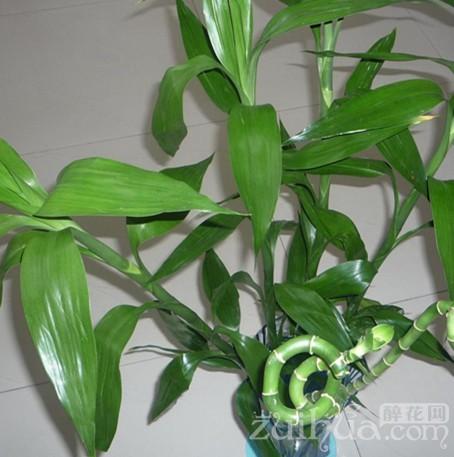
Yellowing leaves
1. Improper watering
Improper watering can cause yellowing leaves on lucky bamboo. To judge whether the yellowing of lucky bamboo leaves is water-yellow or drought-yellow, you can determine it from the different signs of leaf yellowing. Water-yellow shows on the young leaves, while the old leaves do not turn yellow; drought-yellow, by contrast, causes the old leaves to wither, yellow and drop off, while the new leaves grow relatively normally. Once you have determined the cause, you can increase or reduce water accordingly.
2. Insufficient or excessive light
Too much or too little light can likewise cause yellowing leaves on lucky bamboo. The yellowing caused by excessive light is called scorch-yellow, showing as yellow spots on the parts of the leaves facing the sun; light-deficiency yellow is when insufficient light leads to insufficient chlorophyll synthesis and the leaves turn yellow, with the whole plant's leaves turning yellow and dropping off, and it can be avoided simply by strengthening the light.
3. Improper fertilizing
Improper fertilizer application can also cause yellowing leaves on lucky bamboo. Too much fertilizer makes the surface of new leaves thick and dull, while the old leaves scorch, yellow and drop off; when this happens, the fertilizer should be washed out and removed. Insufficient fertilizer, on the other hand, makes the young leaves paler in color, while the old leaves gradually turn yellow; at this point, a light fertilizer should be applied additionally.
Methods for vigorous growth
1. Choosing potting soil
For growing lucky bamboo, it is best to choose a loose, fertile sandy loam. You can mix leaf mold, garden soil and sand in a 5:4:1 ratio as the growing medium; if a small amount of crushed eggshell is mixed in, the lucky bamboo will grow even more vigorously. Repot and change the soil once every spring; when repotting and changing the soil, it is advisable to place a layer of broken hard plastic foam pieces at the bottom of the pot to help with aeration and drainage, prevent root rot, and make it easier to remove the plant from the pot.
2. Water and fertilizer management
Lucky bamboo likes both moisture and fertilizer, but when grown in a pot indoors for display, it is best to control water and fertilizer to make it grow slowly and increase its ornamental value. During the growing season, according to seasonal climate changes, water once every 2 to 5 days as soon as the potting soil is dry, keeping the potting soil moist, and mist the leaves often to increase the air humidity of the micro-environment and benefit its growth. Persist with light, frequent fertilizing: apply a small amount of a nitrogen-phosphorus-potassium compound fertilizer once every 15 to 20 days; excessive amounts or nitrogen-only fertilizing easily cause leggy growth. Do not fertilize in winter, and water less.
3. Temperature and light
Lucky bamboo likes warmth, and its most suitable growing temperature is 18°C to 25°C. It is not cold-tolerant; when the lowest temperature drops to 5°C, it should be brought indoors to overwinter, keeping the room temperature above 5°C. It likes an environment with plenty of diffused light. In summer and early autumn, avoid harsh sun exposure; from late autumn to the following spring, it can be placed in direct light or within 2 m of a window in a spot with plenty of diffused light. Too much shade will make the leaves lose their luster.
The above is my summary of the causes of yellowing leaves on lucky bamboo and the correct care methods. I hope it will be helpful to the many flower lovers out there, and please keep following Zuihua Web to learn more about flower and plant care.
Original address: http://www.zuihua.com/article-33224-1.html