This kind of plant blooms only once in a person's lifetime, if ever, and its seeds are even rarer and harder to come by
Gripping the green mountain, it will not let go; its roots are firmly set in broken rock.
Ground and pounded a thousand times, it stays strong and firm, letting the east, west, south and north winds blow as they will.
-- Zheng Xie, "Bamboo and Rock"
Bamboo, one of the "Four Gentlemen" along with plum blossom, orchid and chrysanthemum, has become a symbol of the nation's character and spirit through its qualities of defying adversity, being hollow inside and straight outside, preferring to break rather than bend, and its modest, open heart, and it is deeply loved by the Chinese people.
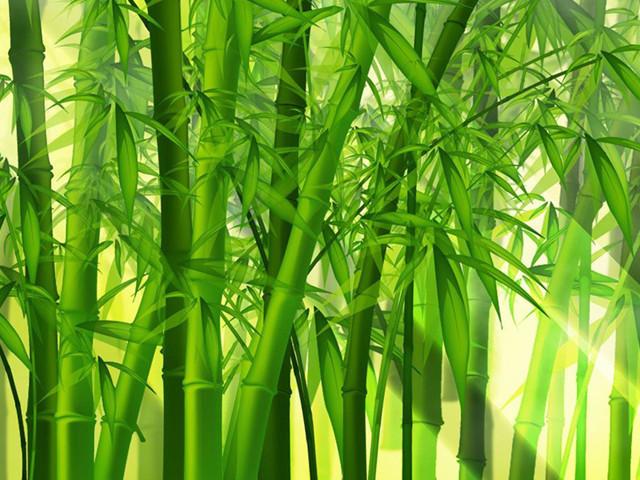
Bamboo flowering, however, is a rare and sorrowful sight, because bamboo blooms very seldom; bamboo generally does not bloom until it is 50-100 years old, and after bamboo blooms, the bamboo grove will die off in whole patches, falling at the most beautiful instant.
There is a folk saying that "when bamboo trees bloom, great disaster is sure to follow," and to a certain extent this has a scientific basis. Some scientists believe bamboo can sense certain changes in the soil, so it flowers and sets seed to move its seeds to suitable new land, and according to scientists' research, just before some catastrophic droughts, bamboo trees will bloom on a large scale and wither, showing a deep connection between the two.
But objectively speaking, bamboo flowering is a physiological phenomenon, generally occurring in bamboo groves where the weather has been dry for a long time, the soil has become compacted, and old rhizomes crisscross the ground.
The fruit produced after bamboo flowering is called bamboo rice. Because bamboo flowering is so rare, bamboo rice is a rare thing. In legend, bamboo rice is the food of the phoenix; it is said that the phoenix "perches only on wutong trees and eats only bamboo fruit," or some say the phoenix and bamboo are both creatures from outer space, and only later did the phoenix disappear, leaving bamboo alone in the human world. Though this is myth, it also reflects how exceedingly precious bamboo rice is.
According to the Compendium of Materia Medica: "Bamboo rice, it communicates with the spirits, lightens the body and boosts the qi." Bamboo rice is sweet, neutral and astringent in nature, entering the spleen and stomach meridians, and has the effect of clearing heat and detoxifying; it is an excellent food for nourishing and protecting the stomach, and can also treat liver disease and cancer, and is known as "the aristocrat of green foods."
Bamboo rice can also nourish the blood and boost the qi, and it also has a very good soothing effect and dietary therapeutic effect on obese patients. According to scientific research, bamboo rice has relatively high nutritional value and medicinal efficacy, containing 18 amino acids from protein hydrolysis, at a higher content than in bamboo shoots.
The way to eat bamboo rice is rather particular: after harvesting bamboo rice, dry it in the sun, then put it in a pot and stir-fry over low heat until slightly scorched. It can be used to stew pig's trotters or chicken, or cooked together with rice or made into congee; it tastes fresh, fragrant and delicious.
Bamboo blooms only once every 50-100 years, so anyone who sees it bloom can be considered fated to do so. If you really are lucky enough to see it, you should shamelessly wait around to collect the bamboo rice.
Once in a lifetime is enough.