11 provinces to place urban and rural resident medical insurance under the unified management of the Ministry of Human Resources and Social Security, speeding up settlement for out-of-town medical treatment
This article is compiled from | the Chinese government website, China Times, the official website of the Ministry of Human Resources and Social Security of the People's Republic of China, etc.
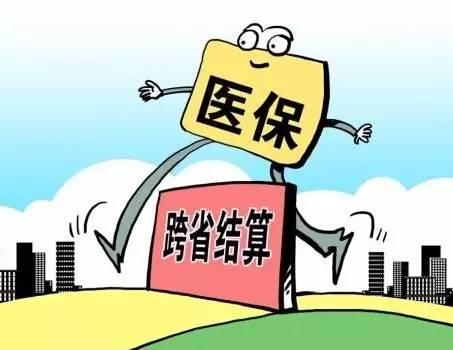
At the end of May, the Ministry of Human Resources and Social Security announced that 11 provincial-level units across the country had made clear that after the integration of urban and rural resident medical insurance, it would be under the unified management of human resources and social security departments. Recently, Huang Huabo, deputy director of the Social Insurance Administration Center of the Ministry of Human Resources and Social Security, said in an interview with the media that "direct settlement of cross-province hospitalization expenses for out-of-town medical treatment has entered the fast lane, and settlement for out-of-town medical treatment will be realized as soon as possible."
Huang Huabo said that the Ministry of Human Resources and Social Security has formulated a "three-step" work plan. First, advance and improve prefecture-level pooling to achieve no out-of-town treatment within prefecture-level areas; second, begin promoting the construction of a provincial-level networked settlement system to achieve provincial-level networked settlement; third, build a national-level networked settlement system.
Speaking of the specific operating process, Huang Huabo said that the Ministry of Human Resources and Social Security will launch the development of the corresponding "Golden Insurance Phase II" project system, namely the national medical insurance network system. If national medical insurance networking is achieved, rural residents participating in the "New Rural Cooperative Medical Scheme" can likewise enjoy the relevant "benefits." At the same time, if insured persons under the New Rural Cooperative Medical Scheme in their place of insurance seek medical treatment in a place without the New Rural Cooperative Medical Scheme, the initially considered plan is that information can be exchanged between the New Rural Cooperative Medical Scheme information system and the social insurance system in the place of insurance, and then, with the help of the provincial and national two-level networked settlement systems and settlement centers, information transmission and direct settlement for out-of-town medical treatment can be realized.
As early as before this year's National Two Sessions, the Chinese government website launched the "I have a message for the Premier" netizen suggestion activity, which at that time received more than 180,000 netizen comments. On this basis, during the Two Sessions, an online vote titled "I ask the Premier a question" was held, among which "accelerate the advancement of national medical insurance networking" topped the list with an extremely high level of attention of 10.98 million votes. At the same time, at the Premier's press conference during the Two Sessions, when talking about the timetable for advancing national medical insurance networking, Premier Li Keqiang said that the government is determined to advance national medical insurance networking, and on the basis of basically resolving direct settlement for out-of-town medical treatment within provinces this year, it will strive to use two years to enable direct settlement of cross-province hospitalization expenses for the elderly, so that reasonable out-of-town settlement issues no longer become a pain point for the public.
Previously, China's medical insurance had long been in a situation of separate governance by division. The Ministry of Human Resources and Social Security managed urban employee and resident medical insurance, while the National Health and Family Planning Commission was responsible for managing the New Rural Cooperative Medical Scheme (hereinafter referred to as the "New Rural Cooperative Medical Scheme") covering 800 million farmers. The divided governance situation led to fragmented management systems, high management costs, and large differences in benefits. The "three insurances in one" for management authority has long been what everyone hoped for.
For this reason, as early as 2013, the General Office of the State Council issued a document requiring that the State Commission Office for Public Sector Reform be responsible for completing the integration of the responsibilities of urban employee basic medical insurance, urban resident basic medical insurance, and the New Rural Cooperative Medical Scheme by the end of June of that year.
At the beginning of this year, the State Council published the "Opinions on Integrating the Basic Medical Insurance Systems for Urban and Rural Residents" (hereinafter referred to as the "Opinions"), making clear that planning and deployment for the integration of urban and rural resident medical insurance should be made before the end of June 2016, with a clear timetable and roadmap, and that each pooled region should issue specific implementation plans before the end of December 2016. The "Opinions" clearly require that during the integration process, "the level of pooling should be raised, in principle implementing prefecture-level pooling, and encouraging areas with the conditions to implement provincial-level pooling."
According to statistics from Jin Weigang, director of the Social Security Research Institute of the Ministry of Human Resources and Social Security, 90% of prefecture-level cities and 60% of county-level cities have also come under the management of human resources and social security departments.
Since then, the Ministry of Human Resources and Social Security has continuously spoken out on urban and rural resident medical insurance, and at the end of May disclosed for the first time that after the State Council's "Opinions" were issued in January this year, Hebei and Hubei were the first to make clear that after the integration of the urban and rural resident medical insurance system, it would be uniformly managed by human resources and social security departments. In addition, before the "Opinions" were issued, Tianjin, Shanghai, Zhejiang, Shandong, Guangdong, Chongqing, Ningxia, Qinghai, 8 provinces (autonomous regions and municipalities) and the **Production and Construction Corps had already achieved urban-rural integration of medical insurance across the whole province, bringing the total to more than a dozen areas nationwide where the three urban and rural medical insurance schemes are uniformly managed by human resources and social security departments, eliminating institutional obstacles.