A canteen with fully transparent ingredients hidden in downtown Shanghai
Superman's Restaurant Visits
Superman's Restaurant Visits is a new column by Foodie Superman. I will share with you some specialty restaurants and food markets that value ingredient sourcing and environmental friendliness. The content in this column is guaranteed to be Superman's [self-funded experience], with no advertising. If you know any other interesting places, feel free to recommend them to me.
Last week, Foodie Superman went to Shanghai on a business trip. I heard that restaurants in this magic city are full of variety, so I asked people on my WeChat official account and Moments to recommend good restaurants with strictly selected ingredients. Special thanks here to the readers in Shanghai: some recommended hot pot with farm-direct supply, some recommended fresh vegetables and mushrooms grown on-site with zero food miles, and some recommended various vegetarian restaurants particular about ingredients... Superman wrote them all down in a little notebook.
--This is a food radar receiving line--
With limited time and unable to visit them one by one, Superman finally picked a restaurant with the most tongue-twisting name: Yueheng Shiji. Fortunately, its English name is more direct, Hunter Gatherer, meaning hunters and gatherers. According to the friend who recommended it, they focus on traceable ingredients, that is, disclosing the supply sources and cultivation standards of ingredients. "How confident must the owner be about his own ingredients to dare to do this?"
What does the canteen, oh no, the "food market" look like
After finishing work on Friday night, by the time Superman traveled from Pudong to Puxi it was already past 19:00. Walking into this restaurant decorated like a canteen, I found there were quite a lot of customers.
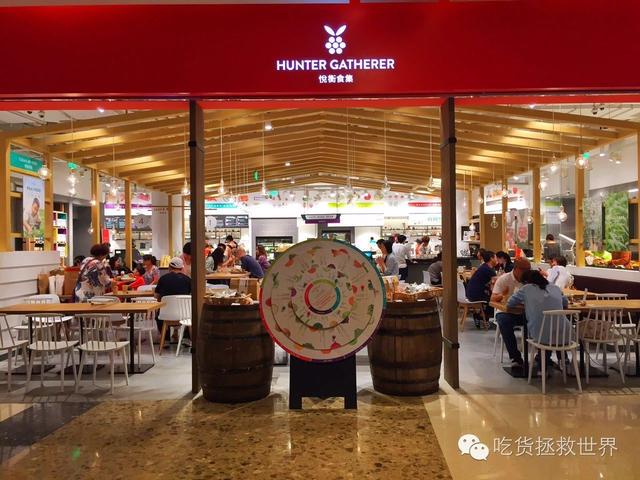
The guide map at the entrance is like a treasure map. Only when I got closer did I discover it is not just a canteen, but alsoa "food market" combining a supermarket, fresh produce stalls, healthy food and creative cuisine, freshly squeezed cold-pressed juice, and a bakery and coffee shop. The decor is clean and bright, with an open kitchen. There are no walls separating the kitchen from diners, and labels are used to disclose to customers all food-related processes. From fresh ingredients, food processing, to cooking artistry and ingredient retail, everything is combined in this space that can be touched and felt.
Restaurant map, with the dining area in the central part. In this food-centered experience space, diners are not only enjoying a good meal, but also experiencing food in multiple ways and feeling what food is really like.
The vegetables and fruits in the fresh produce area come from the restaurant's own farm. The labels state the specific place of origin and how to eat them.
Cold-pressed juice bar, filled with cold-pressed juices freshly squeezed that day, organic soy milk and beverage products. The high temperature from juicers can damage the flavor of food, so the restaurant chose to make juice using the cold-press method.
The food selection counter. The food area mainly has pasta, DIY salad bowls, featured dishes and barbecue. People choose their dishes and order here, and finally pay and eat.
Superman first looked at the freshest seasonal vegetables and fruits, picked the food I had been craving for a long time, and after eating well went to browse the retail area, choosing meat, alcohol and cooking seasonings. When tired from browsing, you can also order a cup of coffee with a pastry. Because the restaurant has "blackboard bulletin"-like sheets everywhere introducing the stories behind the ingredients, as well as personal introductions of the farm's farmers, although I only stayed in the market for 1.5 hours, I felt there were still many hidden secrets and Easter eggs I had not discovered.
When eating, do we not only pursue flavor,
but also need to know where the food comes from?
Many times we are unwilling to dine at restaurants outside because we do not trust the restaurant's "back kitchen" - how do I know whether the ingredients going into my mouth are clean? Is there passing off inferior goods as good ones? What oil is used? Walking into this food market, Superman felt much more at ease.
Because the marketfrom seeds, to vegetables, fruits, processed products, and then to every dish, the open kitchen and detailed introductions to ingredient origins are all doing their best to achieve "full transparency."Foods made on-site, such as nut butter, provide everyone with the transparency of being made right before your eyes.
Smart nut butter grinder. Inside the transparent glass cover are nuts such as almonds and cashews. You only need to press the button and turn the handle to make nut butter yourself. The containers used to hold it are also made of bioplastic and are degradable.
For foods with long growth cycles or complicated processing procedures, how does this restaurant achieve "full transparency"? The on-site ingredient labels show that 70% of the restaurant ingredients in the market are directly supplied by its own farm, and the other 30% come from qualified cooperative suppliers.
Own farms. The restaurant's two farms are located in Yantai, Shandong and Chongming Island, Shanghai. On its official website, it also explains in detail the farm's ecological cultivation methods;and the specially made degradable meal bowls in the restaurant are also sent back to its own farm for composting。
The own farm uses natural farming techniques, that is, using crop rotation, using natural enemies such as seven-spotted ladybugs to fight pests, pollination through bees, and using locally derived microorganisms as fertilizer. The restaurant regularly organizes consumers to make return visits and tours, and consumers can directly chat face to face with the farm's farmers. When it first started operating, the output of the own farm was still relatively small, so the restaurant would mark on the small blackboard next to the ordering sign:"Today the proportion of vegetables from our farm is XX%."
Supplied ingredients. When choosing cooperative suppliers, this restaurant's minimum standard isno chemical fertilizers or pesticides, no GMOs, but it does not necessarily have to meet organic product standards.
Every plate has their standards and declaration for choosing ingredients
Superman randomly interviewed employees in the fresh produce area and cooking area: "Is all the food sold here pesticide-free and chemical-fertilizer-free?" The two employees answered confidently and sincerely: