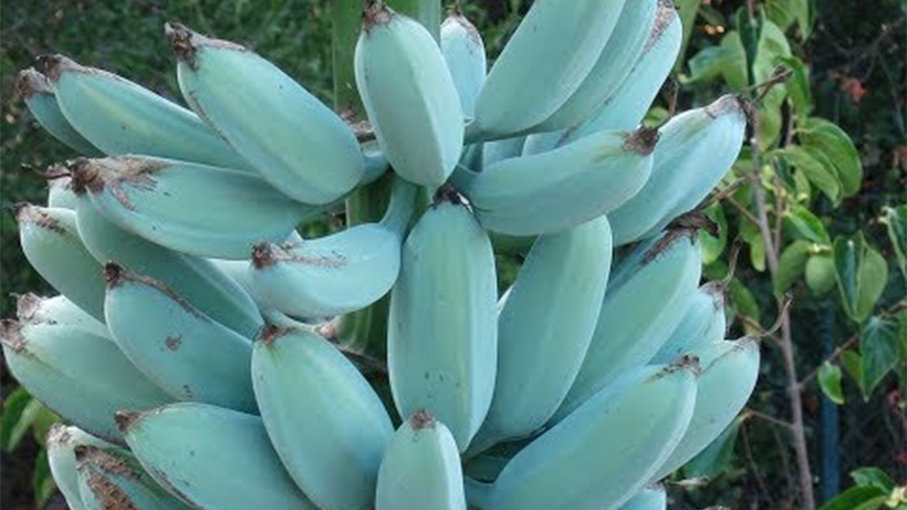
What Is a Blue Java Banana? Real Pictures and a Taste Breakdown of the Blue Banana
Have you ever noticed that the bananas commonly found in your grocery store are a bit, well, bland? The Blue Java banana (Musa acuminata'Blue Java') grows in many parts of Asia, Australia and Hawaii. Thanks to its waxy coating, the unripe fruit takes on a green-silver-blue hue, which is how it got its name. Its white flesh contains black seeds, which is not common for a dessert banana.
Its sweet flavor and soft flesh have also earned it the widespread name “ice cream” banana, and its taste resembles vanilla custard or ice cream. You can eat the ripe banana raw. Others suggest blending it with peanut butter into a smoothie or blending the bananas together and blending the bananas together to make an all-natural ice cream. Options for getting Blue Java outside Asia and the South Pacific are limited. You can buy bananas in bulk from this Florida-based company. For our friends in Hawaii: several local growers cultivate ice cream bananas, so hunt around the farmers markets on the Big Island and Oahu.
But if you do not want to spend a fortune shipping bananas or traveling to Hawaii, you can always try buying a tree and growing one in your own backyard or even indoors. Unlike other bananas, Blue Java can survive in cooler climates. If you live in hardiness zones 8-11, you can grow them outdoors; if you live in zone 4 or higher, you can grow them on a patio and move them indoors during the cold part of the year. But be warned: these bad boys can grow to over 15 feet (over 4.57 m) tall. Find tips on caring for the tree here.
Growing interest in unconventional bananas like Blue Java comes at a time when the global banana market is suffering serious disruption. Everyone from scientists to the media is declaring that a banana crisis is unfolding before our eyes. We have seen this happen before with the Gros Michel (Musa acuminata'Gros Michel') banana, also known as 'Big Mike'. (Fun banana names, in case you had not realized.) Although Gros Michel was the “it” banana in the United States before World War II, it withdrew from the market after being destroyed by Panama disease. Then the Cavendish banana came along. Today about 40% of global banana production consists of Cavendish, making it the de facto king of the banana world.
Cavendish thrived because it was considered genetically resistant to Panama disease. Although that is still true, the fungus Fusarium oxysporum f.sp. cubense, which causes Panama disease, has been working hard in recent years to attack Cavendish. Another fungus known as tropical race 4 (TR4) has already damaged Cavendish (as well as other bananas), leading to fears that the fungus will devastate banana production and could lead to economic losses and food insecurity in Latin America and Africa. Could Blue Java or another banana prove more resistant to this strain and knock Cavendish out of the running? Only time will tell.