What Is Silicon Fertilizer? Uncovering the Mystery of Silicon Fertilizer
In 1787, the "father of modern chemistry," the famous French chemist and biologist Lavoisier, first discovered that silicon exists in rocks. In 1926, the University of California began researching silicon fertilizer and confirmed its effects.
Today, silicon fertilizer has been widely promoted and used in agriculturally developed countries, and large-scale promotion and use has already begun in rice and sugarcane regions of China.
I. Classification of Silicon Fertilizer
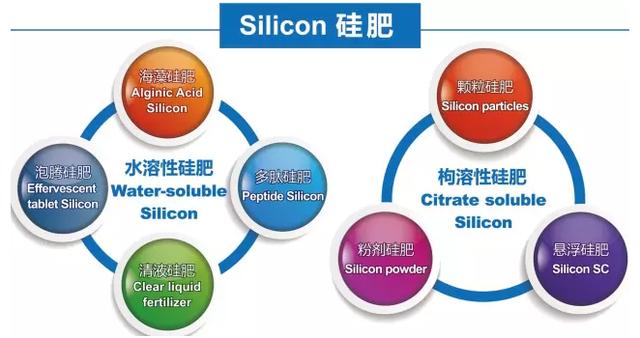
1. Citrate-soluble silicon fertilizer: granular silicon fertilizer, powder silicon fertilizer, suspension silicon fertilizer.
2. Water-soluble silicon fertilizer: seaweed silicon fertilizer, polypeptide silicon fertilizer, clear liquid silicon fertilizer, effervescent silicon fertilizer.
II. The Eight Major Functions of Silicon Fertilizer
1. It is a major yield-increasing element for plant growth
The vast majority of plants contain silicon in their bodies. Especially rice and sugarcane, whose nutritional role in recent years has been considered fourth only to N, P and K. Testing shows that to produce 1000 kg of paddy rice, the absorption of silicon dioxide is as high as 150 kg, exceeding the total absorption of hydrogen, phosphorus and potassium by rice. In the ash of six crops - rice, wheat, barley, soybean, lentil and fennel - the oxides of 7 nutrient elements such as silicon, phosphorus, potassium and calcium account for more than 80% of the ash, of which silicon oxide accounts for 16-61.4%.
2. It is a health-promoting nutrient element fertilizer
Applying silicon fertilizer can improve the soil, correct soil acidity, increase soil base saturation, promote the decomposition of organic fertilizer, and inhibit soil pathogens. For example, red soil dryland has an acidic pH of around 4.5-5.2, lacks organic matter and calcium, and tends to become compacted. Applying silicon fertilizer can improve soil properties, accelerate maturation, and help increase crop yields. When vegetables are continuously cropped in greenhouses for more than two years, the accumulation of mold and pathogens can affect crop yield and quality. Applying silicon fertilizer can effectively control the survival and reproduction of mold and crop diseases such as root and stem rot.
3. It is a nutrient element fertilizer that improves quality
Applying silicon fertilizer to fruit trees can significantly improve fruit quality, increasing fruit size. Sugar content increases. The fruit is sweet, aromatic and beneficial to human health. It also stores and transports well. Applying silicon to sugarcane can increase yield, and in the later stage can promote sugar accumulation in the stalks and increase the sugar extraction rate.
4. Effectively improves photosynthesis
Silicon fertilizer can cause the epidermal cells of crops to become silicified, making the stems and leaves of crops erect, reducing shading, and enhancing leaf photosynthesis. For example, after applying silicon to rice, the leaf angle narrows and canopy photosynthesis increases by more than 10%.
5. Enhances crop resistance to pests and diseases
After crops absorb the silicon element, silicified cells form in the plant body, the cell walls of the stem and leaf surface thicken, and the cuticle layer increases, thereby improving insect and disease resistance, especially resistance to rice blast, rice false smut, leaf spot, stem rot and bacterial leaf blight, as well as reducing damage from piercing-sucking pests such as aphids, mites, red and white spiders, whiteflies, thrips and rice planthoppers.
6. Lodging resistance
Silicon fertilizer can make crop stems thick and strong and shorten the internodes, achieving the goal of lodging resistance.
7. Improving crop stress resistance
Crops absorb silicon fertilizer and produce silicified cells, which effectively regulate the opening and closing of leaf stomata and control water transpiration. This improves the crops' drought resistance, resistance to dry hot winds and resistance to low-temperature damage. Silicon fertilizer is suitable for early spring crops. Such as early rice, early peanuts and winter and spring vegetable production.
8. Regulating acidity and repairing soil
After using silicon fertilizer, it can regulate soil pH, repair the soil, effectively alleviate continuous cropping obstacles, and regulate soil acidification and compaction; it plays a good regulating role on red moss, green algae, surface alkalization and heavy metal pollution.
III. Performance of Silicon Fertilizer on Different Crops
1. Rice:The yield-increasing effect of applying silicon fertilizer to rice is particularly obvious. Rice is a silicon-loving crop. Spraying silicon fertilizer can thicken the epidermal cells of rice, make the stems and leaves thick and erect, develop a strong root system, make the leaves upright, enhance photosynthesis, promote effective tillering, increase the seed-setting rate, produce large panicles with many grains, improve drought resistance and lodging resistance by more than 85%, promote early maturity, improve rice quality, and resist pests and diseases, reducing the disease incidence rate by 75%. After applying silicon fertilizer, the disease resistance of rice is significantly enhanced, especially the incidence of rice blast, rice false smut, sheath blight, leaf spot, stem rot, bacterial leaf blight and root rot, rice planthopper, striped stem borer, stem borer and aphids is significantly reduced.
2. Sugarcane:After spraying silicon fertilizer, sugarcane plants grow upright, leaves are erect, and drought resistance, lodging resistance and disease resistance are strong, with fewer pests and diseases, early maturity and good quality; sugarcane yield and sugar content are significantly increased.
3. Grapes:After spraying silicon fertilizer, the tree grows robustly, leaves enlarge, the number of fruit clusters increases, the dry-to-fresh weight ratio increases, coloring is good, ripening is early, and diseases and pests such as downy mildew, powdery mildew, brown spot, gray mold, black pox, white rot, aphids and red spiders are reduced, with quality and yield significantly improved.
4. Strawberries:After spraying silicon fertilizer, strawberry fruits can become larger, with a bright red, round and glossy appearance; the rate of large strawberries increases, quality is good, the harvest period is advanced by 7 days, economic value increases, and the average yield increases by 50-57%. It can also greatly improve the resistance of strawberries to various pests and diseases. (According to experiments, after spraying silicon fertilizer on strawberries, the incidence of aphids decreases by 75%, the resistance rate to gray mold reaches 40%-53%, and there is also a certain resistance to other diseases such as powdery mildew and viral diseases.) Silicon fertilizer has a great effect on the growth and development, quality and yield improvement of strawberries.
5. Vegetables: After using silicon fertilizer on vegetables, the plants are robust, the leaf color is dark green, the fruit-setting rate is high, the surface gloss is good, the fruit shape is regular, individual fruit weight is higher, the peel is thick, the sugar content is high, and they are resistant to transport.
Using silicon fertilizer can effectively alleviate continuous cropping obstacles and regulate soil acidification and compaction; it plays a good regulating role on red moss, green algae, surface alkalization and heavy metal pollution. It effectively reduces damage from piercing-sucking pests such as aphids, mites, red and white spiders, whiteflies and thrips.
6. Melons: After spraying silicon fertilizer, the stems and leaves are erect, photosynthesis is enhanced, growth is good, the melons are thick and straight, the plants grow robustly, the peel is thin, the flesh is crisp and sweet, the sugar content is high, there are fewer pests and diseases, they come to market early, with good color and taste, and fewer pests and diseases; powdery mildew, fusarium wilt and leaf spot are basically absent, and both quality and yield are significantly improved.
7. Fruit trees:After spraying silicon fertilizer, fruit tree branches become thick and strong, leaves enlarge and become thick, erect and flat, photosynthesis is enhanced, the green leaf period is extended, fruit drop, fruit shrinkage, deformed fruit and fruit cracking are reduced, and physiological diseases such as leaf curling, mosaic, yellowing, spotting, flower drop and leaf drop are prevented; coloring is advanced by 3-5 days, ripening is early, the fruit is large, with good color, sweet taste, high hardness, good storage and transport tolerance, and greatly improved quality.
After fruit trees absorb silicon, more silicified cells and a hard epidermal layer can form on the surface of leaves and fruits, giving resistance to pests such as pear psylla, peach fruit borer, red and white spiders, mealybugs and aphids. High concentrations of silicic acid have strong inhibitory effects on the germination of fungal spores and mycelial growth of many diseases such as scab, black spot, powdery mildew, rust, ring rot, anthracnose, gummosis, blue mold, cottony mold, brown rot, black rot, gray mold, early leaf drop disease, rot disease and root rot, thereby significantly reducing the incidence of various fruit tree pests and diseases.
8. Bananas:After spraying silicon fertilizer, it promotes the height and stem thickness of banana plants, and fruit length and fruit circumference are significantly increased; the fruit has fewer disease spots, good color and good quality. (Bunchy top disease and leaf spot are important diseases in banana plantations, and spraying silicon fertilizer can reduce the occurrence of these diseases. According to practice, the disease incidence rate of plants treated with silicon fertilizer is reduced by 25-50% compared with the control.)