Home Vegetable Gardening Q&A: All Your Common Questions on Transplanting, Pests, and Fertilizing Answered
[Vegetable Gardening Q&A] We've only published a few installments so far, but quite a few readers have been writing in with questions. We'll be posting more often from now on so more friends can see it. Gardeners with questions, bring them on!
[Question 1]
"Anna": Can you take a look and tell me if my veggies are ready to transplant?
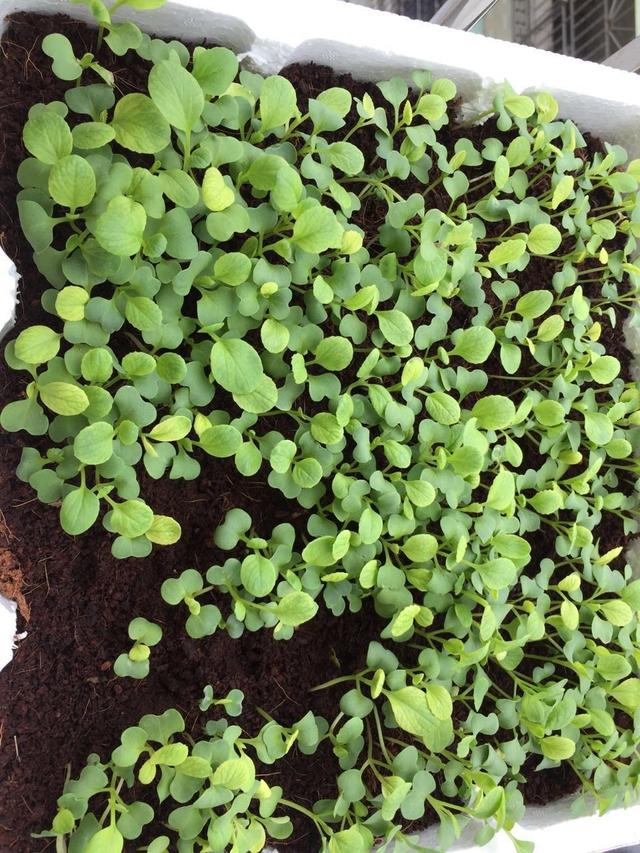
[Reply]:It's still a bit early to transplant. For now, thin the seedlings first, which means pulling some of them out. Looking at this density, you'll need to remove at least half of them right now. As for when to transplant, you need to wait until at least the third true leaf appears. They've just sprouted now, so they're not ready for transplanting yet.
[Question 2]
"Huafenglin": A lot of these little bugs have appeared on my green beans. What should I do?
[Reply]:Unfortunately, these are aphids. Green beans are prone to aphids, and when there are this many, it gets tricky. You can try this: spray the areas with fewer bugs with Sichuan pepper water or chili water to keep them from spreading to more places. If you're brave enough, just pick off all the bugs by hand in the spots where they're really dense, or pick off that whole section, bugs and leaves together, and dispose of it. Then see how it goes.
[Question 3]
"Reading Life": How do you use urine and wood ash? How often should you fertilize with these, and at what stage?
[Reply]:Different fertilizers have different effects. Urine is a good natural nitrogen fertilizer; its main job is to promote lush, vigorous growth of stems and leaves. Wood ash is mainly phosphorus and potassium, so it's better suited to fruiting vegetables like tomatoes and potatoes. As for what stage to use them, that depends on the specific vegetable and its growth stage. For example, leafy vegetables can be watered with nitrogen fertilizer (urine) throughout their entire growing cycle, while potatoes are better off with wood ash mixed into the soil as a base fertilizer.
[Question 4]
"Fish Duoduo": A couple of days ago I accidentally knocked over my cucumber pot, and now it's like this. My heart aches... I wonder if it'll recover in a few days?
[Reply]:It doesn't look too serious. It should recover. You'll have to be more careful next time. All that time and effort!
[Question 5]
"I'm Not a Naughty Kid": What kind of fertilizer is nitrogen fertilizer? Can I just pour soybean residue directly onto the seedlings?
[Reply]:Nitrogen fertilizer promotes plant cell division and growth and speeds up leaf growth, giving the plant more leaf area for photosynthesis and promoting healthy growth of the whole plant. Nitrogen fertilizer is suitable for leafy and stem vegetables throughout their entire growing cycle, and for melons and fruiting vegetables in the early stage. But for melons and fruiting vegetables, you should limit nitrogen fertilizer in the mid-to-late stage, so the fruit doesn't stay green and fail to ripen.
Moldy or bug-eaten beans, peanuts, and sunflower seeds that can't be eaten are all good nitrogen fertilizer materials. After fermentation, pour them into the soil and they make excellent nitrogen fertilizer. Soybean residue is best soaked in water, fermented, and then poured into the soil.
Follow the WeChat official account "love-zhongcai" for more vegetable gardening knowledge.