Agricultural Chemicals and Toxic Substances Research Institute launches multi-country assessment service to help farmers export to South Korea with rapid customs clearance
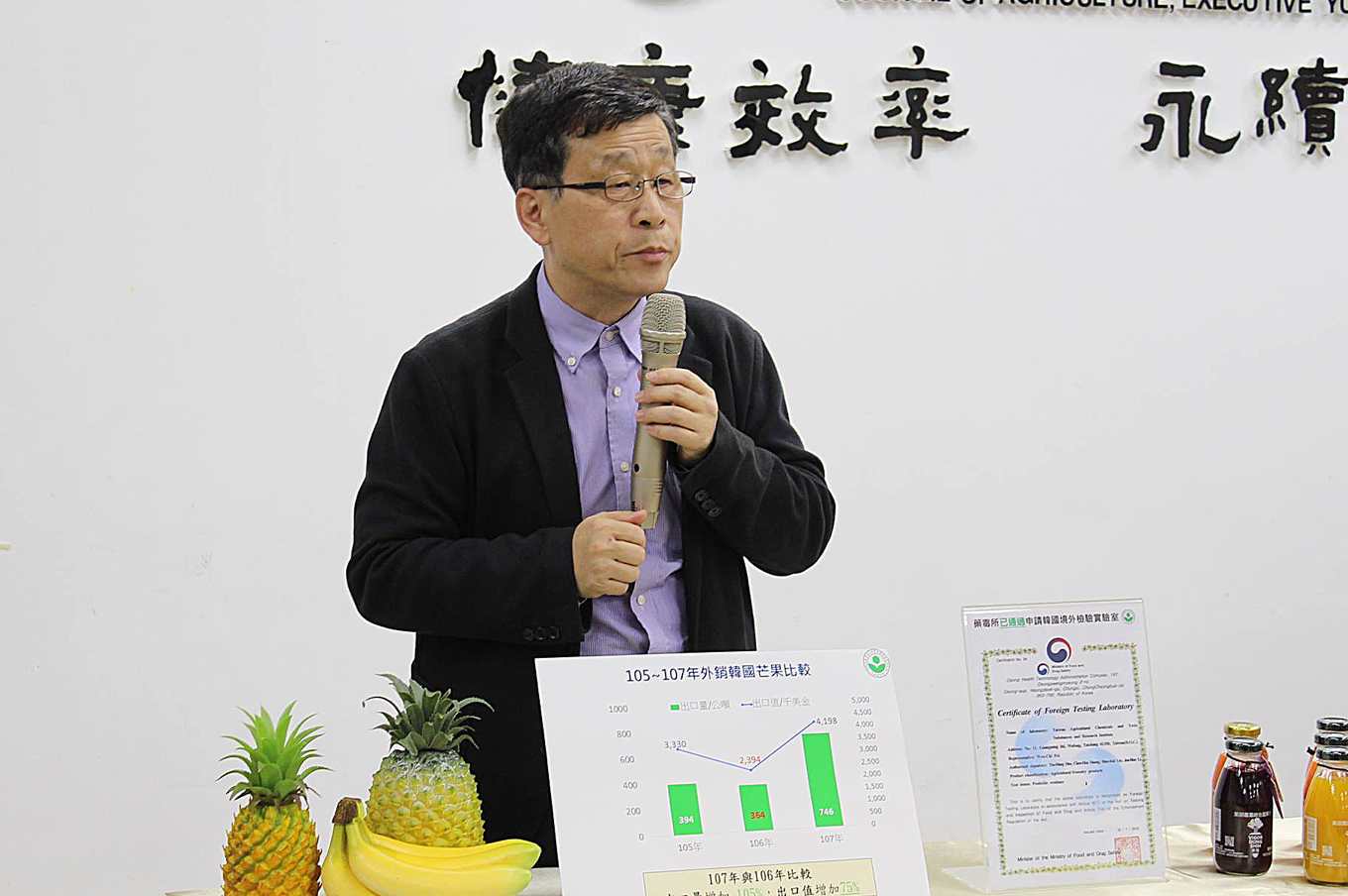
For agricultural products to be exported smoothly, meeting pesticide residue standards is a necessary condition, and since standards differ from country to country, how can farmers know whether their crops comply with the regulations of the destination country? The Agricultural Chemicals and Toxic Substances Research Institute (hereinafter referred to as the Institute) has launched a "multi-country assessment" mechanism. As long as the crop is suitable for export to any country, the pesticide residue report will indicate whether it meets the standard, providing farmers with a reference for export. The Institute has also reached an agreement with South Korea: in the future, as long as agricultural products pass testing at the Institute's laboratory, the South Korean side will recognize them as "no problem" and they can clear customs quickly.
Agricultural product exports must pass two stages: "pesticide testing" and "quarantine"
What testing standards must agricultural products pass for export? Su Teng-chao, a technical specialist in the Crop Inspection Section of the Agriculture and Food Agency, explained that it is divided into two parts: "pesticide testing" and "quarantine." Quarantine refers to pest and disease control standards, while pesticide testing checks the drug residues on agricultural products. Generally speaking, pesticide and quarantine checks are carried out separately under these two procedures.
In the field, the Agriculture and Food Agency conducts random pesticide residue testing on export crops and sends them to the Institute for testing. If they fail to meet even domestic regulations, penalties will be imposed under the Pesticide Management Act. If they fail to meet the standards of the intended destination country, the operator will be guided to adjust the amount of pesticide used. As for quarantine, depending on different crops and the regulations of different destination countries, there are different quarantine procedures such as fumigation, low temperature, or high temperature, and the Bureau of Animal and Plant Health Inspection and Quarantine is responsible for this stage of control and random inspection.
Farmers in export supply orchards who voluntarily submit samples for testing and pass will receive a government subsidy of half the testing fee
Hsu Tzu-hung, head of the Institute's Testing and Research Division, explained that currently there are two channels for pesticide testing of agricultural products: government random inspections and voluntarily commissioned testing. The government conducts sampling in the field and sends samples to the Institute for testing. The other is voluntarily commissioned testing, where farmers commission relevant units to conduct testing for the items and certifications they want to test for, including SGS certification; both SGS and the Institute are certification bodies.
Huang Ching-wen, an associate researcher at the Institute, stated that farmers who voluntarily commission testing and pass will receive a government subsidy for half the certification fee. Su Teng-chao, a technical specialist in the Crop Inspection Section of the Agriculture and Food Agency, explained that operators who have joined export supply orchards (covering 15 items including mango, sugar apple, and pineapple) will receive a subsidy for half of their testing fee if they voluntarily submit samples for testing and pass. About 1,500 fruit samples are voluntarily submitted for testing each year, and the rate of passing and receiving the half subsidy is 98 percent.
Pesticide residue reports directly list whether each country's standards are met
In response to the differing pesticide residue tolerance standards of various countries, the Institute has proposed adjustments and updates to the presentation of test reports. Ho Ming-hsun, acting director of the Institute, stated that in the past, test reports only showed whether a certain country's standards were met, which was not convenient or comprehensive enough for farmers. At present, the "multi-country assessment" mechanism is in use. The test report includes which pesticides were detected, how much residue there is, which countries the crop is suitable for export to, and whether it meets those countries' standards, all listed together. Which country's pesticide residue standard the tested item meets, and whether it passes or fails, can be seen at a glance on a single test report.