Key points in the design of the most popular rice-field aquaculture models today
Abstract
Sharing articles and consultations on post-harvest preservation of various agricultural products, agricultural park planning and design, and agricultural planning and operation, to fill the lives and production of new farmers with health and vitality.
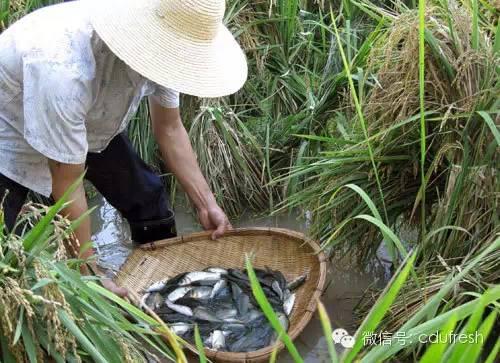
Raising fish and shrimp in rice fields is a production model that organically combines crop farming with aquaculture, enabling the water resources, weed resources, aquatic animal resources, insect resources and other materials and energy in the rice field to be more fully utilized by crayfish. At the same time, the life activities of the fish and shrimp can weed the rice field, eliminate insects, loosen the soil, enliven the water, aerate it and increase fertility. "Rice-crayfish symbiosis" is a new ecological farming model that, under manual management, achieves the mutually beneficial double harvest of rice and shrimp plus the triple benefit of experiential consumption. It is especially suitable for application in basic farmland (paddy fields) in the Chengdu Plain area and the shallow-hill valley areas of central Sichuan.
I. Product forms
1Rural tourism products
Rural tourism products are a type of tourism product that uses the scenery and activities of the countryside and rural villages as attractions, with the aim of satisfying tourists' needs for entertainment, knowledge and a return to nature.
The formation of the rice-fish symbiosis system was to a large extent due to the natural geographical conditions of "nine parts mountain, half part water and half part field" and poor transportation conditions, and this precisely gave tourists the opportunity to come into contact with nature, enjoy pastoral scenery and experience rural flavor.
2Scientific research and education tourism products
The traditional rice-fish symbiosis system was selected for the "Globally Important Agricultural Heritage Systems" program and has enormous scientific research value; it is also an excellent teaching material for ecological and environmental education of tourists. The potential customer groups for scientific research and education tourism products include researchers and enthusiasts in related fields such as heritage, agriculture, aquaculture and biology, as well as youth groups receiving environmental education.
3Culinary tourism products
The traditional rice-fish symbiosis agricultural system uses little or no chemical fertilizer or pesticide and can provide organic agricultural products, making culinary tourism possible. Relying on ingredients such as field fish, organic rice and wild vegetables, there is a very broad space for developing culinary tourism products.
4Cultural tourism products
Culture is the soul of the tourism industry. In tourism development, examples of people using regional culture to create well-known brands for local specialty tourism abound. For example, in the Qiandongnan region, there are the Muyu dance of Fanpai, the bronze drum dance of Zhang'ao, and the original ecological hunting culture of Basha.
Traditional rice-fish symbiosis agricultural culture is the regionally iconic culture of a World Agricultural Heritage site, specifically including farming culture, folk culture, overseas Chinese culture and architectural culture. Relying on these cultural resources, interactive tourism products can be developed, such as letting tourists participate in rice transplanting, fish release and fish catching and other farm labor, and take part in fish lantern dance performances.
II. Model design
Rice-crayfish sequential cropping:After planting one season of mid-season rice varieties in the rice field, one crop of crayfish is raised. Immediately after the rice is harvested, water is irrigated and 20 kg/mu of crayfish brood stock is stocked. By May of the following year, before mid-season rice transplanting, all the shrimp are harvested. This model, without affecting rice yield, can produce about 100 kg/mu of crayfish.
Rice-crayfish symbiosis:Early, mid-season or late rice varieties resistant to lodging can be selected, with only one season of rice planted, and no-till seedling throwing used during transplanting. Rice-crayfish symbiosis can increase rice yield by 5%-10%. Stocking 20 kg/mu of brood shrimp in August-September or 30 kg/mu of 3-4 cm juvenile shrimp in March-April can increase crayfish production by about 50 kg/mu during the rice growing period.
Rice-crayfish rotation:Using the water body of the rice field, one season of rice is planted. After the rice is harvested, crayfish are raised; the following year no rice is planted, and in the third year another season of rice is planted, with one cycle every three years. After the rice is harvested in September, water is immediately irrigated and 25 kg/mu of crayfish brood stock is stocked. Before June of the third year, the crayfish are harvested, and a season of mid-season rice is planted again using the no-till seedling throwing method. This model is suitable for producing large-scale high-quality commercial shrimp and can produce 230-250 kg/mu of crayfish.
III. Key points of engineering design
1. The field ridge is 0.5-0.7 m high and 0.5 m wide, with the base of the ridge widened by 1.0 m-1.5 m, and a slope ratio of 1:2-1:3.
2. About 1 m from the field ridge, dig a ring-shaped shrimp-raising ditch around the inner edge that is 2-4 m wide and about 1 m deep. The ring-shaped shrimp-raising ditch accounts for about 10% of the rice field.
3. Build an escape-prevention wall around the field ridge with plastic mesh cloth, burying the lower part 10-20 cm into the soil and leaving the upper part 0.5-0.6 m above the field ridge. Support and fix it with wooden stakes or bamboo poles every 1.5 m, and sew calcium plastic board about 30 cm wide onto the inner side of the upper part of the mesh cloth to form an overhang, so as to prevent crayfish from escaping.
4. The water inlet and outlet of the rice field should be located on the earth ridges at two opposite corners of the rice field, and the inlet and outlet should be enclosed with steel wire mesh or iron railings.
IV. Expansion (types of aquatic products)
Practice has shown that the choice of aquaculture species is the key to the success or failure of rice-field farming and aquaculture and to the level of economic benefit. Farmers must, according to comprehensive factors such as geographical location, facility conditions, market conditions, economic strength, source of fry and fingerlings, and technical level, choose suitable aquaculture species adapted to local conditions, in order to achieve the purpose of promoting high yield, high efficiency and sustainable development of rice planting and aquatic animal farming.
So, what aquatic animal species are suitable for rice-field aquaculture?