What is the difference between Chinese honey and Italian honey?
The native bee is also called the Chinese bee:it is a bee species native to our country. Native honey is the honey produced by the Chinese bee, also called Chinese honey, or Chinese bee honey for short.[Italian bee]is a bee introduced to our country from Italy for keeping, or Italian bee for short; Italian honey is the honey produced by the Italian bee, also called Italian honey. It only collects a single type of flower, such as acacia honey, rapeseed honey and other single-flower nectars. Today Let's Learn's editor will teach you to distinguish the Chinese bee from the Italian bee.
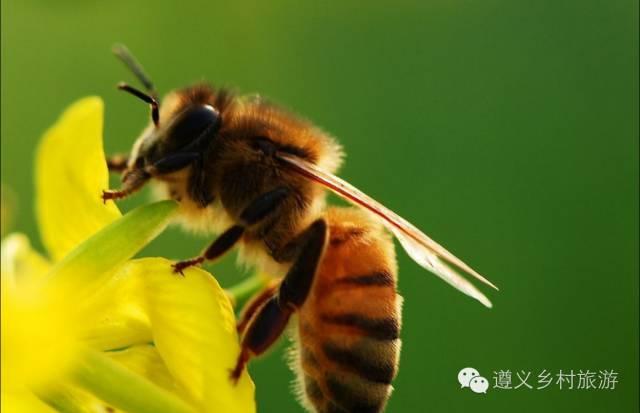
The difference between Chinese honey and Italian honey:
From the appearance of the honeyNative honey is in a solidified, viscous state; it is mixed honey, blending pollen, propolis, beeswax and all other components into one, while the Italian honey on the market is thin and transparent, with high water content and a single composition;[In taste]Freshly harvested native honey has a relatively strong Chinese herbal medicine flavor, with all four tastes of sour, sweet, bitter and pungent, while Italian honey has an ordinary taste, a single flavor, and is very sweet;[From crystallization and color]After crystallization, native honey has fine particles, as fine as fat, as smooth as cream, while Italian honey has relatively large visible particles when it crystallizes. In terms of color, native honey hasyellow, white, redthree colors;[Yield and price]Its nutritional value is high, and things are precious when they are rare. The number of Italian bees kept in China far exceeds the number of Chinese bees, and the yield per colony is far higher than that of Chinese bees. In addition, Chinese bee honey has a stronger fragrance and is more nutritious. SoChinese bee honey is relatively more expensive than Italian honey. In particular, most Chinese bee honey is not harvested at low concentration for artificial processing and sale, and almost no bee medicines are used during the keeping process, so there is little drug contamination,making it more favored by consumers。
[Differences between the Chinese bee and the Italian bee]The Chinese bee has lived in our country for several thousand years, collecting hundreds of flowers and fully brewing them into capped, ripenative honey, with dark yellow honey color, a unique taste, a mellow fragrance andhigh concentration. This honey is different from theItalian honey sold in supermarkets. People who do not keep bees may not know that there are many kinds of bees. In our country, most of the bees used for commercial keeping are Italian bees imported from abroad (Italian bee for short). That kind of bee is convenient forlarge-scale keeping and has high yield, and its yield under the same conditions isseveral times to more than ten timesthat of the Chinese bee, so the vast majority of domestic apiarieskeep Italian bees。
[The so-called Chinese bee]is simply the abbreviation of the Chinese bee, a bee native to our country, and in many places in our country a large portion live in the wild. The honey produced by the Chinese bee (that is, Chinese bee honey) is sweet and delicious, rich in nutrition, and is also the honey recorded in"Compendium of Materia Medica",with good medicinal effects; it is the first choice of honey as a medicinal guide, and cannot be compared with the Italian honey sold in supermarkets and shops.Because truly large-scale artificial keeping of Chinese bees is difficult, the yield is low, and they do not produce royal jelly, the kept quantity is very small, but the quality is greatly higher than that of Italian bees.
[Characteristics of wild native honey] [Different states]Native bees like to collect scattered nectar sources, and their brewing process has no human intervention and happens naturally. The quality of the weather, the direction of the sunlight, the altitude,and the time of honey harvesting all determine the color, taste and stateof the honey. Wild native honey is collected by native bees on the mountain from the nectar of countless wild plants and harvested only after it is fully mature; it does not need processing or concentration, has a long brewing time, is harvested once a year, has high concentration, has a strong antibacterial effect, and can be stored for many years without spoiling. (The liquid state of mature uncrystallized wild native honey and the granular crystallized state of wild native honey)
[Limited yield]Wild native honey cannot pursue yield. Why? Because in a year, when all kinds of conditions are satisfactory, one wooden barrel produces at most around 20 jin of honey in a year, and a mountain within a 100-kilometer radius can hardly produce 10,000 jin of honey in a year. Moreover, when empty barrels are placed on the mountain, whether bees will come to build combs and brew honey is also unknown, so its yield is naturally much lower than that of large-scale apiaries. Things are precious when they are rare, and the quantity is small but refined. In order to give the honey top quality, naturally one cannot go harvest it every few days; that kind of honey is watery honey, with high water content and prone to souring and spoiling.
[Distinguishing by keeping method]The wooden barrel keeping method of wild native honey is a simulation of the bees' living environment by our ancestors using the living habits of native bees in caves and burrows, so that they serve humans. Native bees are extremely sensitive to environmental pollution, so the places where native bees are generally kept are pure natural, pollution-free environments. (The new type of movable-frame keeping method, in the mountains and fields, under large trees or under eaves, single-layer, with a certain distance between each colony, while Italian bees are placed in open, spacious places. The many Western bees you see being carried around by trucks to chase flowers are undoubtedly Italian bees.) (The old-style round barrel keeping, placed deep in the mountains, sometimes wild bees come to settle, and if the beekeeper takes them back, that is an extra harvest.)
【Chinese bee keepingandItalian bee keeping] [Chinese bee】Traditional manual honey cutting: bees give people sweetness, and people repay them with gentleness. The light and skillful technique preserves the original taste and nutrition of the honey, and also reduces damage to native bees during honey harvesting to the greatest extent. The honey extractor used in industrial production allows mass production with extremely high efficiency.[Italian bee]Wooden-frame keeping of Italian bees at dedicated farms is characterized by large honey output and a short honey production cycle, and can produce royal jelly, propolis and other products, while native bees cannot; the honey production cycle can be shortened to three to five days, and Italian bees prefer large-scale single-flower nectar sources, so their nutritional and health functions are greatly inferior compared with native honey produced once through one spring and autumn. The two neatly arranged layers in the picture below are Italian bees.
[Different feeding]Wild native bees are extremely picky about food and only eat the honey they themselves have brewed. If the beekeeper cannot leave them enough rations when cutting honey, a great famine will break out in the bee colony, and their disaster will come. Italian bees are different: Italian bees not only eat honey, but also eat white sugar. In order to increase output, large farms put in large amounts of white sugar every day so that the bees can quickly synthesize honey. So the honey you eat is nothing but white sugar.
[Distinguishing by nectar source use]In mountains and fields, in places without large-scale nectar sources, Italian bees can hardly survive, while wild bees are different. Large-scale apiaries all have their own nectar source bases, and the nectar source bases are all planted artificially, such as jujube flower honey generally coming from artificial jujube flower bases, and there are also things like rapeseed bases and so on. Therefore,the paradise of mountain wild native honey is among the mountains and waters, not in farms。
[Storage time]Scientific research and practice have proved thatwild native honey has a very strong antibacterial ability and is the only food in the world that will not spoil and deteriorate. There is no strict shelf life.
Source: Zunyi Rural Tourism