Millet prices are soaring, so why are farmers still unwilling to grow it?
Speaking of millet, the price keeps climbing, from just over 2 yuan at the beginning to more than 6 yuan now, and farmers are all crying out that they can't afford to eat it. Grow a little yourself? They would rather die than grow it. So what's the reason?
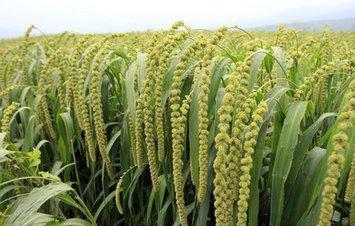 1. Difficulty one: Growing millet first requires leveling the ground. The second step is to use a hoe to draw shallow little furrows. These shallow furrows are extremely difficult to make! First, speed is required, because the moisture inside the soil keeps evaporating, and once it is exposed for a long time the millet will lack the moisture essential for rooting. Second, the furrows must be straight - ever heard of "straight as an arrow"? An old farmer who has farmed for a long time has good arm strength and can keep going for more than 3 hours. In addition, a certain sense of balance is required. For example: however fast you walk, the old farmer can draw the furrows just as fast! This is no exaggeration - without 3 years of farming experience, you really can't use a hoe.
Next comes sowing the seeds, and sowing is also a great art. The farmer carries a bag of millet in the left hand and sows with the right hand, and the coordination between right and left hands must be perfect. There is also a requirement for evenness - one patch of land with too many seeds and another with too few definitely won't do. Don't brag to me that you can pick it up right away! With 5 years of "farming age," I still wouldn't dare say I've mastered it, and having my fingers go stiff for half an hour before recovering is routine. For beginners sowing seeds, it wastes a terrible amount of seed, because the arm strength isn't enough. At the beginning, my dad directly gave me money and begged me not to ruin the millet!
After the seeds are sown, it's time to cover them with soil. Note here: millet requires only a thin layer of covering soil, otherwise when the seeds sprout they can't break through the soil. Farmers generally don't use farm tools to cover the soil, but instead use the side of their shoes, walking along while pushing soil into the furrows!
You thought that was the end of it?! Dear, let me ask you: do you water next or not? You'll surely all say in perfect unison: Of course you water! Wrong, wrong! Millet cannot be watered right after planting. You have to wait until the seedlings grow to about half a finger tall before watering for the first time. The reason is: once you water, alkaline substances appear on the ground surface, causing the soil to harden (that is, become compacted). How could frail young seedlings possibly break out of the soil!
See? These are all skilled jobs! Never mind city people - if 40% of old farmers can do this work, they're talented!
(Heavy with weight, this is hope)
2. Difficulty two: Millet is a cereal plant, and one characteristic is that its stems are too thin. If it encounters strong wind, being blown down means death. What farmers fear most is that when the nearly ripe millet is heavy with grain, it will suddenly be blown down collectively, and then the harvest is greatly reduced! So most rural people are unwilling to grow millet.
(At this stage the millet is about to ripen and most fears being blown down by wind)
3. Difficulty three: Most people don't know about this difficulty; that is, thinning the seedlings. Confused? "Pulling seedlings to help them grow"? No. Because millet growth needs suitable spacing. Too dense and it affects sunlight and nutrient absorption. The most suitable distance is one decimeter, which is the maximum distance between your thumb and your index finger! So in the middle of summer, kneeling in the field under the blazing sun, single-mindedly thinning seedlings - you can imagine how hard farming is! Every single grain is the fruit of hard work!
(Birds madly eating the millet)
4. Difficulty four: Now the state requires environmental protection and harmony between humans and nature, yet farmers curse angrily. Why? The reason is only 4 words: going too far. Millet is birds' favorite food, so wherever there is millet there are especially many birds. And there's one more thing you don't know: birds are social animals. As long as one bird finds a patch of grain, the next day birds will come flying over in a vast blanket! One statistic: in less than 2 hours, the millet in one mu of land is completely eaten. I have seen old farmers sitting alone on the field ridge wiping away tears more than ten times, yet powerless to do anything! How bitter! The hard work of more than half a year goes up in flames in an instant!
(Harvesting the grain, taking it home to dry)
5. All right, now the millet has also been harvested, and the hard work comes again. The millet brought back now has too much moisture. If it isn't dried it will go moldy, so farmers have no choice but to use a small cart to haul the grain ears onto the highway to dry. It takes about a week, hauling them out and back every day (rural areas all have dirt roads; only a few main roads are highways). Finally comes threshing. In the past, a donkey pulled an iron wheel round and round to thresh out all the millet. Now donkeys are too expensive to raise, so they have to use human power to pull the iron wheel, pulling for more than 10 days. When it's all done, the farmer will have backaches for 1 month! (Grain wasted by college students)
Now you know why farmers lick their bowls clean after eating! You say farmers are lowly; they just grin at you. That's mockery, understand? Nowadays college students one by one just know how to waste. They buy a bowl of rice and leave more than half of it. Scold them a bit, and they still think they're right: "I couldn't finish it." Let me ask: if you couldn't finish it, why dish up so much! Spending your parents' hard-earned money, and so high-mindedly afraid of overfilling your stomach - aren't you afraid of overfilling your "conscience"?! Four words for you: diligence and thrift!