Market|Vegetable prices that were once ridiculously high have recently fallen noticeably. With plenty of rainy weather, leafy vegetables are being shunned by vendors
"Listen to agriculture, rural areas and farmers, feel China"
Click "Agriculture, Rural Areas and Farmers China" above to subscribe!
At the beginning of this year, affected by cold spells, vegetable prices once ran at a high level, and the prices were so expensive that people found them somewhat unbearable. Right now is the peak season for leafy vegetables coming to market in large quantities. According to reporters, recently vegetable prices have fallen to varying degrees. While consumers are delighted, for vegetable farmers this is something that worries them.
So, is the drop in vegetable prices a normal response of market rules? What trend will prices show in the future?
Right now is the peak period when all kinds of vegetables are coming to market in large quantities. According to monitoring by the Ministry of Commerce, last week the market prices of edible agricultural products in 36 large and medium-sized cities across the country continued to fall, and the prices of means of production in the circulation sector continued their downward trend. Among them, the prices of vegetables such as eggplant, bitter melon and cauliflower fell by 9.4%, 9.2% and 7% respectively, relatively large declines.
Farmer Old Wan is a vegetable grower in Shouguang, Shandong. Recently, the prices of the celery and zucchini he grows at home have both been poor. Old Wan says he estimates this sluggish market will last for some time, and he can only rely on output to make a profit.
Old Wan: The volume is so large that supply exceeds demand, so dealers push the price down a bit, buy at a lower price, and then this price becomes especially low, creating an overall situation that is not very prosperous.
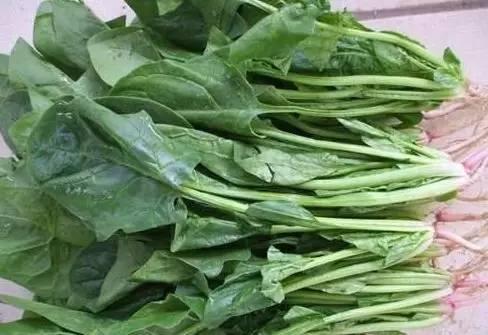
According to reporters, in the north, the prices of leafy vegetables have seen a large-scale decline. Li Tao, an analyst at the Anhui Baida Zhougudui Agricultural Products Wholesale Market, says that an increase in market supply has led to the price decline.
Dealer Li Dayou says that currently leafy vegetable prices are relatively low, profits are thinned, and coupled with hot weather and rising labor costs, many dealers are unwilling to deal in leafy vegetables.
Li Dayou: Because this leafy vegetable has high risk, and processing and so on, the costs are relatively high. At least 5 mao per jin has to be added before a deal can be made.
Li Tao told reporters that according to the patterns of vegetable price movements, April to June every year is when vegetables come to market in large quantities, and also when vegetable prices are cheapest in the year. Whenever this time comes, for vegetable farmers, income will decline somewhat; and for dealers, thinned profits also affect their enthusiasm.
Li Tao says that rather than changing planting decisions, it is better to clear the circulation links and make long-term plans.
Li Tao: Small vegetable farmers still need to develop by grouping together, either by cooperating to jointly cultivate or seek a vegetable broker, or by establishing a cooperative and supplying vegetables in the name of the cooperative to catering enterprises, vegetable processing enterprises and other large-scale buyers; for large vegetable growers, they should enrich the variety structure, strive to grow more kinds of vegetables, appropriately balance scale according to the market, and work hard to raise unit output.
Prices of northern vegetables have already shown a regular decline. What about the south?
In a farmers' market in Hangzhou, reporters saw that the amount of local Hangzhou vegetables was not large, and green vegetables and maomao greens were hard to spot. Vendor Wang Hong told reporters:
Wang Hong: Now the weather is hot, and small green vegetables rot easily.
Affected by the recent continuous rainy weather in the south, the output of local vegetables in Hangzhou has decreased. The weather is muggy and humid, and leafy vegetables have a very short shelf life and easily wilt, affecting sales, so vendors are unwilling to stock leafy vegetables.
Vendor A: Now for vegetables like spinach and celery, when this kind of stuffy, hot weather comes, these vegetables rot relatively quickly.
Vendor B: If they are continuously soaked for, say, more than 24 hours, root rot generally occurs. Also, photosynthesis is gone.
Li Tao, an analyst at the Anhui Baida Zhougudui Agricultural Products Wholesale Market, says that leafy vegetables are often affected by weather. In seasons of continuous rainfall, harvesting leafy vegetables takes a lot of effort and losses become greater. Without intervention from outside markets, leafy vegetable prices will rise to some extent.
Li Tao: Now logistics is very convenient. Southern vegetables are shipped north, northern vegetables are shipped south, and regional market adjustments are very convenient. Once a region lacks supply, it will promptly be replenished from other markets, thereby stabilizing prices. For places in the south with concentrated rainy weather, vegetable farmers' crops have already suffered losses. After the flood season passes, they should promptly plant some fast-growing vegetables to make up for their own losses.
Reporter and editor: Li Xin
Final editing: Wang Feng