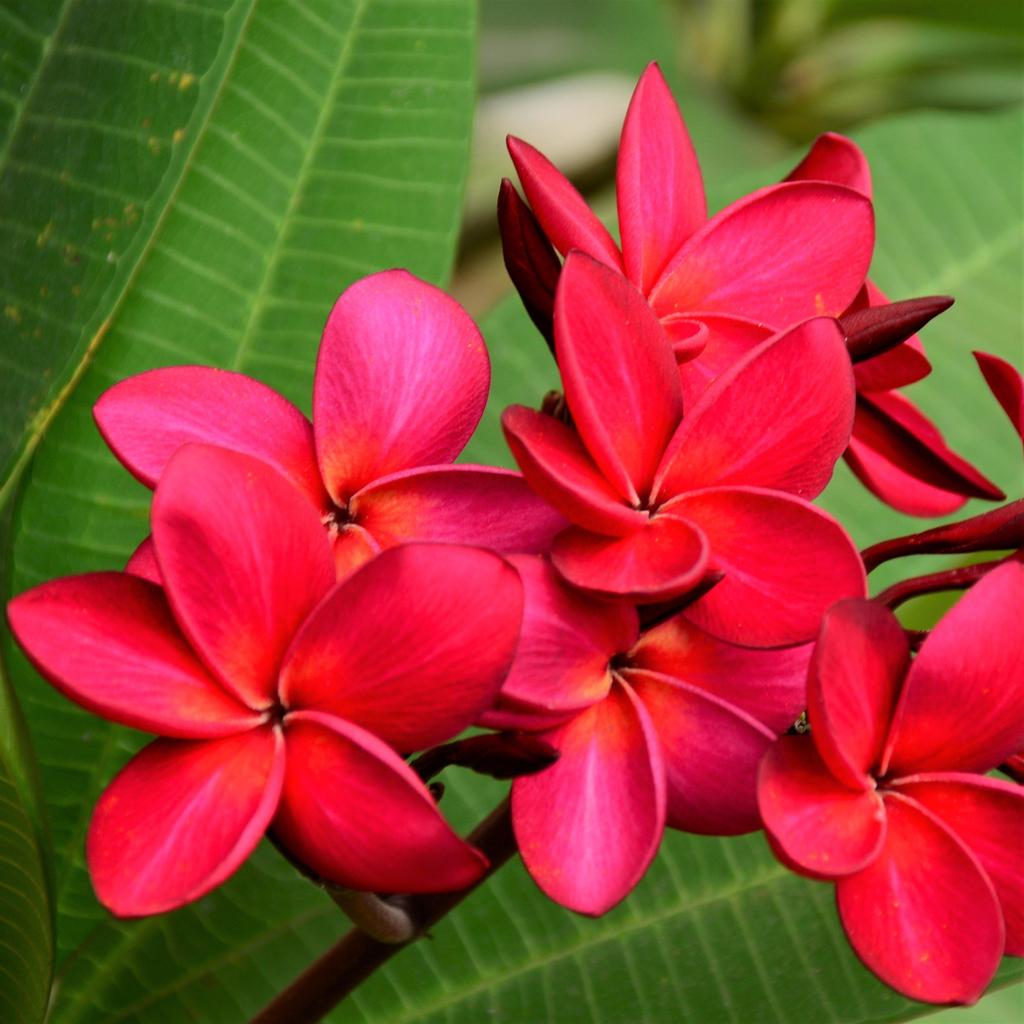
Red Frangipani Potted Planting Techniques and Care Methods After the Blooming Period Ends
Do you like frangipani? The fragrant frangipani is perfect as a specimen or accent plant in the landscape, or placed in containers so their floral fragrance can be fully enjoyed. They are also suitable for greenhouse use. In full sun, frangipani are the most durable and drought-tolerant, and even in dry regions they do not need daily watering. Learn about how to grow them!
How do you plant a red frangipani tree?
Find the pot in which you want to plant your frangipani; fill the container with good-quality, well-draining soil. Almost any commercially available potting medium will work fine. Make sure there are enough drainage holes; frangipani must never (never!) sit in waterlogged soil, or they will die.
Find a spot for your frangipani where they will receive plenty of sun. These are tropical plants, and they love hot environments. Gently slide the plant and root ball out of the pot and place it into a hole at the same depth as the soil ball. Firm the surrounding soil around the plant, and check to make sure the frangipani is level with the rest of the ground (not too deep or too shallow).
After planting, water thoroughly to settle the soil around the root ball. Within a few weeks, slender, leathery leaves will form. If there is no rain, water regularly during the growing season, but remember that infrequent deep watering is better than regular light drinks. Let the soil dry out between waterings. These plants need less water than most people think. Frangipani will appreciate a high-nitrogen fertilizer application early in the season (usually in April).
In early May, encourage flower bud formation by switching to a high-phosphorus fertilizer, and apply it once every 2-3 weeks through August. Feather-like flowers drop in midsummer. While in full bloom, feel free to cut the buds for a vase or float the flowers in a bowl of shallow water. This will not harm the plant and will provide a very fragrant supply of flowers.
After the bloom, the season ends and the weather begins to cool down, and the frangipani slips into dormancy. While the plant is resting, it is normal for the leaves to drop. Water infrequently in autumn and stop watering in winter. (In Zone 9 and cooler zones, bring the frangipani indoors. Do not let the plant freeze.)
Your frangipani will rest for several months before starting the spring growth cycle. During this time, you can enjoy the attractive branching, vase-like shape, clearly visible without leaves. With the warm spring and longer days, resume watering and fertilizing. New leaves will appear.